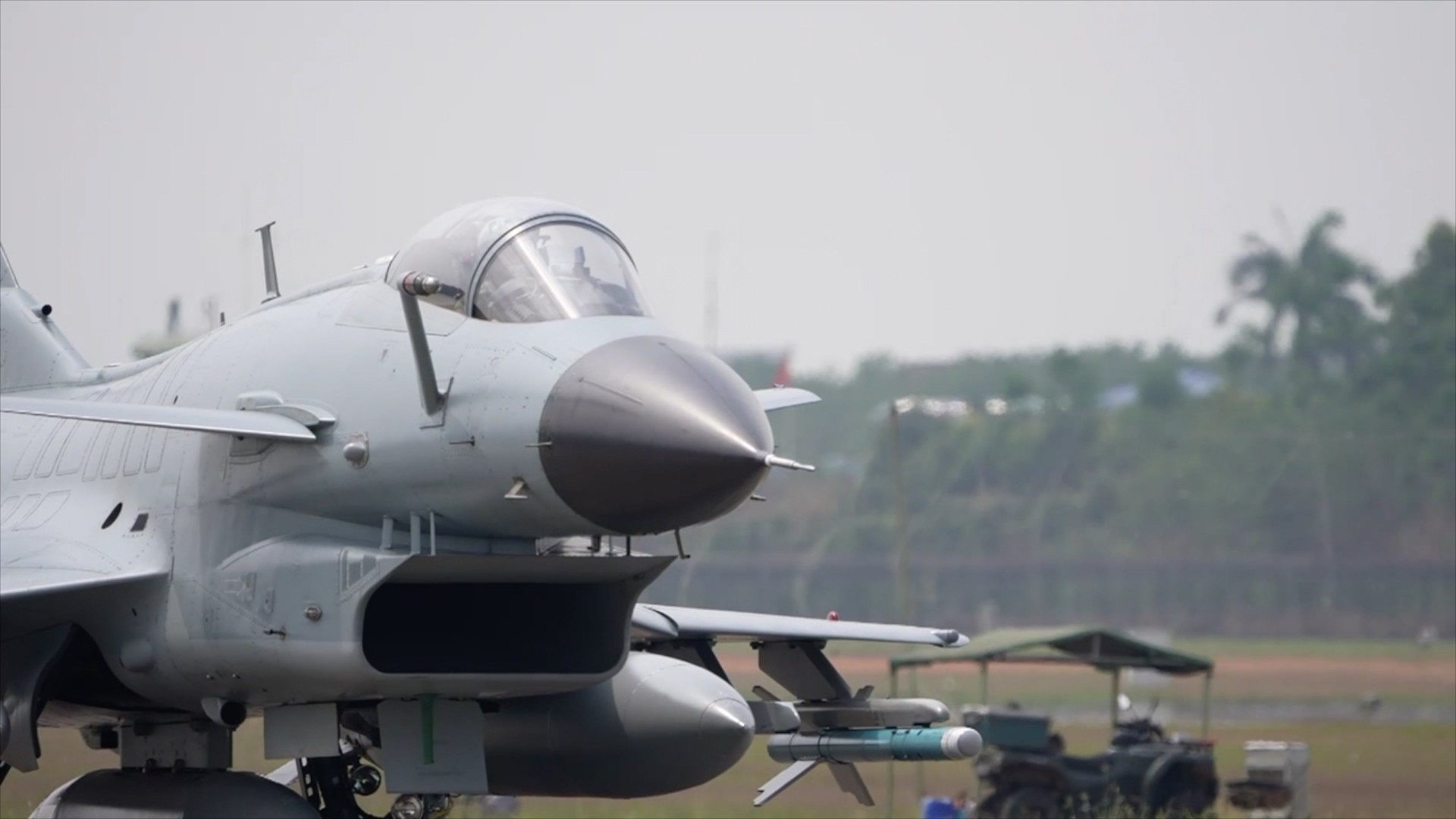
ISLAMABAD: Bangladesh is racing to finalize a $2.2 billion government-to-government contract with China for 20 to 24 Chengdu J-10CE multirole fighter jets, the same aircraft Pakistan used to shoot down an Indian Air Force Rafale during Operation Bunyan ul Marsoos in May 2025, media reports say.
The deal, first reported June 22 by Dhaka's The Daily Waadaa, would hand the Bangladesh Air Force its first beyond-visual-range capable, 4.5-generation combat platform, dramatically redrawing the airpower map of the Bay of Bengal.
An 11-member inter-ministerial committee, led by Air Chief Marshal Hasan Mahmood Khan, is managing negotiations toward a contract signing by August 2026, according to The Daily Waadaa.
The Times of India confirmed the talks are being accelerated during Prime Minister Tarique Rahman's ongoing state visit to China.
The J-10CE was largely unknown to Western audiences until May 2025, when Pakistan's air force used it to defeat India in four days of aerial combat. Following the Pahalgam incident on April 22, 2025 in Indian Illegally Occupied Jammu and Kashmir, India launched Operation Sindoor and attacked Pakistan.
Indian concern
India's alarm is immediate and structural. The Pakistan Air Force already operates multiple J-10CE squadrons on India's western border. Bangladesh's acquisition of the identical platform, carrying the same PL-15 missile with a range exceeding 145 kilometers, forces Indian planners to simultaneously defend both flanks against compatible systems, as noted by The Week and the South Asian Herald.
The geographic pressure point is the Siliguri Corridor, a strip of land just 22 kilometers wide connecting mainland India to its eight northeastern states. J-10CEs based at northern Bangladeshi air bases would sit within operational range of that corridor, potentially capable of severing India's ability to reinforce its northeastern army formations along the disputed Chinese border, according to the South Asian Herald.
Indian analysts cited by The Times of India warn the eastern theater, long treated as a low-threat rear area, can no longer be managed with second-tier assets.
The $2.2 billion deal also guarantees a permanent Chinese technical presence on Bangladeshi soil. Sustaining a 4.5-generation fleet requires on-site radar calibration, software updates, and munitions integration, all performed by Chinese engineers stationed at Bangladesh Air Force bases.
Indian analysts warn those personnel will have daily access to India's eastern electromagnetic environment, including radar frequencies and IAF flight patterns, according to The Week.
The deal is the centerpiece of Bangladesh's Forces Goal 2030 framework, launched by the BNP government after Prime Minister Tarique Rahman won elections earlier this year.
The J-10CE purchase lays bare the challenge facing New Delhi: Beijing's military exports are reshaping the balance across South Asia. With compatible systems now positioned on both India's western and eastern borders, supported by Chinese technical infrastructure and intelligence, India confronts a coordinated strategic pressure that extends beyond traditional defense planning.
Dhaka's acquisition signals that Bangladesh sees its security interests aligned with Beijing's strategic vision in the region.




.jpg)
.jpg)