


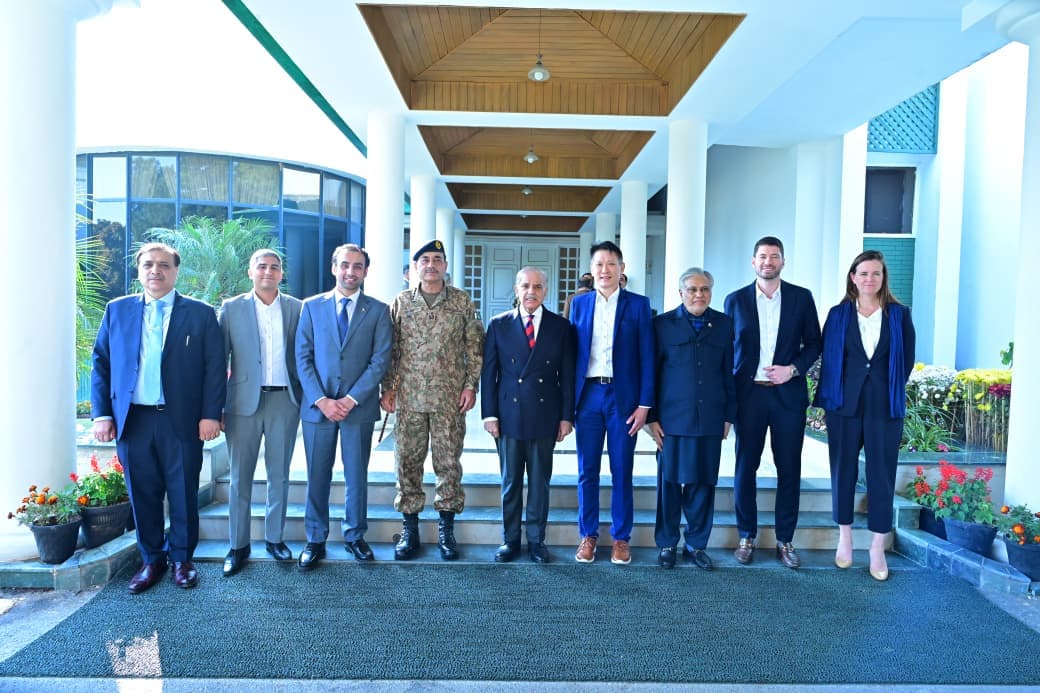
ISLAMABAD: Binance CEO Richard Teng has arrived in Islamabad for high-level engagements as Pakistan pushes forward with a sweeping regulatory framework for digital assets, according to statements issued by the Prime Minister’s Office (PMO) and the finance ministry.
Teng, leading a senior Binance delegation, met Prime Minister Shehbaz Sharif and Chief of Defense Forces Field Marshal Syed Asim Munir. The PMO said on Saturday that the visit reflects Islamabad’s “strong commitment to digital asset regulation” as the government works to modernize financial oversight, strengthen compliance and encourage responsible innovation.
A day earlier, Finance Minister Muhammad Aurangzeb and Pakistan Virtual Assets Regulatory Authority (PVARA) Chairman Bilal Bin Saqib co-chaired a high-level consultative meeting at the Finance Division to review Pakistan’s National Digital Asset Framework.
The finance ministry said the session aimed to build a “secure, well-regulated, and innovation-driven digital asset ecosystem.”
It noted that officials emphasized the “responsible operationalization of on- and off-ramp infrastructure, enhanced compliance standards, improved market transparency, and stronger integration of regulated financial institutions.”
Aurangzeb reaffirmed Islamabad’s focus on establishing a “robust and forward-looking regulatory environment” that protects national interests while enabling technological progress.
He added that “close coordination between government agencies, licensed global exchanges, and domestic banks remains essential for modernizing the payments landscape, improving financial inclusion, and aligning national systems with international standards.”
The Binance delegation offered insights on global digital asset trends and Pakistan’s accelerating adoption.
Aurangzeb said this rapid growth “reflects an irreversible global trend” and presents a significant opportunity to bring citizen-held virtual assets under formal oversight.
“Such integration would strengthen financial visibility, support creditworthiness assessments, and enhance national asset reporting without conferring legal tender status on digital assets,” he said.
The meeting also assessed opportunities to modernize the country’s digital payments infrastructure, noting that “blockchain-based systems could significantly reduce costs from the country’s $38 billion annual remittance flows.”
Participants stressed the need to develop domestic expertise in blockchain and Web3 to create high-value jobs for Pakistani youth.
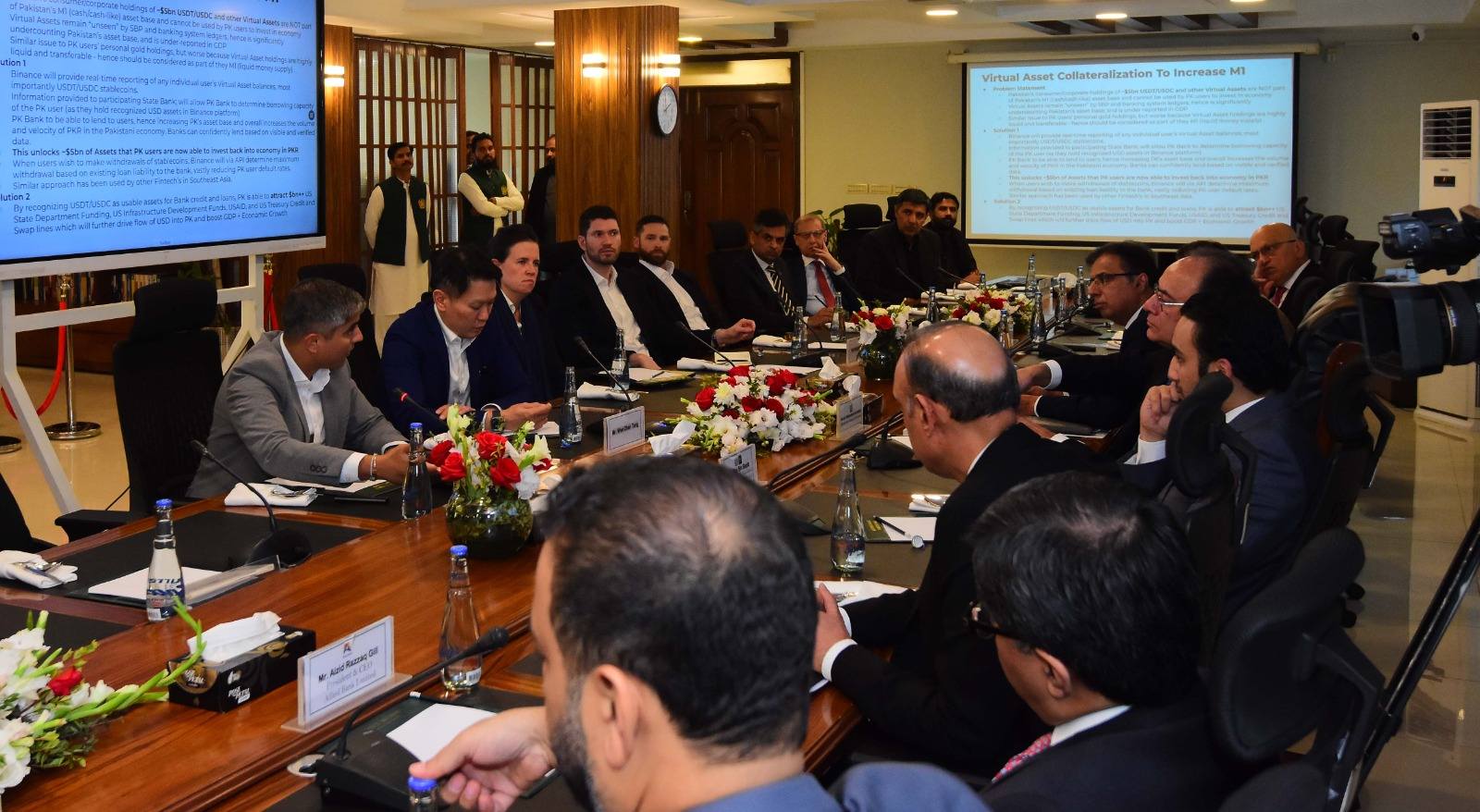
Officials further discussed sovereign debt tokenization to improve liquidity and investor access, positioning Pakistan as a regional frontrunner in compliant blockchain-based financial instruments.
The conversation, according to the finance ministry, also covered taxation and compliance principles, including shifting oversight to licensed exchanges, adopting a phased capital gains structure, and evaluating a time-bound amnesty to encourage users to move assets to regulated platforms.
A structured licensing regime for Virtual Asset Service Providers was also reviewed, with the ministry noting its importance for transparency, stronger verification systems, and alignment with global AML/CFT standards.
Bank presidents shared input on custody, risk management, and regulatory collaboration once national rules are finalized.
Aurangzeb said a regulated environment would bolster market stability and “encourage users to transition to licensed domestic platforms,” supporting economic growth, attracting investment, and accelerating technological advancement.