


ISLAMABAD: China and Pakistan marked the 75th anniversary of diplomatic relations on Monday, as total investment under the China-Pakistan Economic Corridor (CPEC) neared $26 billion, according to a factsheet released by the Embassy of China in Pakistan on Monday.
The factsheet highlights the scale and impact of the CPEC, describing it as the “flagship project” of the Belt and Road Initiative (BRI) and a cornerstone of the countries’ “all-weather strategic cooperative partnership.”
According to the embassy, total investment under CPEC has reached $25.93 billion, generating over 261,000 jobs and adding more than 8,000 megawatts of electricity to Pakistan’s grid.
China has remained Pakistan’s top trading partner for 12 consecutive years, with bilateral trade exceeding $25 billion in 2025, while accounting for 53.2% of foreign direct investment between July 2025 and Feb 2026.
The factsheet outlined major energy and infrastructure projects across provinces, including the 1,320 MW Sahiwal coal power plant in Punjab and the 720 MW Karot hydropower project, which it said serves millions of people while reducing carbon emissions.
It also cited the 27-kilometer Lahore Orange Line Metro Train as the country’s first metro system, carrying 280 million passengers over five years.
Provincial projects
Sindh's K-2 and K-3 nuclear power facilities were praised for contributing 2,200 MW to the grid, alongside coal and wind energy projects in Thar and Jhimpir. The 392-kilometer Sukkur–Multan motorway was credited with cutting travel time from 11 hours to 4.
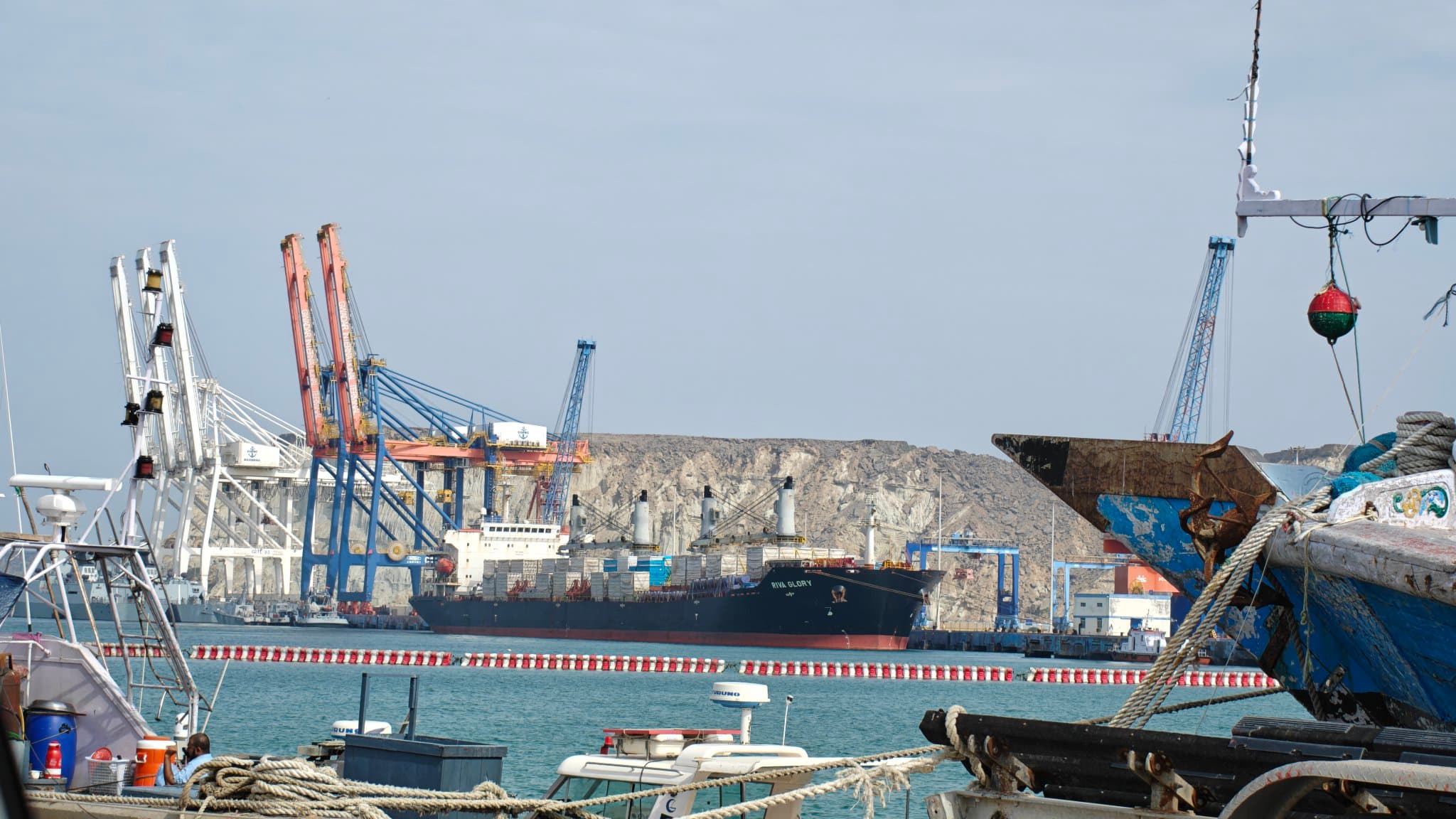
The embassy described Gwadar Port as a “regional connectivity hub,” supported by projects including a new international airport, hospital, desalination plant and vocational institute.
It added that more than 10,000 household solar panels had been distributed in recent years to address energy shortages in the area.
In Khyber Pakhtunkhwa, the Suki Kinari hydropower project and the Karakoram Highway Phase-II upgrade were cited as improving energy supply and reducing travel times.
At the same time, the Rashakai Special Economic Zone has attracted dozens of enterprises.
Expansion into space, agriculture, and industry
Beyond infrastructure, the embassy said cooperation has expanded into space, agriculture, and industry. It listed multiple Pakistani satellites launched in China and plans for Pakistan’s first astronaut to visit the Tiangong space station.
Agricultural trade between the two countries has averaged around $1 billion annually in recent years, with exports including rice and seafood, while 1,000 Pakistani professionals received agricultural training in China in 2025.
Industrial collaboration was also highlighted through special economic zones and planned investments in manufacturing and textiles, expected to generate thousands of jobs.
Humanitarian aid and people-to-people ties
The factsheet also highlighted humanitarian assistance, stating China provided financial and material aid during floods in 2022 and 2025, along with medical support and health supplies in Balochistan.
The embassy said people-to-people ties have deepened through education and cultural exchanges, with Pakistan ranking among the top countries sending students to China and over 130 institutions participating in a CPEC universities consortium.
Describing the partnership as “ironclad,” the embassy said the two countries are entering “CPEC 2.0,” focused on industrial development, innovation, green growth, and social welfare corridors.