


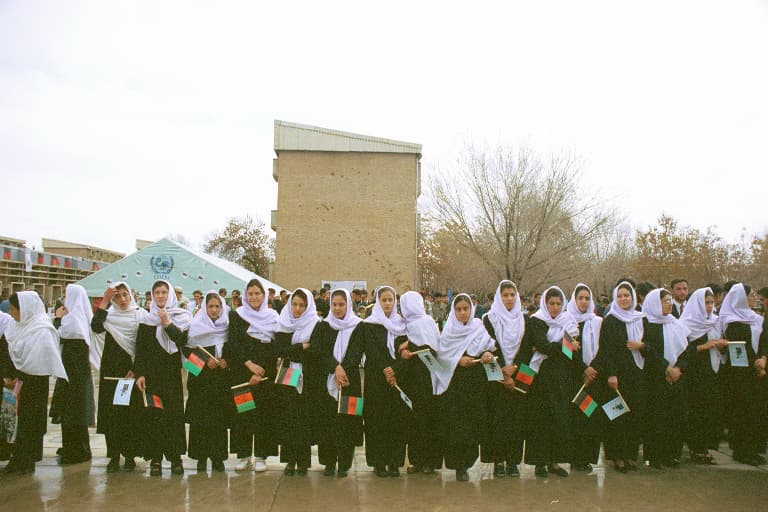
ISLAMABAD: Taliban authorities in Daikundi province, central Afghanistan, detained a female school administrator after she refused to hand over her smartphone during a search at a girls’ high school, Amu TV reported on Tuesday.
Tayyeba Hafezi, who heads a girls’ high school in the provincial capital of Nili, was taken into custody on June 22 after declining to surrender her phone during an inspection by Taliban officials.
The search was part of a broader effort by Taliban authorities to enforce a recently imposed ban on smartphone use among public employees.
Taliban personnel entered the school and began collecting smartphones from teachers. Hafezi was detained after refusing to comply with the order and remained in custody until later the same day.
Several teachers and female students were also subjected to harsh treatment during the operation. Some Taliban members allegedly threatened younger students and displayed weapons while demanding information about where teachers had hidden their phones.
Taliban officials have not publicly commented on the reported detention.
The incident appears to be among the first reported cases of an individual being detained for refusing to comply with the Taliban’s smartphone restrictions, which have expanded in recent weeks across government institutions.
The restrictions stem from a verbal directive reportedly issued by Taliban leader Hibatullah Akhundzada that bans smartphone use by public-sector employees. Authorities have increasingly moved to enforce the order in provinces across the country.
Earlier this month, Taliban officials in Panjshir province announced a comprehensive ban on smartphones in government offices, warning that employees who violate the order could face disciplinary action.
Taliban authorities have also warned that public employees found carrying smartphones may be referred to military courts.
The measures have drawn concern from educators, civil servants and rights advocates, who argue that smartphones are essential for communication, access to information and administrative work in a country where digital services have become increasingly important.