


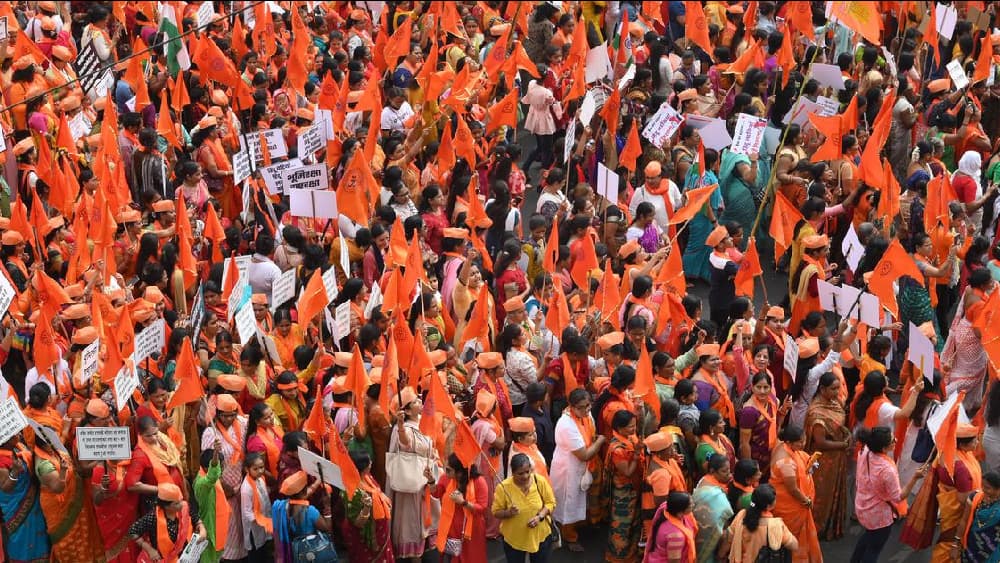
ISLAMABAD: A mob attacked and vandalized the Jama Masjid in Jorpokhri, Darjeeling, on Wednesday, shortly after the West Bengal Assembly elections in India, as reported by the Observer Post. The elections resulted in a victory for the Hindu right-wing Bharatiya Janata Party.
The attack came as West Bengal entered a volatile political transition following the BJP’s first major capture of power in the state, where the party won more than two-thirds of the 294-seat assembly, ending the Trinamool Congress’s three-term-long dominance.
The desecration in Jorpokhri has intensified fears among Muslim residents and rights advocates that the BJP’s electoral surge in Bengal could embolden Hindutva-aligned groups targeting minority religious spaces.
The Darjeeling mosque attack followed reports of political clashes in several districts after the vote count, adding to concerns that post-election violence has taken on both partisan and communal dimensions.
The desecration of mosques and Muslim religious spaces has become synonymous with India’s Hindutva-centered political landscape under BJP rule.
Amnesty International has documented the demolition of Muslim homes, businesses and places of worship through what rights groups call “bulldozer justice,” describing such actions as unlawful, punitive and discriminatory.
Human Rights Watch has also reported that authorities have failed to act adequately against BJP supporters accused of attacks.
Rights groups say victims of violence have themselves faced state action, including demolitions of Muslim-owned properties.
This pattern reflects the deeper normalization of Hindutva politics in India, where Hindu majoritarian ideology increasingly shapes public life, state action and electoral mobilization.
From the controversial Ayodhya temple built on the site of the martyred Babri Mosque to more recent disputes over mosques and Muslim neighborhoods, India’s secular framework exists only in name.