


ISLAMABAD: Every June, millions of Pakistanis wait anxiously for one important announcement: the federal budget. Government employees hope for salary increases, businesses anticipate changes in taxes, investors watch for economic signals, and ordinary citizens wonder how the new budget will affect their daily lives.
Similar discussions are underway at different fora these days, when the federal budget for the fiscal year 2026-27 will be presented before the National Assembly on June 10.
What is a budget?
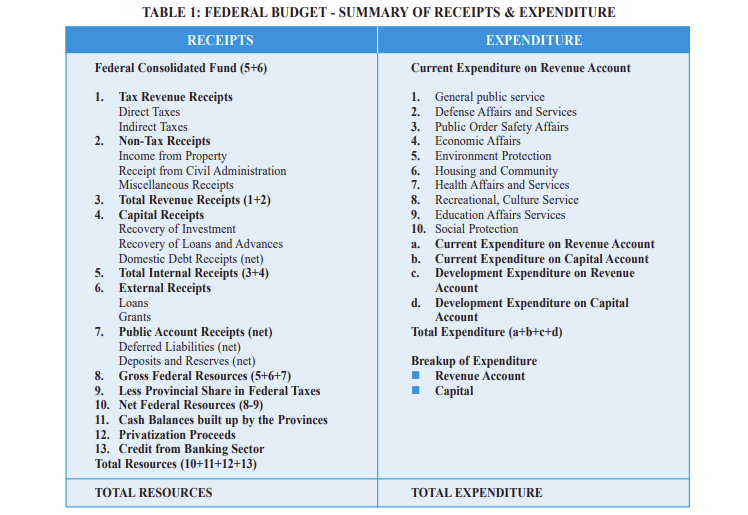
A budget is an estimate of income and expenditure for a specific period, usually one year. A government budget outlines how much revenue is expected to be generated in the coming fiscal year and how that money will be spent across different sectors.
Pakistan's fiscal year runs from July 1 to June 30. Therefore, the annual budget covers estimated government income and expenditures for this same period.
The Constitution of Pakistan, 1973, in several provisions under Chapter II, outlines the budget-making process.
It refers to the budget as an "Annual Financial Statement," while the financial bill presented in the National Assembly is termed a "Money Bill."
Experts say the budget not only reflects the government's financial priorities but also serves as a blueprint of the country's economic direction, development plans, and public welfare policies.
The first steps, setting the stage
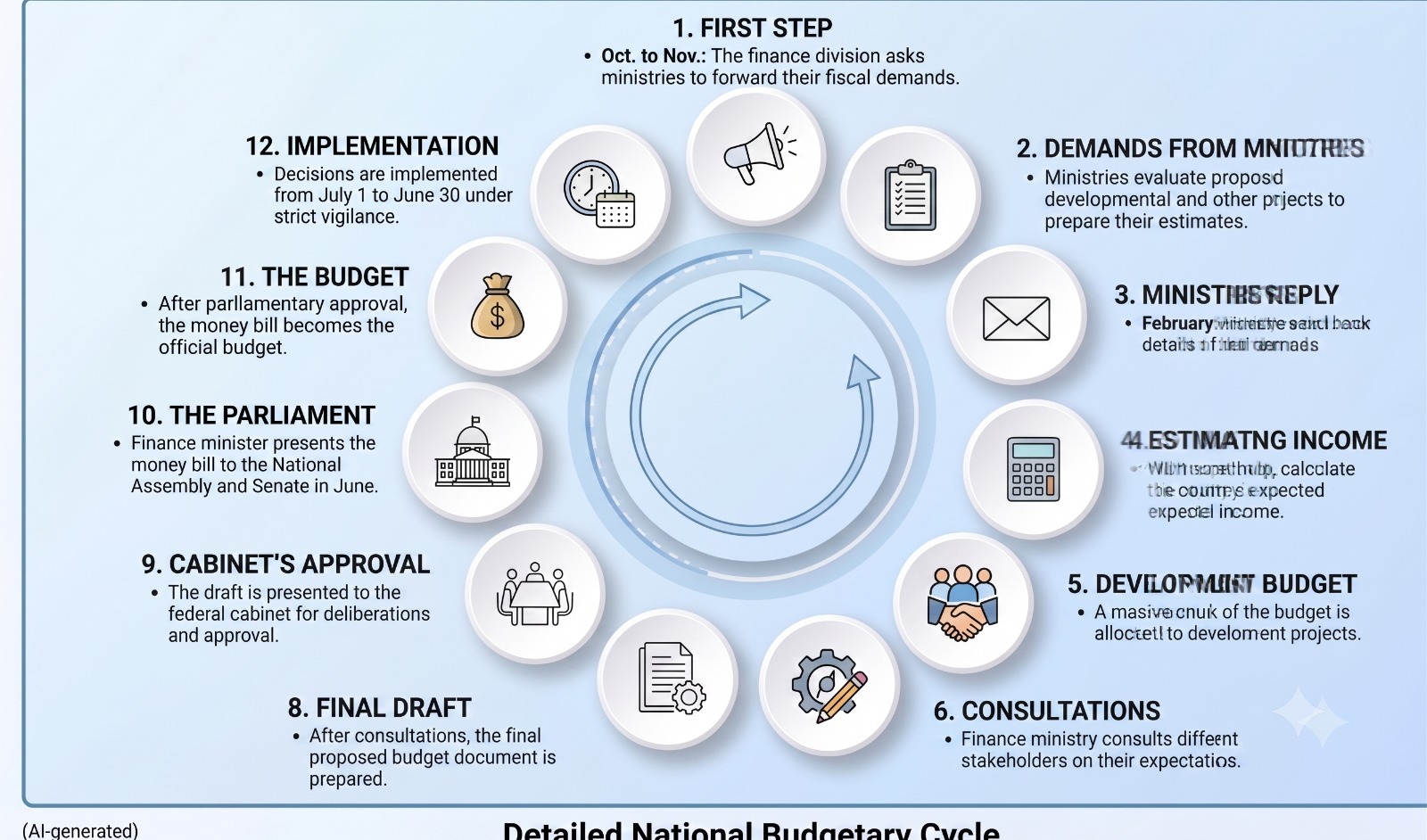
The budget-making process typically starts several months before the beginning of the new fiscal year on July 1. As early as October or November, the Ministry of Finance begins consultations with various government departments and ministries.
At this stage, the Finance Division issues detailed budget call circulars to federal ministries and divisions.
These documents serve as guidelines for preparing budget estimates and expenditure proposals.
Each ministry is asked to evaluate its financial needs for the coming year. Officials examine ongoing projects, operational expenses, development plans, and future priorities.
The process resembles a massive national exercise in planning and forecasting.
Ministries make their demands
Inside government offices across Islamabad, teams of bureaucrats start preparing detailed estimates.
Requests are submitted to the Ministry of Finance, which faces the challenging task of balancing competing demands with available resources.
It is often said that every ministry wants a larger share of the pie, but the pie itself has limits.
Estimating the nation's income
While ministries focus on spending, another critical question confronts policymakers: How much money will the government actually have?
The Federal Board of Revenue (FBR) plays a key role in answering this question.
Tax experts estimate how much revenue can be collected through income tax, sales tax, customs duties, and other taxes.
Economic growth projections, inflation forecasts, import trends, and business activity all influence these calculations.
At the same time, officials estimate non-tax revenues such as profits from state-owned enterprises, petroleum levies, dividends from government investments, and fees collected by various departments.
International economic conditions also receive careful attention. Global oil prices, exchange rates, foreign investment flows, and debt obligations can significantly affect Pakistan's financial outlook.
Development budget
A major component of Pakistan's budget is the Public Sector Development Programme (PSDP).
The Ministry of Planning, Development and Special Initiatives works closely with various departments to identify priority projects.
These may include highways, dams, hospitals, schools, digital infrastructure, and energy initiatives.
Consultations with stakeholders
Budget preparation is not confined to government offices alone. Business leaders, chambers of commerce, economists, industry representatives, exporters, farmers, and civil society organizations often provide recommendations to policymakers.
In the weeks leading up to the budget, the Ministry of Finance and the FBR hold meetings with stakeholders from different sectors.
These consultations help policymakers understand the concerns and expectations of various segments of society.
Role of IMF and economic realities
In recent years, Pakistan's budget-making process has increasingly been influenced by economic stabilization programs and international financial commitments.
When Pakistan is engaged in programs with international financial institutions, particularly the International Monetary Fund (IMF), budget planners must ensure that fiscal targets are met.
As a result, budget preparation becomes a delicate balancing act between public expectations and economic realities.
Final draft takes shape
As budget day approaches, intense activity unfolds within the Ministry of Finance.
Teams of economists, financial experts, and senior officials review countless spreadsheets, projections, and policy proposals.
Discussions continue late into the night. Revenue estimates are refined. Expenditure allocations are adjusted. Tax proposals are evaluated.
The finance minister holds consultations with the prime minister and senior cabinet members to finalize key decisions.
Eventually, a comprehensive budget document begins to take shape, a roadmap for managing the country's finances during the next fiscal year.
Cabinet Approval
Before being presented to Parliament, the budget must be approved by the Federal Cabinet.
Cabinet members review major policy measures, revenue proposals, expenditure plans, and development priorities. Although adjustments may still occur, this stage represents the government's collective endorsement of the budget framework.
Once approved, preparations begin for one of the most closely watched events on Pakistan's political calendar.
Budget day in parliament
The climax of the budget-making process arrives when the finance minister presents the budget in the National Assembly.
The budget speech outlines the government's economic vision, revenue measures, development priorities, and fiscal strategy.
Key announcements often include changes in taxes, government salaries, pensions, development spending, and social welfare programs.
For many Pakistanis, this is the first public glimpse of months of planning and deliberation.
Parliamentary debate and approval
Contrary to popular belief, the budget does not become law immediately after the finance minister's speech.
Members of Parliament debate the proposals extensively.
Opposition parties scrutinize government policies and criticize areas they believe require improvement.
Standing committees examine various aspects of the budget. Amendments may be proposed, and detailed discussions take place on expenditures and taxation measures.
This parliamentary scrutiny is an essential element of democratic governance, ensuring accountability and transparency in public finances.
After debate and voting, parliament approves the Finance Bill and related budgetary measures.
After approval from the National Assembly, the money bill is tabled before the Upper House of the Parliament i.e. the Senate for endorsement.
From paper to reality
Once approved, the budget enters the implementation phase.
Government ministries begin spending according to approved allocations. Development projects move forward. Tax measures come into effect.
The Ministry of Finance continuously monitors expenditures and revenues throughout the fiscal year.
Unexpected economic developments, natural disasters, global crises, or revenue shortfalls may require adjustments along the way.
Thus, budgeting is not merely an annual event but an ongoing process of financial management.
At first glance, a federal budget may appear to be a collection of figures and statistics. In reality, it is much more than that.
The budget reflects a government's priorities, economic philosophy, and vision for national development.
It determines how resources will be distributed. Which sectors will receive support, and how the burden of taxation will be shared?