

ISLAMABAD: Neutrality means withholding judgment from all sides equally. And yet, India did not do that. Throughout the Middle East war, which began with US and Israeli strikes on Iran and ended with Iranian sailors and Indian seafarers both dead, New Delhi reserved its silence for one side only.
And that silence never extended to Israel.
The retreat from Iran was already underway before the war made it permanent. India had stopped buying Iranian oil in 2019 to comply with US sanctions, and its diaspora in the country had shrunk to roughly 4,000 people, according to a report by the Institute of South Asian Studies at the National University of Singapore.
By the time the war started on Feb. 28, 2026, it seems there was little material relationship left to defend. It then showed within hours.
Three Iranian naval vessels, returning from exercises India itself had hosted, asked for emergency shelter at Indian ports that same day. Indian Foreign Minister Jaishankar claimed that New Delhi approved the request on March 1.
However, days later, a US submarine torpedoed one of those ships, the IRIS Dena, off Sri Lanka, killing 87 Iranian sailors, according to The Guardian.
This led to a debate over India's regional influence and capabilities, especially in its own backyard.
India's silence drew fierce domestic backlash. The Indian National Congress staged a walkout in Parliament on March 9, 2026. It condemned External Affairs Minister S Jaishankar's refusal to address the sinking, according to statements from the Ministry of External Affairs.
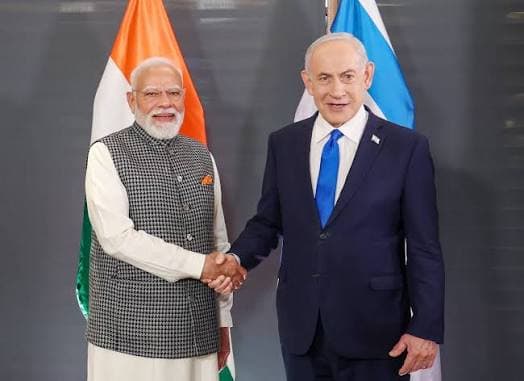
While India distanced itself from Iran, it rushed toward Israel. Just 48 hours before the war would begin, Prime Minister Narendra Modi concluded a state visit to Tel Aviv on Feb. 26, 2026.
During the visit, Modi and Israeli Prime Minister Benjamin Netanyahu elevated their partnership to a "Special Strategic Partnership for Peace, Innovation, and Prosperity," according to the India-Israel Joint Statement released by the Ministry of External Affairs.
The alliance has deepened rapidly over the years. On June 16, Israel Aerospace Industries announced plans to deepen its manufacturing footprint in India. The Tel Aviv-based defense contractor stated that it was planning to commence production, integration, and validation operations for advanced radar systems at a dedicated facility in Shoolagiri, Tamil Nadu, beginning in 2027, as reported by Wion.
IAI had already jointly manufactured Barak anti-missile systems with India, as reported The Jerusalem Post. Throughout the three-month war, defense cooperation operated without interruption, the Financial Times confirmed.
India's abandonment of Iran extended to its own strategic interests. In May 2026, the government allocated zero funds for the Chabahar Port project in southeastern Iran, its long-planned gateway to Central Asia. The decision marked a dramatic reversal from the $4.3 million allocated for the 2025-26 fiscal year, according to India's Ministry of External Affairs. Directors of the state-owned operating company (IPGL) managing the project resigned, several Indian new outlets reported.
The project, once central to New Delhi's regional connectivity vision, was left on the wayside.
And the cost on Indian ‘neutrality’ came directly to its seafarers. On June 9, 2026, US military forces targeted the oil tanker M/T Settebello in the Gulf of Oman, killing three Indian sailors, as reported by CBS News.
The crew reportedly ignored 60 verbal warnings over two weeks. The Ministry of External Affairs registered a "strong protest" and summoned the US Chargé d'Affaires.
Secretary of State Marco Rubio defended the blockade and conceded nothing, Hindustan Times reported. Opposition leader Rahul Gandhi called the government's posture that of an "obedient servant", according to The Hindu.
India's cultural policies also reflected the shift. In March 2026, the Indian Central Board of Film Certification blocked the Oscar-nominated film "The Voice of Hind Rajab," depicting a six-year-old Palestinian girl killed by Israeli fire, The Variety reported.
Board members explicitly stated that releasing the film would "break up the India-Israel relationship." Following public backlash, the ministry referred the film to a revising committee, which cleared it.
By June 2026, the realignment was complete. India had sacrificed its Iranian partner, absorbed the loss of a critical regional port, and accepted mounting tensions with the United States, all to cement its alliance with Israel.