


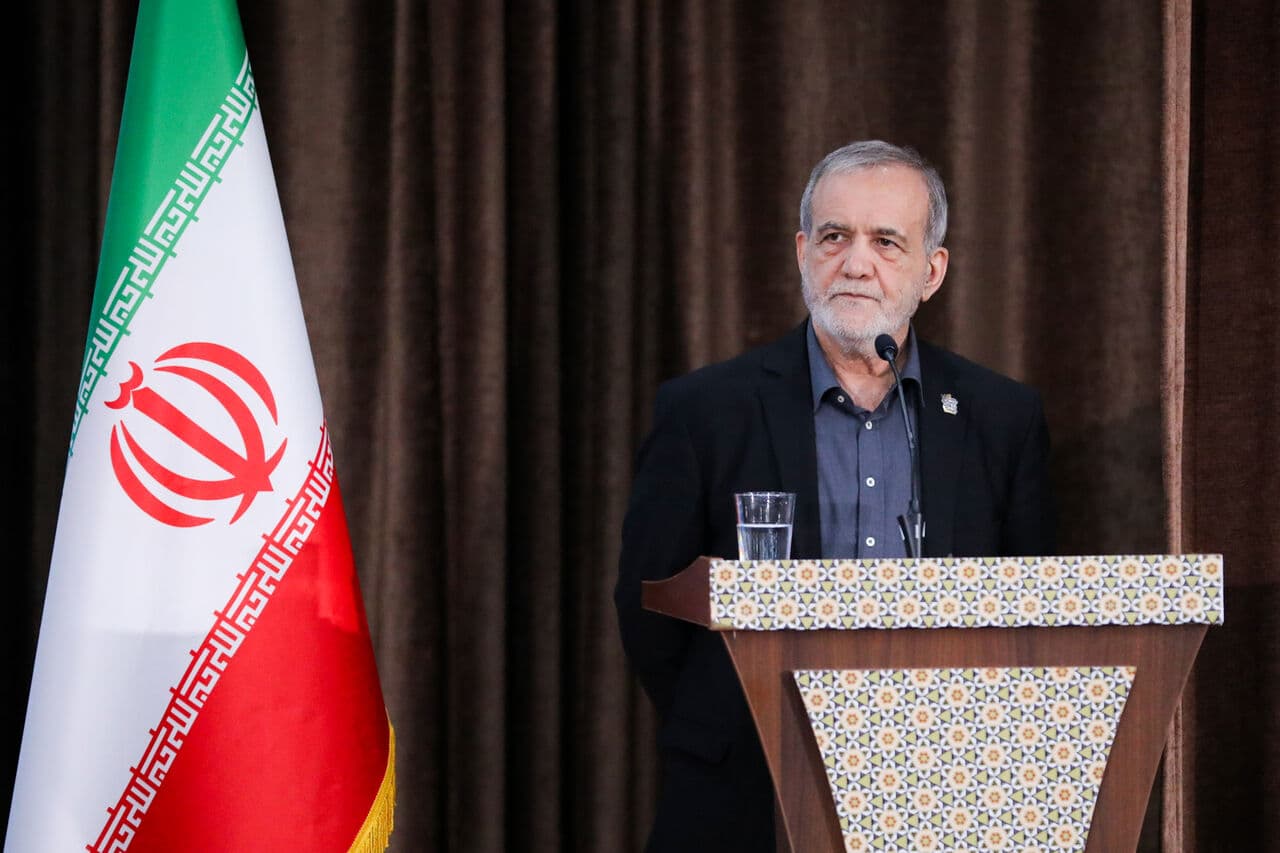
TEHRAN: Iranian President Masoud Pezeshkian said on Sunday that recent talks between Iran and the United States had produced “encouraging signals,” but stressed that Tehran remains prepared for any possible scenario.
“Iran is committed to peace and stability in the region. Recent negotiations included the exchange of practical proposals and yielded encouraging signals. However, we continue to closely monitor US actions and have made all necessary preparations for any potential scenario,” Pezeshkian wrote on X.
Iran and the United States have held two rounds of talks this month focused on Tehran’s nuclear program and the lifting of sanctions on the Islamic republic.
The discussions, held in Oman on Feb. 6 and in Switzerland on Feb. 17, marked the first such engagement since the 12-day war launched by Israel in June last year, which the United States later joined.
Amid the negotiations, Washington has deployed aircraft carriers and other military assets to the region, while warning Tehran of possible military action.
Earlier, Iran’s Foreign Minister Abbas Araghchi said he is likely to meet US Special Envoy Steve Witkoff in Geneva, Switzerland, on Thursday for a new round of negotiations.
Speaking to CBS News on Sunday, Iran's Foreign Minister Abbas Araghchi said details of a possible deal were being drawn up ahead of the renewed talks on Tehran's nuclear program, after Washington's envoy Steve Witkoff had publicly wondered why Tehran had not yet "capitulated."
Badr Albusaidi, foreign minister of regional mediator Oman, said talks would resume on Thursday in Geneva "with a positive push to go the extra mile towards finalizing the deal."
US threats of military action have multiplied since a nationwide protest movement in Iran sparked a crackdown that rights groups say killed thousands. On Sunday, Iranian students held competing pro- and anti-government protests, with critics of the clerical leadership risking arrest or worse if they are caught.
"If the US attacks us, then we have every right to defend ourselves," Araghchi said, alluding to American interests in the region as potential targets.
Still, he said, "there is a good chance to have a diplomatic solution."