


ISLAMABAD: In 2025, Israel launched an unprecedented series of military attacks across six countries in the Middle East, according to the Armed Conflict Location and Event Data Project (ACLED).
The data analysis group’s report, “Israel recalibrates its military campaigns in a region still on edge,” highlights the growing scope and intensity of Israel’s actions in the region.
ACLED, an independent global conflict monitor, reported that Israel launched military attacks in Iran, Lebanon, Palestine, Qatar, Syria, and Yemen throughout the year, marking the widest geographic reach of any military worldwide in 2025.
“In 2025, Israel launched attacks in Iran, Lebanon, Palestine, Qatar, Syria, and Yemen,” ACLED states, noting that between January 1 and November 28 alone, Israel “undertook more than 12,500 military actions across the Middle East.”
Deadliest zone: Palestine (Gaza Strip and West Bank)
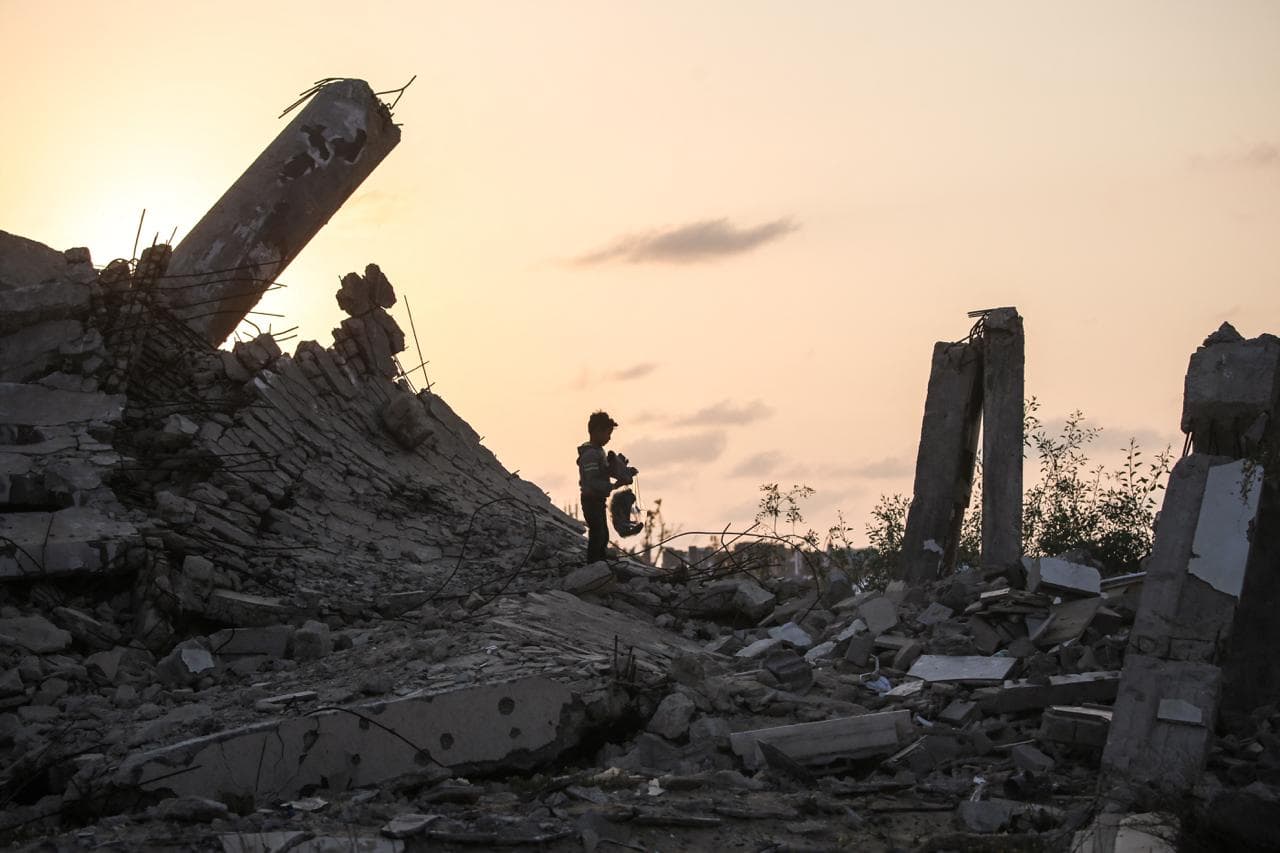
ACLED identified the Palestinian territories, particularly Gaza, as the deadliest theater of Israel’s military activity in 2025.
“Gaza remained the deadliest arena; the IDF killed thousands — the majority civilians — in strikes,” the report details. Israeli Defense Forces (IDF) strikes reportedly killed over 16,100 Palestinians in Gaza.
The report further stated that Israel broke a ceasefire in January and, by October, had “confined Palestinians in Gaza to less than 25% of the enclave and was pushing to establish full control over Gaza City.”
In the West Bank, ACLED documented intensified Israeli military operations: “The IDF conducted its largest operations in decades, displacing tens of thousands from the Jenin, Tulkarm, and Nur al-Shams camps.”
Lebanon: ongoing air and artillery strikes
Despite a ceasefire, ACLED recorded that Israel continued to carry out air and artillery strikes in Lebanon.
“The IDF conducted nearly 1,600 air- and artillery strikes, as well as shooting attacks, in Lebanon,” the report said.
Israeli forces withdrew ground troops in February but continued “hundreds of near-daily strikes, mainly in the south but also in the Bekaa Valley and Beirut,” killing hundreds of Hezbollah fighters, including nearly 25 commanders.
Iran: strategic campaign
ACLED describes Israel’s campaign in Iran as the most strategically consequential foreign operation of 2025.
“Israel launched a 12-day military campaign consisting of over 350 airstrikes across 27 provinces, including in the capital Tehran,” the report notes.
Targets included missile sites, military bases, nuclear facilities, and government buildings, with assassinations of senior military leaders and nuclear scientists.
Syria: expanded presence and strikes
Israel maintained and expanded its military presence in Syria, according to ACLED.
“In Syria, the IDF targeted Syrian military assets despite al-Assad’s ouster,” the report says, noting that Israel “established six additional outposts in the demilitarized buffer zone, deploying up to 15 kilometers inside Syria.”
Yemen: targeted operations against Houthis
In Yemen, Israel escalated its military campaign against Houthi forces.
“The IDF conducted operations on 16 separate days in 2025, killing over 120 people,” ACLED states, highlighting strikes that decimated the Houthi de facto government and killed the military chief of staff.
Qatar: Rare but significant target
ACLED points out Israel’s rare military action in Qatar, related to its pursuit of Hamas leaders.
“From Palestine to Lebanon, Syria, Yemen, Iran, and even Qatar, the Israel Defense Forces projected military power across the region in 2025,” the report says.
The strike in Qatar marked a diplomatic turning point affecting regional relations later in the year.
ACLED concludes that Israel’s 2025 military posture shifted from a status quo power to a more revisionist one, noting: “Israel established or expanded buffer zones and military outposts in three countries.”
This data underscores the complex and far-reaching nature of Israel’s military campaigns in the Middle East throughout 2025, marking one of the most active and geographically expansive years in recent regional history.