


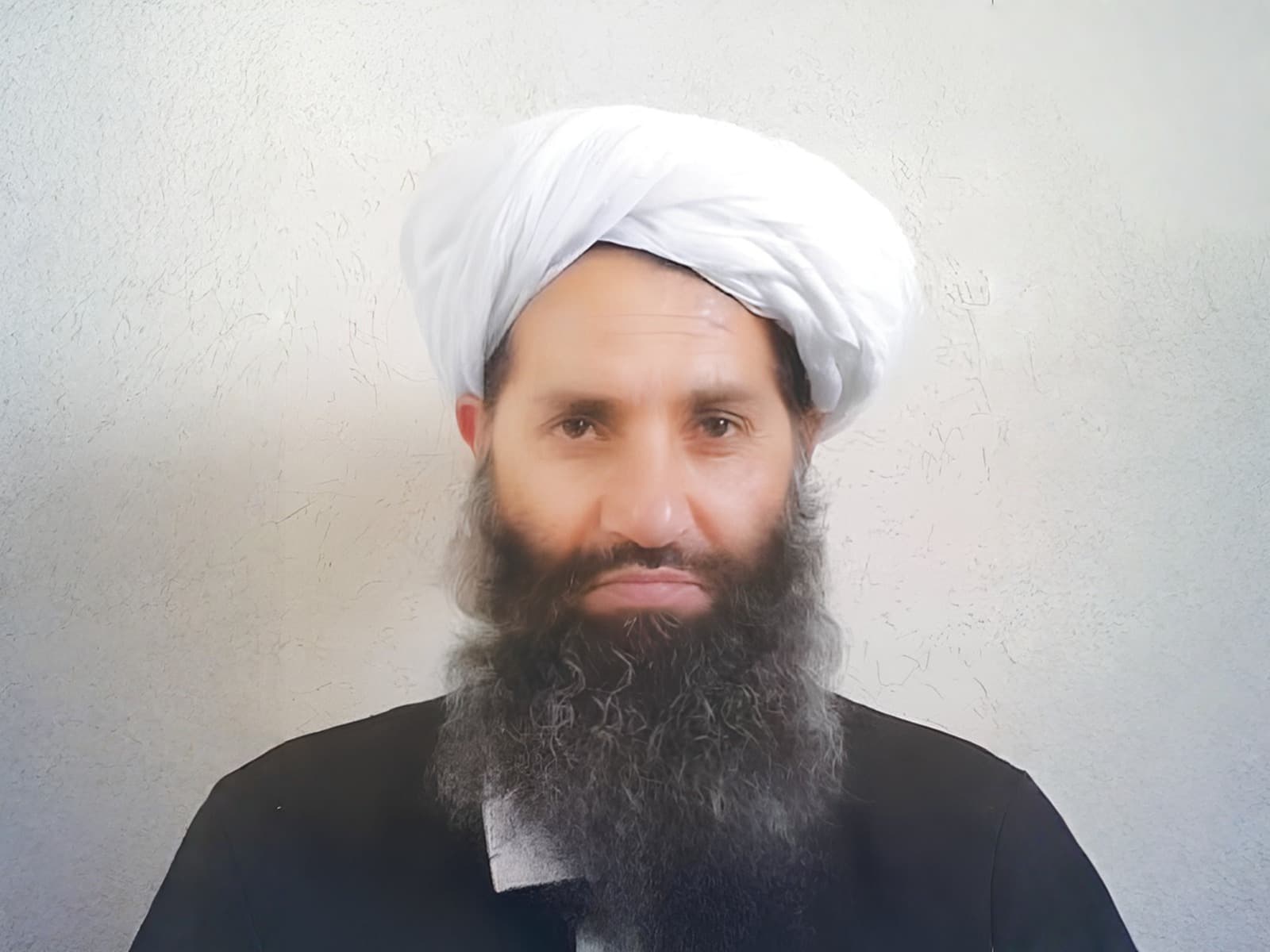
ISLAMABAD: A leaked audio recording attributed to Taliban supreme leader Haibatullah Akhundzada has exposed deep anxiety within the movement’s leadership, with warnings that internal divisions could ultimately lead to the group’s collapse, according to a report by the BBC.
The audio, obtained and reviewed by the British broadcaster, is said to come from a speech delivered by Akhundzada at a madrassa in Kandahar in January 2025. In the recording, the Taliban emir openly acknowledges growing discord within the ranks.
“As a result of these divisions, the emirate will collapse and end,” Akhundzada warns in the audio, as quoted by the BBC.
The remarks have intensified speculation about rifts at the very top of the Taliban, rumors that had circulated for months but were never publicly acknowledged by the leadership.
According to the BBC report, the Taliban leadership is now split into two competing power blocs. One faction is firmly loyal to Akhundzada and based in Kandahar, the movement’s ideological heartland. The other consists of influential Taliban figures operating largely from Kabul, many of whom favor a more pragmatic approach to governance and international engagement.
Rather than addressing these disagreements through consultation or reform, the report says the Taliban leadership has responded by further centralizing power in Kandahar, sidelining rivals and consolidating authority within a narrow inner circle.
Power reshuffles by decree
Since late 2024, Akhundzada has issued repeated decrees reshuffling senior officials across Afghanistan’s provincial administrations, security forces and ministries. Taliban critics say the moves are designed less to improve governance than to neutralize dissent.
Taliban interim spokesperson Zabihullah Mujahid confirmed that the changes were ordered directly by the emir.
“The appointments were made by the Emir,” Mujahid said in a statement posted on X announcing the latest reshuffle.
That round involved 25 senior officials, including provincial governors, corps commanders and local administrators. Among them, Qari Gul Haidar Shafiq was appointed governor of Bamyan, while the outgoing governor Abdullah Sarhadi was reassigned to Jawzjan. Ahmad Shah Dindost, a former corps commander, was named governor of Sar-e-Pol.
Further changes placed Andar Gul Abdullah as deputy governor of Laghman, approved new appointments in Kandahar itself, and authorized 15 additional changes within the defense ministry. Subsequent decrees reshuffled corps commanders and deputy commanders across key military units.
Earlier rounds of reshuffling saw governors, intelligence officials, border police chiefs and department heads rotated into new posts, often swapping positions with one another rather than being replaced.
Technocrats pushed aside
The Taliban’s reliance on internal reshuffles has drawn criticism for excluding professionals and technocrats from government roles. Instead of widening participation, the leadership has repeatedly recycled loyalists with limited administrative expertise.
That approach drew attention in December when Mawlawi Mohammad Wazir Fedayi, a cleric, was appointed water adviser at the energy and water ministry, replacing Dr Farooq Azam, a PhD-holder in water resources.
Dr Azam was removed after publicly criticizing the Taliban’s ban on girls’ education and questioning the group’s morality law, a move widely seen as punishment for dissent rather than a performance-based decision.
Estimates cited by critics suggest that between January 2025 and January 2026, Akhundzada reshaped Afghanistan’s administrative structure six times through decrees.
Growing public discontent
Inside Afghanistan, critics have described the process as a “monopolization” of authority, arguing that key state institutions are now firmly controlled by a small group of Kandahar-based loyalists.
They warn that many appointees lack the qualifications needed to manage critical sectors such as water, energy, health and the economy.
Ordinary Afghans have also voiced frustration, saying closed-circle appointments are worsening unemployment, deepening poverty and further eroding trust in state institutions amid a severe economic crisis.
Despite mounting domestic criticism and international isolation, the Taliban leadership has shown little willingness to broaden political participation or form a more inclusive government. The leaked audio, however, suggests that even within the movement, fears are growing that internal fractures, if left unresolved, could threaten the Taliban’s own survival.