


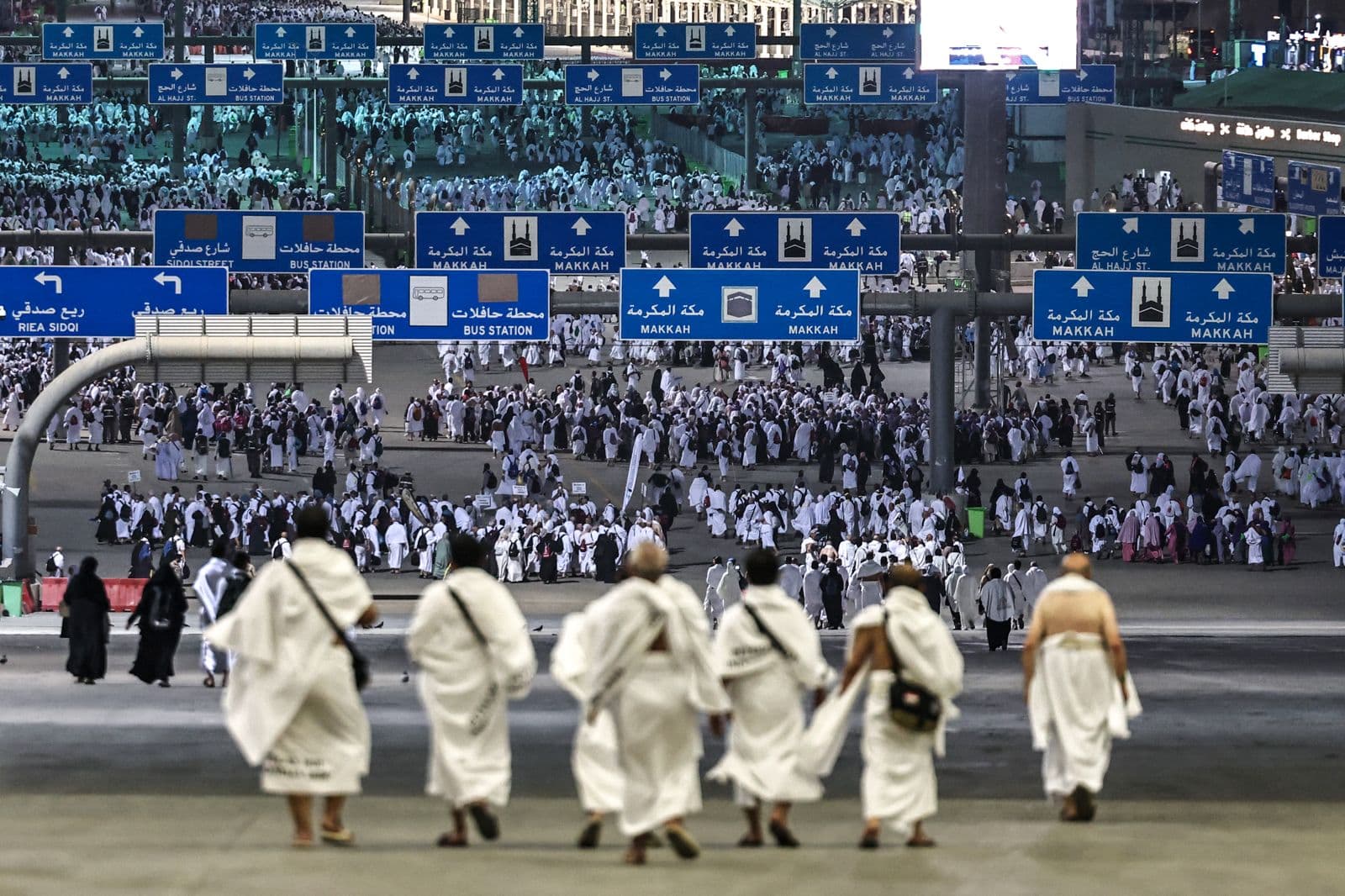
ISLAMABAD: More than 1.7 million Muslims gathered in Mina before dawn on Wednesday to perform the symbolic stoning ritual marking the start of Eid al-Adha, following an overnight stay in Muzdalifah during one of the most demanding stages of the annual Hajj pilgrimage.
According to Saudi publication Arab News and the Saudi Press Agency (SPA), pilgrims arriving from Muzdalifah began performing the ritual of stoning Jamrat Al-Aqaba at dawn, throwing seven pebbles at the largest of the three pillars representing Satan.
The movement of pilgrims unfolded under extensive security, transport and health operations as Saudi authorities managed one of the world’s largest annual religious gatherings.
Millions of pilgrims dressed in white ihram garments moved through pedestrian corridors linking Arafat, Muzdalifah and Mina, while water misting stations and medical teams were deployed along the routes to help pilgrims cope with desert temperatures.
Saudi authorities said crowd movement at the Jamarat complex remained smooth under integrated operational plans involving security personnel, ambulance teams, sanitation workers and crowd-management officials.
The Saudi Press Agency reported that shuttle buses and the Al Mashaaer Al Mugaddassah Metro continued transporting pilgrims between the holy sites according to coordinated traffic schedules designed to reduce congestion and travel times.
Saudi Arabia Railways (SAR) said around 290,000 pilgrims were transported from Arafat to Muzdalifah during one operational phase alone, bringing the total number of passengers transported through the metro system during the first three phases to more than 604,000 pilgrims.
SAR said the metro network would operate more than 2,000 trips during Hajj season, transporting over two million passengers across the holy sites.
The third day of Hajj coincides with the beginning of Eid al-Adha, one of Islam’s most important religious festivals commemorating Prophet Ibrahim’s willingness to sacrifice his son in obedience to Allah.
After completing the first stoning ritual, pilgrims proceed with animal sacrifice, hair shaving or trimming and Tawaf Al-Ifadah at the Grand Mosque in Makkah before returning to Mina for additional stoning rituals during the days of Tashreeq.
On Tuesday, pilgrims gathered at Mount Arafat for the spiritual climax of Hajj, offering prayers and supplications at the site where Prophet Muhammad is believed to have delivered his final sermon.
This year’s Hajj has drawn 1,707,301 pilgrims, according to Saudi authorities, including more than 1.54 million international pilgrims.
Pakistan has sent around 179,000 pilgrims for Hajj 2026, including more than 119,000 under the government scheme and 60,000 through private tour operators, making it one of the world’s largest Hajj contingents.
Pakistani officials said trained teams of Khuddam-ul-Hujjaj remained deployed across the holy sites to assist pilgrims with transport, accommodation, crowd management and emergency support.
Pakistan also introduced a pilot project this year enabling thousands of Pakistani pilgrims to travel between Makkah and Madinah aboard the Haramain High-Speed Railway, significantly reducing travel time between the two holy cities.
Saudi authorities said this year’s Hajj witnessed expanded digital services, stronger crowd coordination and broader implementation of the Makkah Route Initiative, which allows pilgrims from participating countries, including Pakistan, to complete immigration procedures before departure.