


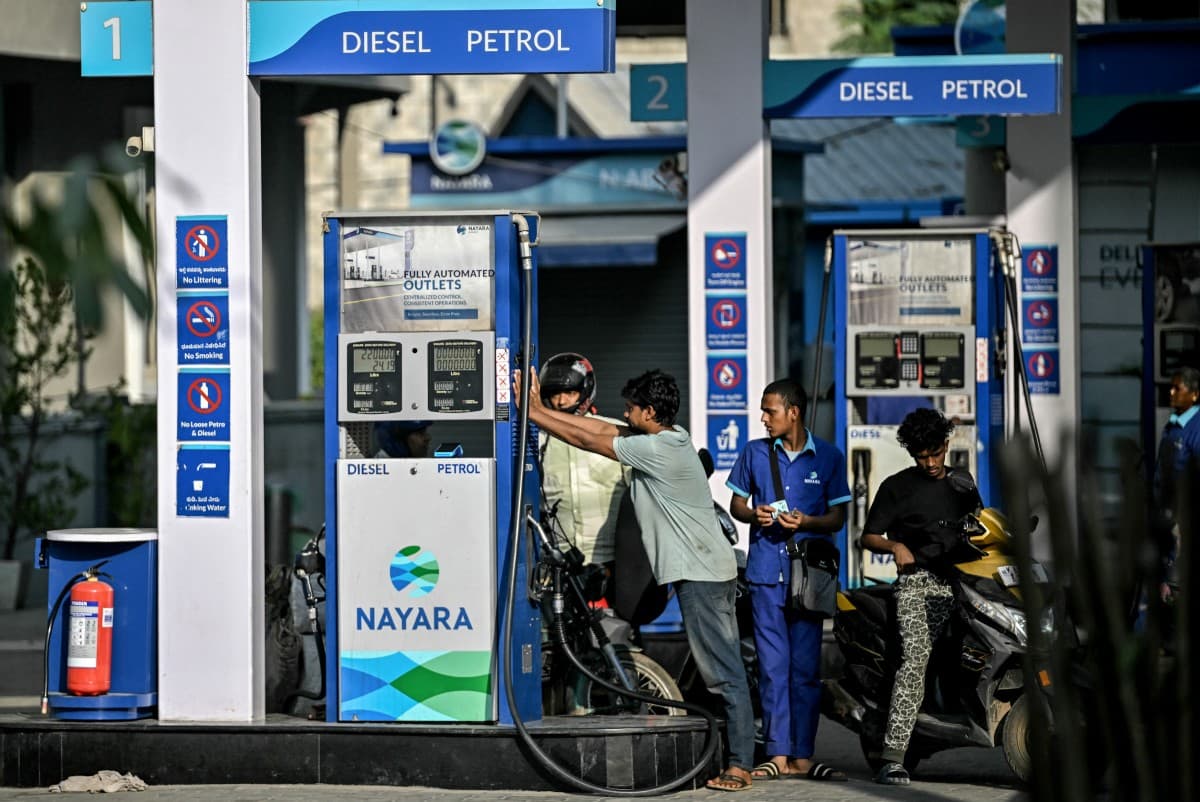
ISLAMABAD: President Donald Trump on Wednesday said a US naval blockade against Iran could last months, sending oil prices up more than 7% to $126.41 on Thursday, the highest in more than four years.
The trajectory of oil prices can be traced back to Feb. 28, when the US and Israel launched joint strikes on Iran, prompting immediate retaliation. Oil prices rose more than 3% on the day, with Brent briefly climbing above $73 per barrel before settling at $72.48.
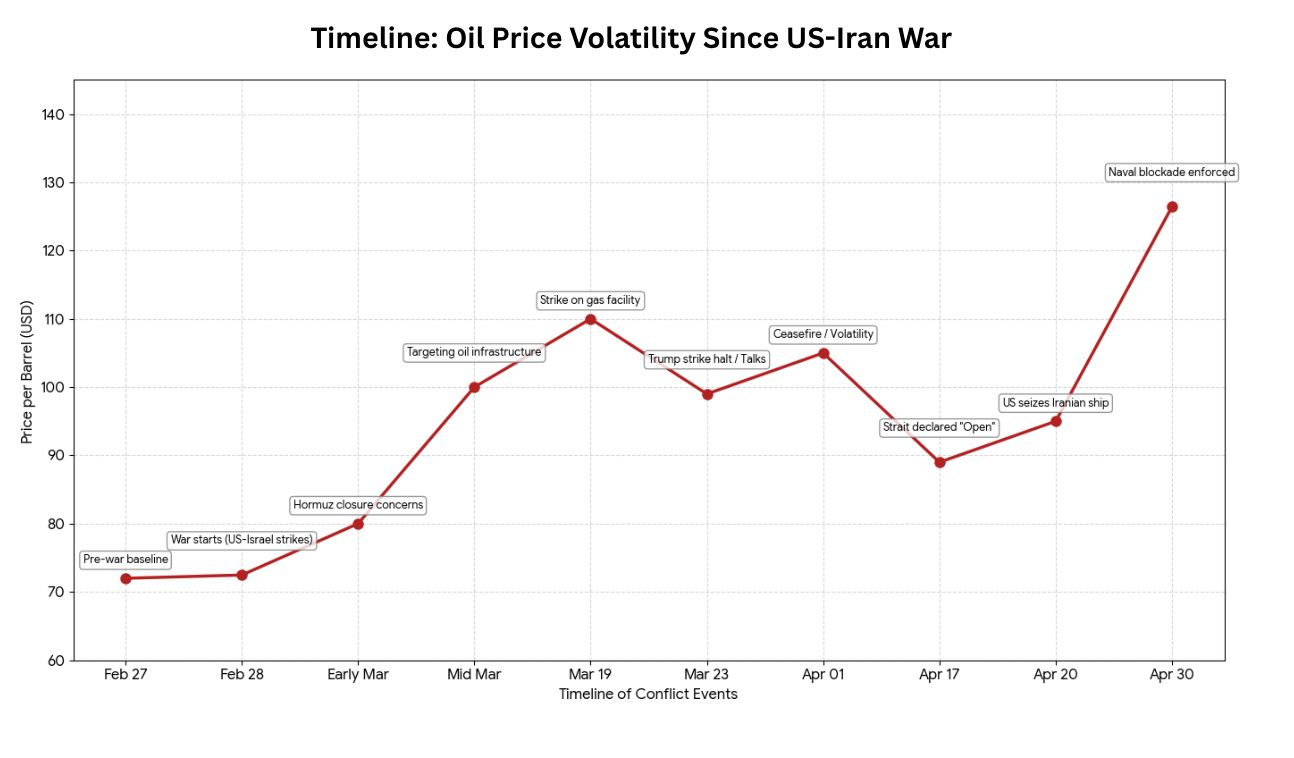 Graph made by Gemini depicting oil price volatility since the Iran war broke out
"With the US having called on its citizens to leave Israel and Iran, the threat of an attack on the Islamic Republic has dramatically risen, pushing the oil price to a seven-month high," analyst Axel Rudolph at investing and trading platform IG had said at the time.
Strikes threaten Strait of Hormuz closure
Within days, concerns over the possible closure of the Strait of Hormuz pushed prices sharply higher. Brent climbed to around $80 per barrel as the OPEC+ alliance hiked production quotas by 206,000 barrels per day for April.
By March 2, Qatar halted LNG production after Iranian attacks on key facilities, sending the Dutch TTF gas benchmark up nearly 45% to over €46 ($54).
Iranian oil facilities hit
Escalation intensified in the second week of March as attacks targeted Iranian oil infrastructure and Gulf energy facilities.
Crude surged past $100 per barrel for the first time in years, triggering declines in global equity markets and raising concerns among major energy-importing economies.
Pakistan also raised domestic fuel prices by around 20%, citing global market impacts, and revised the frequency of fuel price announcements from fortnightly to weekly, given the rapidly changing situation.
In the US, Trump dismissed the gas price spike as a "small price to pay" for removing the alleged threat of Iran's nuclear program.
Iran strikes Qatar's Ras Laffan complex
A further spike came on March 19, following a strike on a major Iranian gas facility, which sent Brent up more than 6% to nearly $110 per barrel.
Iran vowed to hit energy facilities throughout the Gulf in retaliation for what it said was an Israeli attack on the Ras Laffan complex it shares with Qatar.
Iranian President Masoud Pezeshkian warned the situation could have "uncontrollable consequences," and John Kilduff of Again Capital described the South Pars attack as a "red line" for Iran.
Trump postpones Iran strikes for talks
But oil prices sank around 10% on March 23 after US President Donald Trump suddenly ordered a halt to strikes on Iranian energy infrastructure after citing "very good" talks with Tehran.
Despite Iran's foreign ministry denying any such negotiations, Trump's statement offered relief to crude prices, dipping below $100 per barrel.
By this point in the war, Brent North Sea crude had jumped more than 40%, while European gas prices had rocketed over 75%.
Two-week ceasefire
Volatility persisted into April as US President Donald Trump set a deadline for Iran to reopen the Strait of Hormuz, threatening attacks on infrastructure and warning Iran would be “living in Hell” if it didn't reopen the strait.
The countries agreed to a two-week ceasefire barely an hour before Trump's deadline to "obliterate" Iran was set to expire, with Pakistan serving as a key intermediary and host for the negotiations.
Airline shares rallied, and oil equities retreated as crude prices tumbled in response to the expected return of shipments of oil and other key products through the strait.
Biggest single-day drop as Iran declares strait open
The biggest single-day drop came on April 17, when Araghchi declared the strait "completely open" for commercial tankers and cargo ships during the ceasefire.
Brent plunged 10% to around $89 per barrel after earlier falling 5% amid hopes of a US-Iran peace deal.
West Texas Intermediate shed 1% to $84.11 a barrel.
US Navy seizes Iranian ship
However, oil prices jumped again on April 20 after the US Navy imposed a blockade of the strait and fired on and seized an Iranian container ship in the Gulf of Oman the day before.
Iran reimposed restrictions on the strait and warned it will "under no circumstances" return to the pre-war status.
Most recent hike
Iran warned the US on March 30 that its naval blockade was doomed to fail, after President Donald Trump signaled it could be enforced for months to come, in a confrontation wreaking havoc on global energy markets, according to AFP.
As a result, oil prices soared to a four-year high, with Brent crude for June delivery up 7.1% to more than $126 a barrel. Iran's President Pezeshkian responded with a warning that the action would only further destabilize the region.
At present, the US continues its blockade of Iran's ports, while the Islamic Republic maintains its stranglehold over the strategic Strait of Hormuz.