


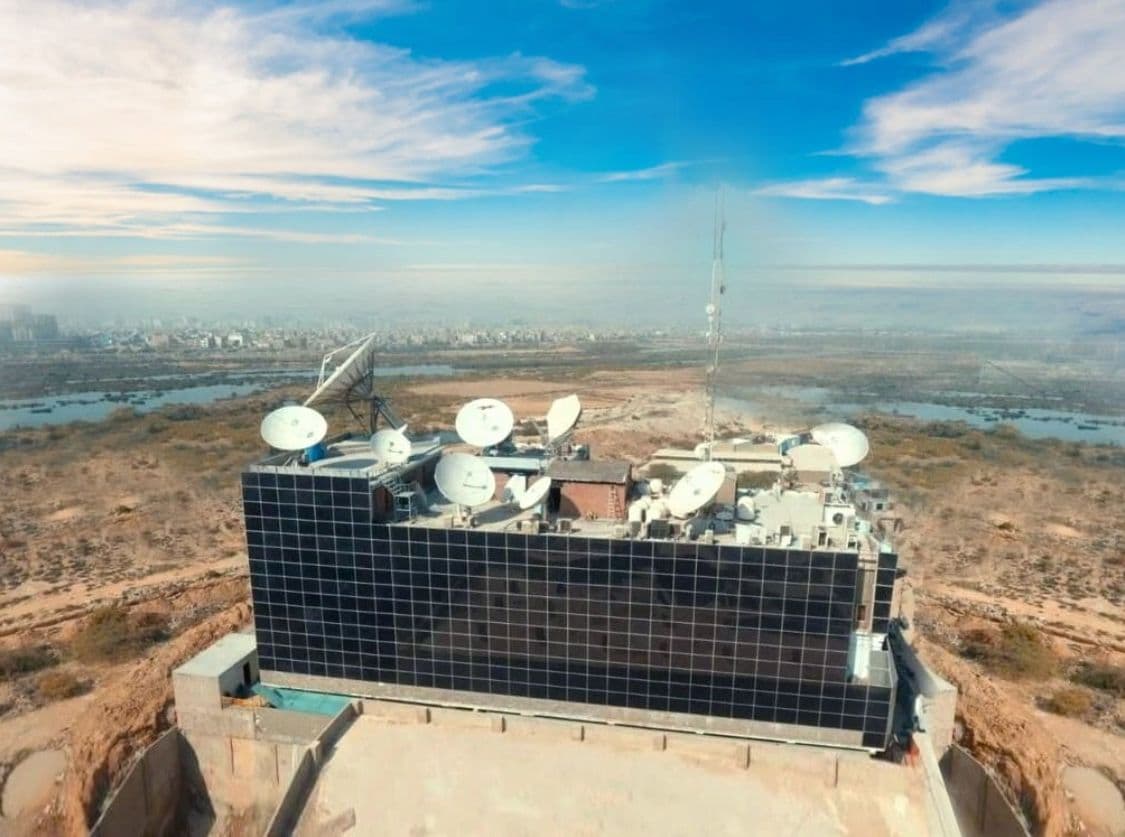
LAHORE: Pakistan’s technology and telecom sector unveiled the country’s first AI-ready sovereign cloud, a move industry leaders said would fundamentally reshape national access to advanced artificial intelligence and end dependence on foreign cloud providers.
The platform, jointly launched by major Pakistani tech and telecom firms, marked “the moment Pakistan moved from consuming AI to producing it at scale,” according to executives involved in the rollout.
For years, enterprises seeking to develop high-performance AI models were forced to rely on overseas cloud services, constrained by global GPU shortages and the high cost of importing hardware. Local capacity was further limited by international export restrictions on advanced chips.
Data Vault Pakistan, the country’s AI-optimized and enterprise-secured data center, said it had overcome those barriers. The company secured special approval from NVIDIA for the import of its GPUs despite US restrictions targeting certain markets, enabling the deployment of thousands of high-performance processors inside Pakistan.
Data Vault CEO Mehwish Salman Ali told Pakistan TV Digital that the company had expanded to “over 3,000 GPUs,” making it “the only fully AI-enabled data center in the country.”
She called the milestone “one of the hardest to achieve” but said it now allowed banks, telecom operators, hospitals, and startups to train and deploy frontier-scale AI models domestically, with lower latency and full data sovereignty.
“The era of exporting Pakistan’s most valuable data to foreign servers was over,” Ali said.
Ali added that control of GPU compute was as strategically important as national physical infrastructure.
“Whoever controls high-performance GPUs controls the speed of AI innovation,” she said. “Every rupee spent on foreign compute is a rupee that never comes back. Data Vault keeps that value and that power right here at home.”
She stressed that a sovereign AI cloud was “not a buzzword, it’s a red line,” saying Pakistani data had to remain under domestic jurisdiction, something she argued global cloud providers “cannot guarantee.”
The development coincided with a broader national technology push. In May, the Pakistani government allocated 2,000 megawatts of electricity in the first phase of a program to support Bitcoin mining and AI data centers.
Officials said Pakistan’s relatively low energy costs and available land gave it an advantage over regional competitors such as India and Singapore, where rising power prices and land scarcity constrained expansion.
Demand for AI data centers surged globally, with consumption exceeding 100 gigawatts, while current supply was estimated around 15 GW. Pakistani industry leaders said that gap created an opening for countries with surplus energy and emerging regulatory frameworks.
The new Telenor–Data Vault platform enabled organizations to run GPU-accelerated AI training, inference, and data processing. Supported uses included machine-learning pipelines, video analytics, generative AI systems, industrial automation, and the creation of large language models for Urdu and regional languages.
Operators said sensitive datasets, including financial transactions, medical imagery, telecom records, and government information, would remain inside Pakistan, meeting compliance requirements set by the Pakistan Telecommunication Authority (PTA), the State Bank of Pakistan (SBP), health-sector regulations, and emerging national AI governance standards.
The system was designed to support national priorities across multiple sectors.
Financial institutions could strengthen fraud detection and anti-money laundering systems; hospitals could deploy AI diagnostics; manufacturers and logistics companies could use automation and predictive analytics; and government agencies could run secure, locally hosted AI models for public services and digital governance.
The initiative also came as the telecommunications landscape underwent restructuring. Telenor Pakistan, with roughly 42.4 million mobile subscribers, was preparing to merge with PTCL, whose Ufone unit held 27.2 million subscribers.
The combined entity was expected to form Pakistan’s second-largest mobile operator, creating a broader network backbone for nationwide AI-driven services.
Industry leaders said the convergence of domestic compute capacity, energy availability, strategic land allocation, and regulatory support positioned Pakistan to produce AI at scale rather than rely on international providers.
The Telenor–Data Vault sovereign cloud, they argued, was both a technological breakthrough and a statement of national capability, signaling Pakistan’s intent to build, control, and deploy advanced AI on its own terms.