


ISLAMABAD: Pakistan marked 19 years since the Samjhauta Express bombing, saying justice remains elusive for the 68 people killed in the 2007 attack, including 44 Pakistanis, according to the Foreign Office on Thursday.
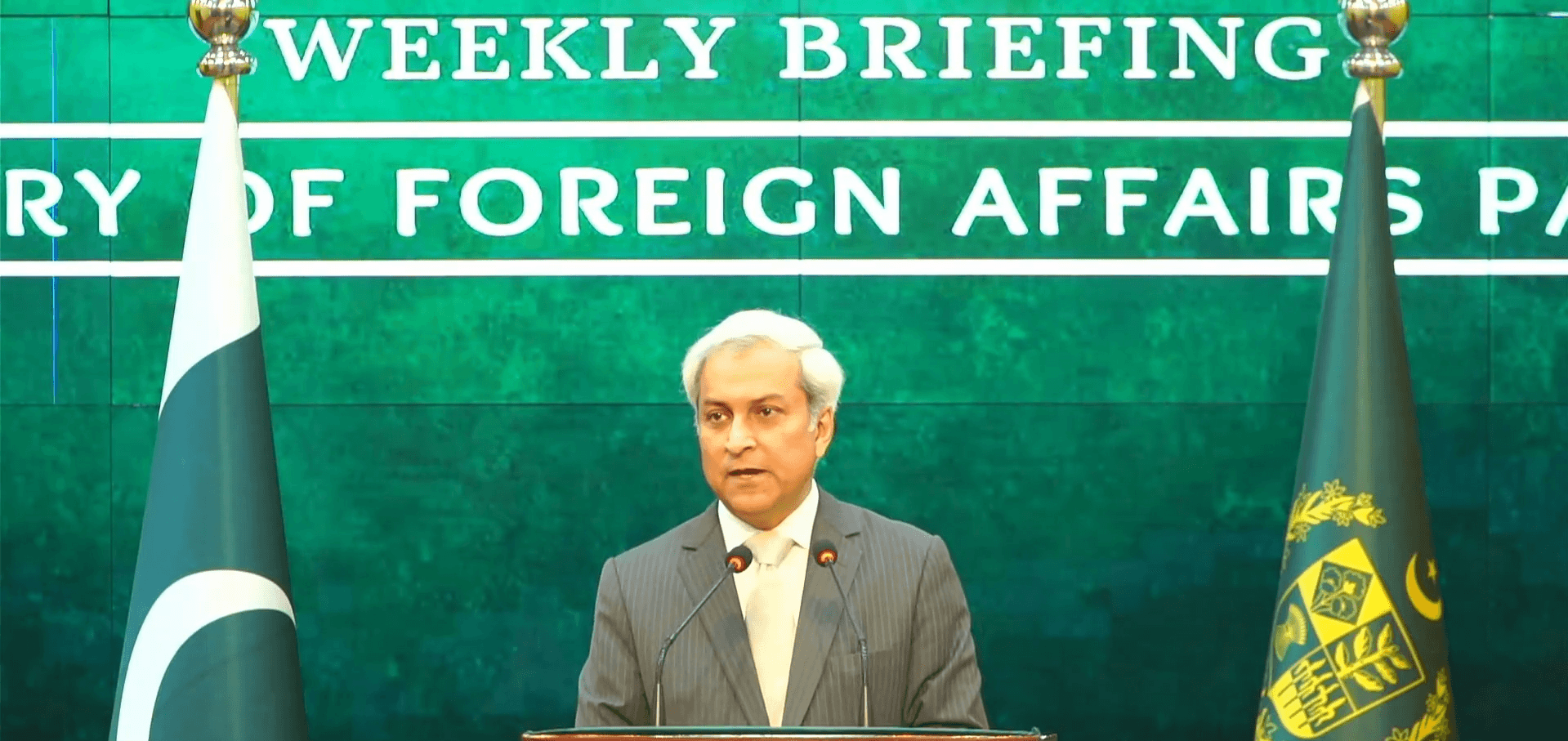
At a weekly briefing, Foreign Office Spokesperson Tahir Andrabi expressed “severe disappointment” over India’s “callousness” toward victims’ families. He said they continue to wait for justice nearly two decades later.
He condemned the acquittal of four individuals, including Swami Aseemanand, whom he said publicly confessed to masterminding the attack, Lieutenant Colonel Purohit and Sadhvi Pragya Singh Thakur. The spokesperson said the exoneration confirmed India’s role as an “official and political accomplice” in the attack carried out on its soil.
Pakistan demands a fair trial for the perpetrators and abettors, he said. He termed the exoneration an example of “Indian duplicity and state sponsorship of terrorism against Pakistan.” He added that “Hindutva extremism and saffron terror” behind the attack had intensified under India’s current government.
Afghanistan strikes
Andrabi confirmed intelligence-based, selective strikes on seven militant camps and hideouts along the Pakistan-Afghanistan border. The action followed recent terrorist attacks in Bajaur and Bannu, he said.
The spokesperson stated the strikes were proportional and carefully planned. They targeted identified militant sites with “utmost caution” to prevent civilian harm.
He described reported remarks from Afghan authorities about Pakistan’s law-and-order situation as “discouraging and disappointing.” Attacks have increased over the past 12 to 18 months since the Taliban takeover, he said, as that militants operating from Afghanistan conduct attacks against Pakistan.
Pakistan will respond “swiftly, strongly” in exercise of its right to self-defense, he said. Security forces remain vigilant as there is currently no structured dialogue with Kabul, and no decision has been taken on contributing troops to an ISF force discussed in Washington.
Kashmir
Andrabi condemned the extrajudicial killing of three Kashmiri youths in the Kishtwar district of Indian Illegally Occupied Jammu and Kashmir (IIOJK). He called it another manifestation of “state-sponsored terrorism.”
He referred to the Kunan Poshpora incident as a grave human rights violation and said perpetrators remain unaccounted for.
He stated that Pakistan will continue urging the international community and `UN human rights bodies to hold India accountable and seek a peaceful resolution in line with UN Security Council resolutions and the aspirations of the Kashmiri people.
He also said Pakistan expects “foolproof, complete security” for its diplomats and nationals in Afghanistan, adding that Islamabad extends the same seriousness to Afghan diplomats in Pakistan.
Israel occupation in West Bank
Andrabi stated that Pakistan will outline its stance on Israel’s recent move to annex parts of the occupied West Bank at an upcoming ministerial meeting of the Organization of Islamic Cooperation (OIC).
He said that Deputy Prime Minister and Foreign Minister Ishaq Dar will represent Pakistan at the OIC's Open-Ended Extraordinary Ministerial Session, in Jeddah, Saudi Arabia, Feb. 26-28.
The meeting “has been convened to consider the illegal decision by the Israeli occupation authorities aimed at expanding settlements, pursuing annexation, and attempting to impose Israel's sovereignty over the occupied West Bank,” the spokesperson said. Dar will present Pakistan’s case during the session.
In a Facebook post, the Foreign Office said Dar will “hold sideline meetings with counterparts from OIC” member states.
Andrabi said Israel’s measures in the occupied West Bank have drawn condemnation from the OIC and other Muslim states, as well as “European and other world countries,” including Brazil, France, Denmark, Portugal, Spain and Sweden.
“In this statement, we described these changes as wide-ranging and amounting to reclassifying Palestinian land as so-called Israel state land, accelerating illegal settlement activity, and further entrenching Israeli administration,” he said.
Restating Pakistan’s long-standing position on Israel’s occupation of Palestinian lands, Andrabi said the country issued “a joint statement” with “eight other countries” condemning a statement by the US ambassador to Israel suggesting it would be acceptable for Israel to exercise control over territories belonging to Arab states.
He said Egypt, Jordan, United Arab Emirates, Indonesia, Turkey, Saudi Arabia, Qatar, Oman, Bahrain, Syria, Lebanon and Palestine, along with the OIC Secretariat and the League of Arab States, “strongly condemned” the remarks.
The US envoy’s comment was “dangerous, inflammatory, and clear violation of international law and the UN Charter,” Andrabi said. He added that it threatened regional security and stability.
Qatar
Separately, Andrabi addressed Prime Minister Shehbaz Sharif’s recent state visit to Qatar at the invitation of the emir, Sheikh Tamim bin Hamad Al Thani.
PM Sharif met the Qatari emir and discussed enhancing cooperation in several areas, including economic ties. Both sides agreed on resolving international disputes peacefully through “dialogue” and “diplomacy.”
Sheikh Tamim will “visit Pakistan later this year,” he added.
During the visit, PM Sharif also met Qatar’s defense minister, Sheikh Saud Al Thani, who expressed interest in expanding defense cooperation between the two countries and “appreciated the professionalism and expertise of Pakistan's armed forces.”