


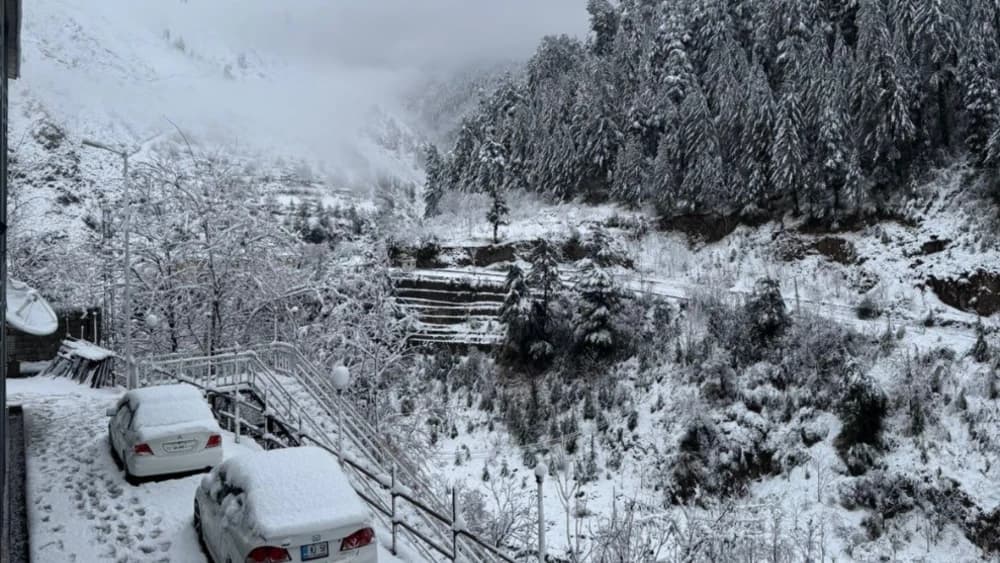
ISLAMABAD: Pakistan’s Meteorological Department (PMD) has forecast more rain and snowfall in the northern parts of the country as a strong westerly weather system continues to affect the region, following heavy snowfall in several hill stations.
Murree recorded 17 inches of snowfall on Friday, the highest in nearly 20 years, while Malam Jabba received 39 inches, Kalam 30 inches, and Chitral 16 inches, according to PMD data shared by meteorologist Ghulam Murtaza. In Balochistan, Quetta recorded 1.2 inches and Qalat 1.6 inches of snowfall.
Snowfall continued on Saturday, though with reduced intensity in some areas. Malam Jabba received an additional 25 inches, Murree 5.5 inches, Kalam 3.5 inches, while Kakul recorded 1 inch of snowfall at ground level.
Heavy rain accompanied by a hailstorm also lashed Rawalpindi and Islamabad, while snowfall in Murree pushed temperatures down to around 4 degrees Celsius. Due to hazardous conditions, authorities closed the Murree Expressway and restricted the entry of vehicles into the hill station.
The PMD said the current wet spell is likely to persist, with another westerly wave expected to bring more rain and snowfall from Sunday to Tuesday. Temperatures are expected to drop further once cloud cover clears, and cold westerly winds intensify.
After a prolonged dry spell, Azad Jammu and Kashmir (AJK) also received widespread rain and snowfall, with upper areas blanketed in thick snow. Landslides were reported at some locations, disrupting traffic.
The Met Office warned that heavy snowfall and rain may cause road closures and slippery conditions in Murree, Galliyat, Naran, Kaghan, Dir, Swat, Kalam, Chitral, Kohistan, Mansehra, Abbottabad, Shangla, Astore, Hunza, Skardu, Neelum Valley, Bagh, Poonch, Haveli, and Rawalakot. Tourists have been advised to avoid unnecessary travel, while authorities have been asked to remain vigilant.
Climate change perspective
Climate experts link the late but intense snowfall to changing winter patterns. Dr Zainab Naeem, an environmental scientist at the Sustainable Development Policy Institute (SDPI), said Pakistan’s winter rain and snow depend on western disturbances, which have become weaker and more erratic due to climate change.
She said delayed winter systems often result in prolonged dry spells followed by short bursts of heavy precipitation. “Winter is arriving later and lasting for a shorter time, but extreme events like intense snowfall are becoming more frequent,” she said, warning of increased risks of landslides, avalanches, and travel disruptions in northern areas.