


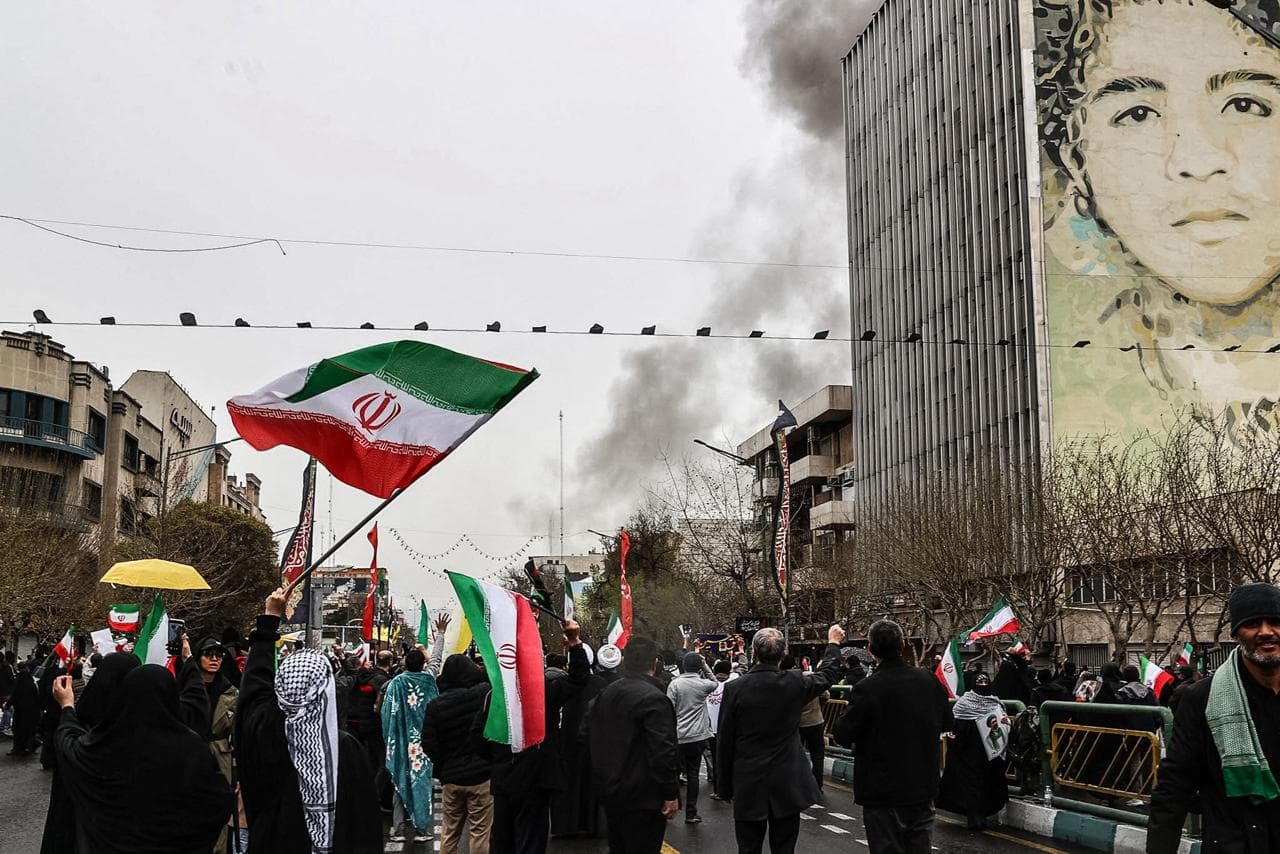
PARIS: Beneath a hail of bombs, few Iranians have the heart to prepare for Nowruz, the Persian New Year, as war casts a shadow across the country.
“People just aren’t thinking about it,” said a resident of the northern city of Bukan, reached by phone from Paris.
“It’s the first time in my life that I’ve forgotten how to grow sabzeh,” a mother said, referring to the sprouted lentils grown for Nowruz.
Yet the holiday is a central moment in Persian culture, typically marked by weeks of anticipation.
Nowruz, meaning “new day,” will ring in the year 1405 on the Persian calendar and the arrival of spring on the afternoon of March 20.
But this year, the festive spirit eludes many.
The dazzling “fire festival” (Chaharshanbe Suri) that kicks off the holiday season will be closely watched on Tuesday evening.
It is the first moment for Iranians to gather in public outside state-organized rallies in support of the authorities.
On the night of bonfires, Iranians jump over flames to ward off misfortune and welcome renewal.
Over the past two decades, the ancient celebration has become a powerful outlet for young people despite the disapproval of authorities and much of the Shia clergy, who deem it a “pagan” ritual.
Whether Iranians will be allowed to gather at all this year is unclear.
Security forces are out in large numbers across major cities and the country remains in a 40-day mourning period following the death of supreme leader Ali Khamenei on the first day of the war.
“Normally in the days before Nowruz, everyone is cleaning their home and getting ready for the holiday,” the Bukan resident said.
“This year that feeling is completely gone.”
‘The children know’
In Tehran and many other cities, bazaars — typically the heart of pre-holiday life — are nearly empty.
Many shops and markets remain shut two weeks after the war launched by the United States and Israel on February 28.
In Piranshahr, in the northwest, “the lively, energetic mood of past years has disappeared,” said a 40-year-old man, also contacted by AFP from Paris and requesting anonymity.
The downturn is another blow to shopkeepers who normally make much of their annual income during the pre-Nowruz rush.
“My cousin has a clothing shop, but he hasn’t been able to open because it’s in a city where there are many explosions,” said a resident of the capital Tehran.
A 48-year-old Afghan migrant who has returned home to seek safety said the streets and bazaars should be packed at this time.
“But when I went to the market, I didn’t see anyone.”
Even so, many families are trying to find some joy for their children, for whom Nowruz is also a holiday of gifts and treats.
“I have a six-year-old boy who has no real sense of the war. All he wants are new clothes, sweets and traditional cakes for Nowruz,” the Bukan resident said.
“People try to buy chocolates and snacks for their kids. They want to reassure them,” said a father living near Tehran.
“But the children know and understand everything.”