


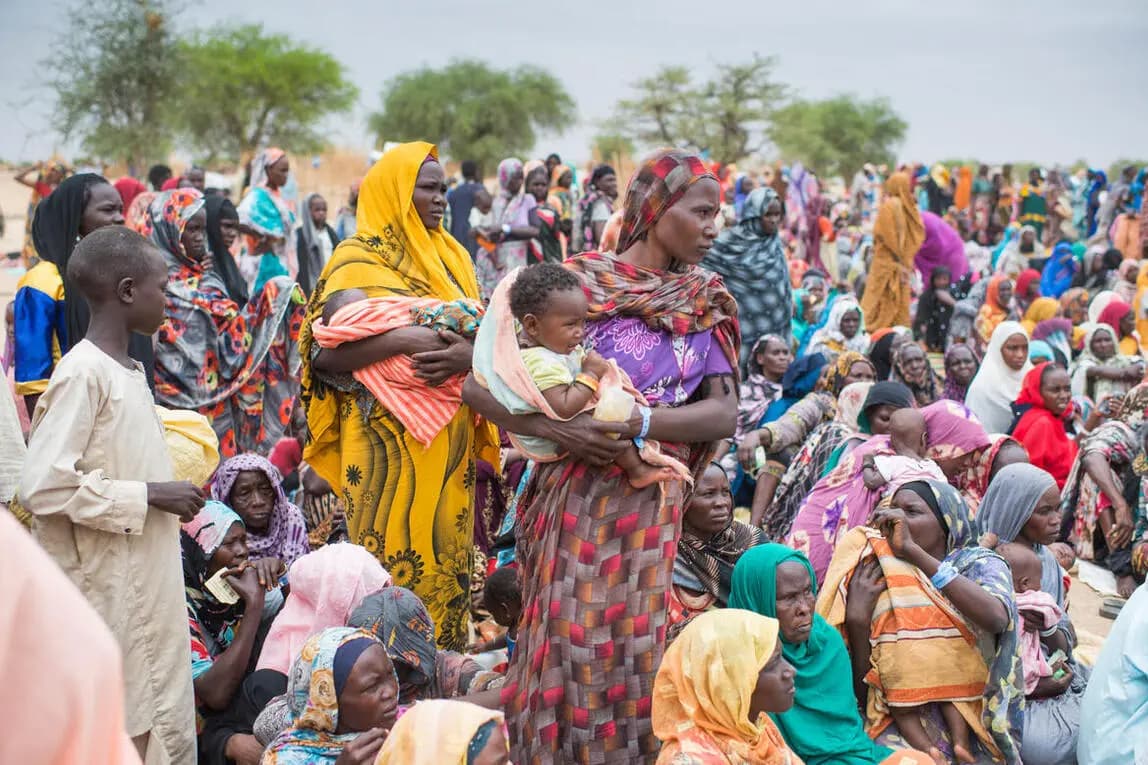
ISLAMABAD: Nearly half of the world’s 304 million international migrants are women, yet many face damaging stereotypes that expose them to violence, discrimination and reduced access to essential services, the UN warned Monday.
A new UN Women policy brief, Migrant Women: Narratives and Perceptions, reports that migrant women are frequently depicted as “promiscuous,” “a burden” or “a threat,” shaping how societies and institutions treat them during crises.
These narratives, the report noted, are emerging across regions, from Latin America to Eastern Europe and the Middle East.
In Colombia, Ecuador and Peru, Oxfam surveys from 2019 and 2023 cited in the UN Women brief show that nearly half of respondents believed migrant women would eventually engage in sex work. Venezuelan women are widely accused of “stealing husbands,” a trope also echoed in Türkiye with Russian women and in Poland with Ukrainian women.
The report also highlights the deadly consequences of stigma. In Saudi Arabia, 37% of all documented suicides involve Ethiopian migrant domestic workers. According to the brief, “narratives about migrant women that are rooted in stigma and discrimination can be potentially life threatening.”
In Ukraine, where the Gender in Humanitarian Action Working Group has documented similar trends, only one in eight people enrolled in the national opioid substitution therapy program is a woman.
Kateryna Hrytsayenko of the Hope and Trust Foundation said women often conceal drug use due to fear of public shaming. Many avoid reporting domestic violence because Ukrainian law allows children to be removed from parents with addiction.
Despite nationwide workforce deficits of about 30%, displaced women and female-headed households in Ukraine continue to face pay gaps, poor job opportunities and greater unpaid care responsibilities, according to labor analysis presented at the same meeting.
The UN brief situates these narratives within a broader global political shift. Over the past decade, it stated, “the world has seen a dramatic rise in right-wing nationalism that deliberately weaponizes migration,” with 2024 elections in more than 60 countries amplifying anti-immigrant rhetoric.
To counter this, UN Women urged governments to “conduct regular perception studies that include sex-disaggregated data on migration.” It also called on media outlets to “center migrant women’s voices as storytellers, not just subjects,” and to avoid framing migration with charged terms such as “crisis” or “invasion.”