


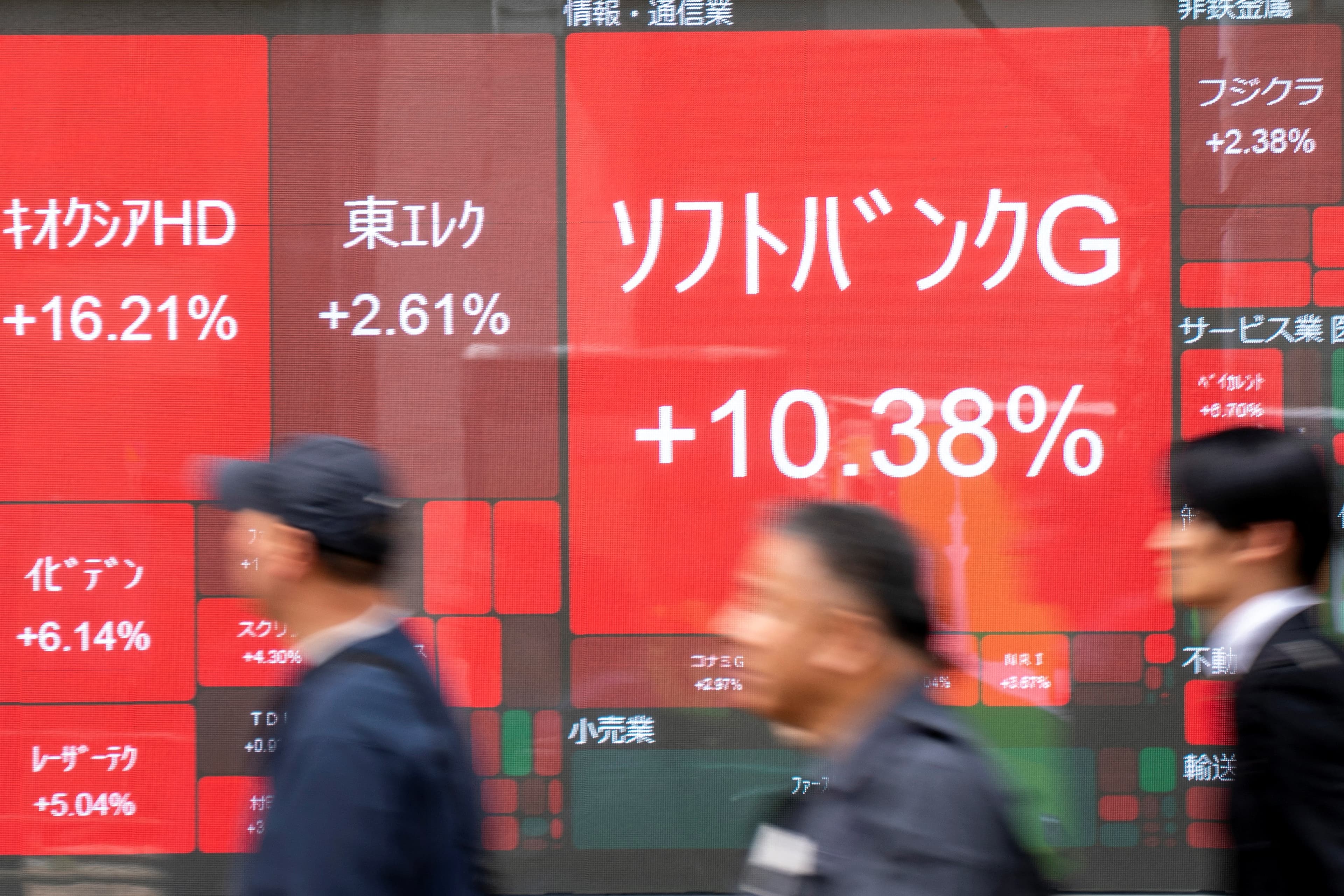
HONGKONG: Stock markets fell Friday as investors awaited news of an extension to the Iran-US ceasefire, while crude prices edged back down following the previous day's rally.
The losses follow a healthy, record-breaking week for equities fueled by hopes the Middle East war, which is heading into a seventh week, could be close to an end after Donald Trump said negotiators were close to a deal.
But worries abound that a shaky truce agreed earlier this month and which ends next week could fall apart and spark a fresh market rout.
The US president on Thursday struck an optimistic tone, telling reporters that "it's looking very good that we're going to make a deal with Iran, and it's going to be a good deal", adding that talks between Washington and Tehran could resume this weekend.
He also claimed Iran had "agreed to give us back the nuclear dust", using his name for the country's enriched uranium stockpile, and the deal would include "free oil" as well as the opening of the Strait of Hormuz.
"We had to make sure that Iran never gets a nuclear weapon," Trump said at the White House. "They've totally agreed to that. They've agreed to almost everything, so maybe if they can get to the table, there's a difference."
Iran has given no public indication it would surrender its stockpile.
However, Defense Secretary Pete Hegseth took a tough line on the situation earlier in the day, telling a Pentagon news conference: "If Iran chooses poorly, then they will have a blockade and bombs dropping on infrastructure, power and energy."
Meanwhile, some Gulf Arab and European leaders fear a long-term agreement could take six months to achieve and called for the truce to cover such a time period, Bloomberg reported.
They wanted the Strait of Hormuz, through which about a fifth of global oil and LNG passes opened immediately and have warned in private of a global food crisis if that is not achieved by next month, the report said.
Fragile sentiment
Stocks fell across the region, with Tokyo, which hit a record high Thursday, among the biggest losers, with Seoul, Hong Kong, Shanghai, Sydney, Wellington, Manila and Singapore also well down.
Taiwan's TAIEX dropped. On Thursday it hit a market capitalization of US$4.14 trillion to top the UK's market capitalization and become the world's seventh biggest, according to Bloomberg data.
London edged lower, Paris edged up and Frankfurt was flat.
That came even after the S&P 500 and Nasdaq enjoyed record closes on Wall Street.
Analysts said traders were heading into the weekend to positioning for any surprise developments.
Oil prices dropped, a day after sharp gains, though both main contracts remain just below $100 a barrel.
There was some support from a 10-day ceasefire agreed between Israel and Lebanon that took effect at 2100 GMT Thursday.
Tel Aviv has sent troops into its northern neighbor since militant group Hezbollah launched rocket attacks in support of Iran last month.
Hezbollah has not officially said if it will recognize the ceasefire but one of its lawmakers told AFP on Thursday that the group would respect it if Israeli attacks on its militants stopped.
Israeli Prime Minister Benjamin Netanyahu said the 10-day ceasefire with Lebanon offered an opportunity for a "historic peace agreement", but insisted that the disarmament of militant group Hezbollah remained a precondition.
Trump said he will invite the countries' leaders to the White House.
"While investors remain buoyed by talks of an extension in the US-Iran ceasefire and an announced Israel-Lebanon 10 day ceasefire, risk sentiment remains fragile as an immediate deal remains unlikely given that the countries remain far apart on key issues," wrote National Australia Bank's Skye Masters.
Fiona Cincotta of City Index, said: "While risks remain particularly around disruptions to key shipping routes such as the Strait of Hormuz markets are increasingly pricing in a scenario where oil prices have peaked unless tensions re-escalate."
But she warned "the outlook remains fragile. A breakdown in diplomacy or renewed escalation could quickly reverse recent gains".
Key figures around 0715 GMT
Tokyo - Nikkei 225: DOWN 1.8% at 58,475.90 (close)
Hong Kong - Hang Seng Index: DOWN 1.2% at 26,087.89
Shanghai - Composite: DOWN 0.1% at 4,051.43 (close)
London - FTSE 100: DOWN 0.1% at 10,584.26
West Texas Intermediate: DOWN 1.0% at $93.73 a barrel
Brent North Sea Crude: DOWN 0.6% at $98.76 a barrel
Euro/dollar: DOWN at $1.1777 from $1.1784 on Thursday
Pound/dollar: DOWN at $1.3507 from $1.3529
Dollar/yen: UP at 159.40 yen from 159.14 yen
Euro/pound: UP at 87.17 pence from 87.09 pence
New York - Dow Jones: UP 0.2% at 48,578.72 (close)