


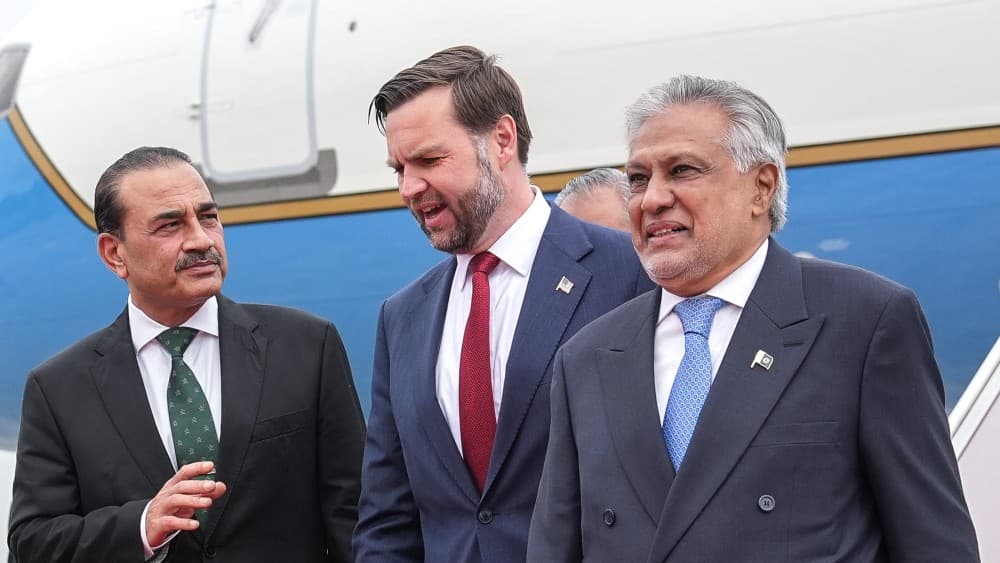
ISLAMABAD: Pakistan’s army chief, Field Marshal Asim Munir, has emerged as an unusually prominent and hands-on mediator in efforts to revive US-Iran diplomacy, with the Financial Times highlighting his distinctive approach and rare access to both sides.
According to the Financial Times, Field Marshal Munir has combined “links to Iran’s security establishment with personal ties” to Donald Trump, positioning himself as a bridge between two deeply mistrustful adversaries.
Trump himself underscored that relationship, describing the Pakistani general as “fantastic.”
A key strength of Field Marshal Munir’s role, the report notes, lies in his ability to engage across Iran’s complex power structure.
Ali Vaez of the International Crisis Group said Munir has “good connections” with the Islamic Revolutionary Guard Corps and “understands their language,” an advantage few mediators possess.
Rather than relying on narrow diplomatic channels, Field Marshal Munir has adopted what experts describe as a “whole-of-the-system approach to mediation.”
By spending extended time in Tehran and engaging both civilian and military leadership, he has sought to ensure that “there’s no power center [in Iran] that feels left out,” Vaez said.
The Financial Times also portrays Field Marshal Munir as a highly active and visible negotiator.
He has remained in direct contact with the White House while simultaneously conducting in-person diplomacy in Iran, reflecting a level of personal involvement that contrasts with more traditional, team-driven negotiations.
His efforts have already yielded limited but notable results.
The report says Trump agreed to extend a ceasefire “citing a request from Munir” and Pakistan’s leadership, a sign of the general’s influence in Washington.
Field Marshal Munir’s emergence has also been supported by improving ties between Washington and Islamabad, allowing Pakistan to step into a role typically played by Gulf states or European powers.
Despite limited prior experience in US-Iran mediation, the Financial Times notes that Pakistan has “surfaced as a surprise lead mediator.”
Even observers cautious about the broader prospects of talks acknowledge the seriousness of the effort.
As Vali Nasr told the newspaper, Pakistani interlocutors are “serious,” reflecting a sustained commitment to keeping negotiations alive.
The report suggests that Field Marshal Munir’s combination of military credibility, political access and an unorthodox, system-wide engagement strategy has made him a distinctive and potentially consequential player in one of the world’s most difficult diplomatic challenges.