


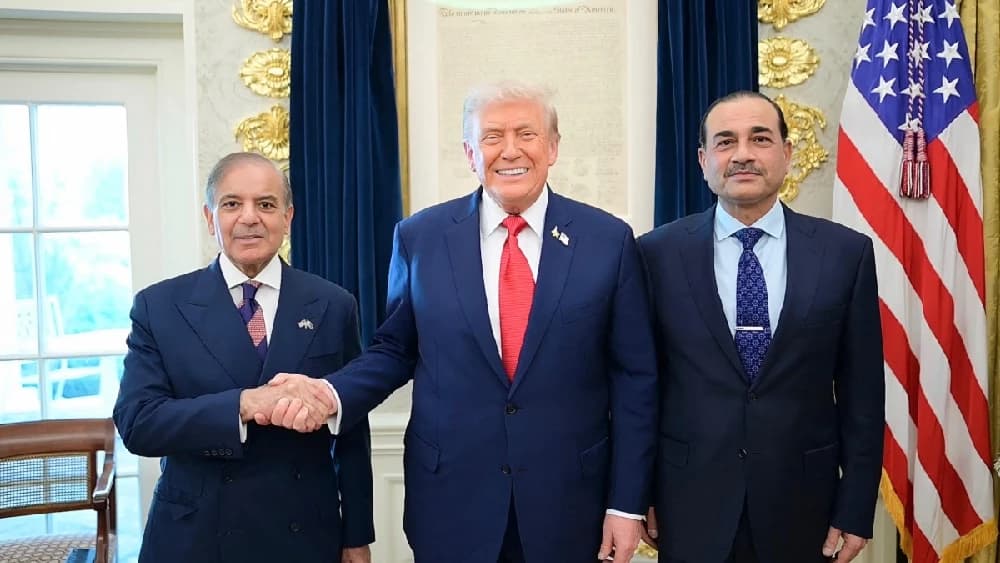
ISLAMABAD: US President Donald Trump has overseen a sharp recalibration of Washington’s South Asia policy, with Pakistan emerging as a renewed strategic partner and India’s long-favored position showing signs of strain, according to an opinion piece published by The Washington Times.
The article, written by retired Brig. Gen. Mark Kimmitt, a former US deputy assistant secretary of defense for Near East and South Asia, says Pakistan has moved “from pariah to partner” within a year, becoming a pillar of Trump’s evolving regional strategy after years of mistrust, diplomatic isolation, and doubts over its counterterrorism commitments.
At the start of Trump’s second term, US-Pakistan ties were described as cold, with Washington viewing Islamabad as unreliable and overly close to China. The prevailing expectation among Trump advisers was to double down on India, strengthen the Quad, and sideline Pakistan.
However, the article argues that concerns about India’s domestic politics, civil liberties record, military performance, and diplomatic rigidity gradually undermined confidence in New Delhi as a regional stabilizer. At the same time, discreet counterterrorism cooperation with Pakistan began to thaw relations.
A turning point came when Trump publicly praised Pakistan’s cooperation earlier this year, surprising Washington’s policy establishment. According to the article, a “virtuous cycle” followed, with incremental cooperation leading to deeper engagement and growing trust.
The opinion piece highlights Pakistan’s military performance during its brief May clash with India as another decisive moment, saying it reshaped perceptions in Washington and restored Pakistan’s image as a serious regional actor.
The article notes that Trump’s role in brokering a ceasefire following the May clash between India and Pakistan further shaped Washington’s reassessment. While India was described as dismissive of Trump’s involvement, Pakistan publicly welcomed and credited his intervention — a contrast the piece says resonated strongly with the US president.
It also notes the rise of Pakistan’s army chief, Field Marshal Asim Munir, as a key interlocutor for the Trump administration. Munir’s White House lunch meeting — the first for a Pakistani military chief — and subsequent high-level engagements with US military leadership are cited as symbols of the shift.
As 2026 approaches, the article says, Pakistan has become central to Trump’s broader strategy, offering Washington channels on Iran, the Middle East, and a counterbalance to China’s regional influence.
“The era of India first in Washington has come to an end,” the article concludes, while cautioning that the shift may not be permanent and will depend on future choices by both Islamabad and New Delhi.