


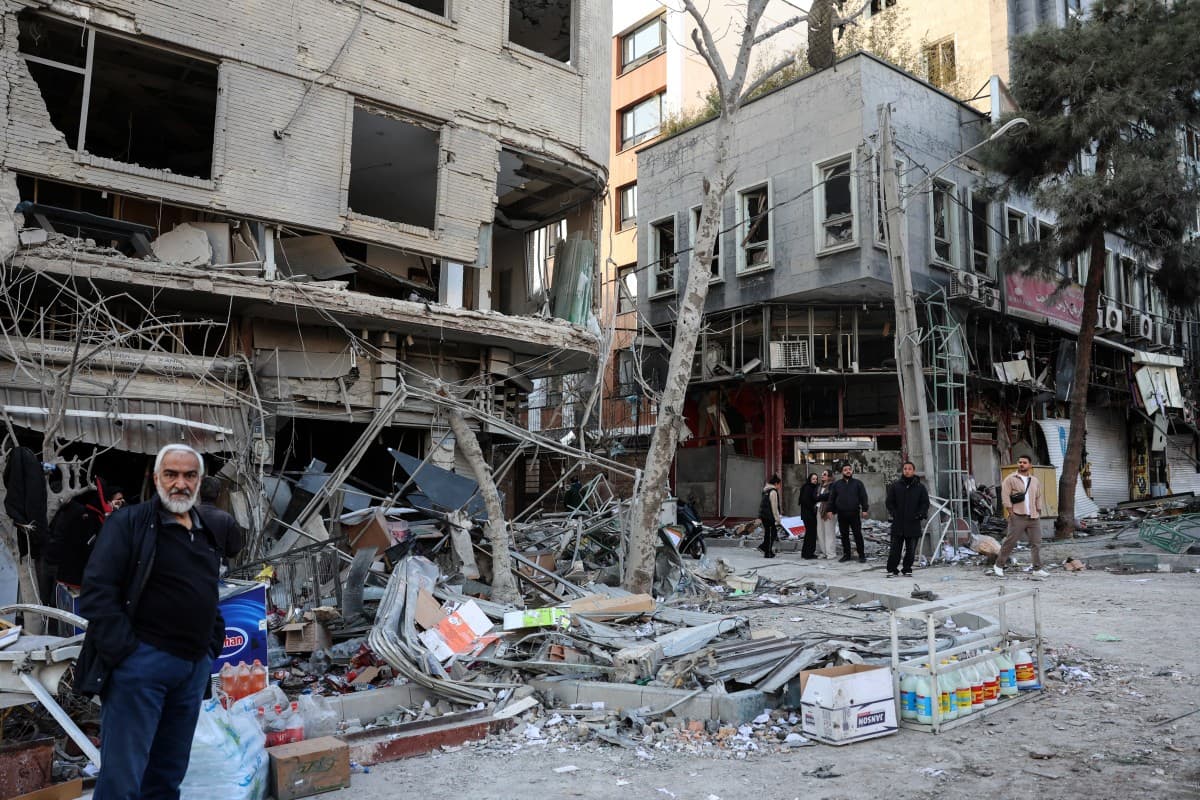
ISLAMABAD: US officials informed congressional staff that there was no intelligence indicating Iran intended to attack United States forces prior to the joint US-Israeli strikes, according to sources familiar with the sessions, CNN reported.
The disclosure by CNN contradicts public statements from the Trump administration claiming a preemptive strike on Iran was needed to prevent an “imminent threat.”
According to CNN, officials acknowledged in closed-door briefings that Iran’s intent was defensive. Sources reportedly said the Pentagon cited Iran’s ballistic missile program and proxy forces as persistent threats but noted these capabilities had existed for years and did not justify a pre-emptive strike.
No intelligence on Iran's readiness to strike US
In an interview with the American news organization, the Vice Chair of the Senate Intelligence Committee, Senator Mark Warner, said he “saw no intelligence that Iran was on the verge of launching any kind of pre-emptive strike against the United States of America.”
The Democrat lawmaker described the administration’s decision as a “war of choice” and questioned the timing of the strike. “The decision to put our service members in harm’s way was entirely based upon the President’s decision, not an imminent threat to America,” he said to CNN.
Administration claims
Senior officials said Saturday that the US launched strikes on Iran because of indications the regime might pre-emptively attack US bases, according to CNN. The sources said there was no intelligence to support that rationale.
Briefers said US forces focused the first two days on destroying Iranian air defenses and command-and-control nodes. Sources said future operations would target ballistic missile launch sites.
Officials said the US has been “burning through long-range precision guided munitions” and would continue until US and Israeli forces were confident of air superiority over Iran.
White House spokesperson Dylan Johnson said the Pentagon “briefed the bipartisan staffs of several national security committees in both chambers for over 90 minutes on the military action in Iran.”
Warnings of potential retaliation
Warner said the president missed an earlier opportunity in January, when millions of Iranians were protesting, to take strategic action. At that time, an aircraft carrier capable of supporting operations was off the coast of Venezuela, and European allies were distracted.
He said eliminating Iran’s supreme leader could benefit regional stability but warned of potential retaliation. “We have had very little visibility into what happens next after the supreme leader is eliminated,” Warner said.
Warner described the Iranian regime as deeply entrenched and likely to resist. “We are seeing just the opening salvos of what could be a sustained war in the region,” he said.
He stated that the US president must justify military actions to Congress and the American people. “When the president commits American forces to a war of choice, he needs to come before Congress and the American people and ask for a declaration of war.”