


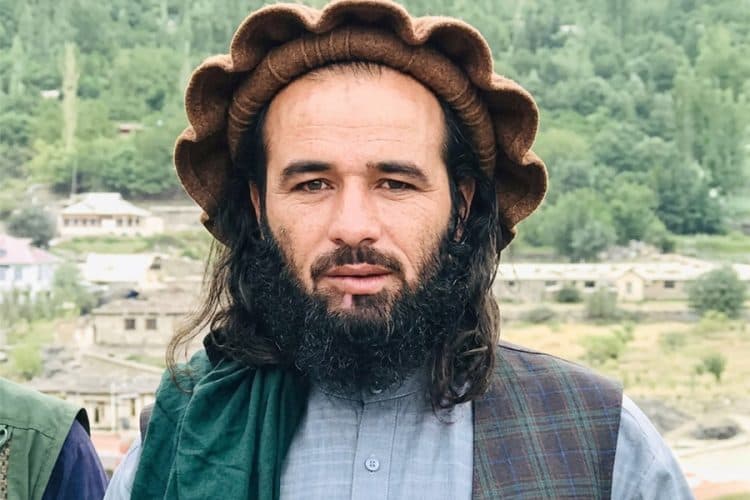
ISLAMABAD: The Afghan Taliban moved to arrest one of its most powerful northern commanders on Sunday, an operation that exposes deep divisions within the group's leadership over control of Afghanistan's gold-rich provinces.
A Taliban convoy of approximately 50 vehicles departed Badakhshan province to apprehend Juma Khan Fatah, the group's deputy governor for Zabul, according to 8AM Media.
The arrest operation exposes divisions within the Taliban leadership. It also reveals how regional commanders have built independent power bases that resist central authority.
Deputy governor breaks ranks
The operation itself demonstrates the splintering. Mawlawi Mahbub Hamid, the Taliban deputy governor for Ghor, refused to join the arrest convoy, according to 8AM Media. He has not reported for duty since Eid al-Adha.
Senior Taliban officials, including Fasihuddin Fitrat, the chief of army staff, and Amanuddin, the governor of Helmand province, were sent to Faizabad to manage the crisis, Amu TV reported. Negotiations with Fatah have failed.
The tensions have already turned violent. According to DID Press, local sources reported escalating clashes between forces aligned with Fatah and Kandahar-backed Taliban factions over mining control in Shiki district, with at least two civilian deaths reported in recent incidents.
The Taliban's central leadership appears intent on crushing the challenge to its authority. According to Afghanistan International, the Taliban dispatched a special unit of approximately 1,000 personnel to Badakhshan to suppress rival networks and rein in local commanders. The unit is led by Ismail Ghaznawi, the Taliban's governor in Badakhshan.
Fatah commands formidable forces. According to DID Press, he claimed to control approximately 10,000 armed fighters across northern Afghanistan, with about 2,500 in Nasi district alone. His influence in the Darwaz region remains significant despite his formal title as deputy governor of Zabul.
Gold mines
The underlying cause is gold. Badakhshan contains some of Afghanistan's most valuable mineral deposits, and control of mining operations has become an increasingly important source of revenue for the Taliban, according to Amu TV.
The Taliban leadership has sought to consolidate control over these assets, creating friction with regional commanders who have profited from managing mines independently.
That conflict intensified in May 2026. According to Afghanistan International, the Taliban detained at least 15 people affiliated with Fatah and other figures close to Mawlawi Amanuddin Mansoor, the Taliban's governor in Helmand. The detainees included Musa Kaka, a commander close to Fatah.
The Taliban also destroyed gold-processing workshops belonging to Amanuddin Mansoor, Afghanistan International reported.
According to Afghanistan International, Abdul Fateh, Juma Fateh's brother, fled with dozens of his men following the start of the Taliban operation. He was a central figure in clashes at a gold mine in the Shiki district.
The arrest attempt suggests that the Taliban leadership views Fatah as a direct threat to unified control.