


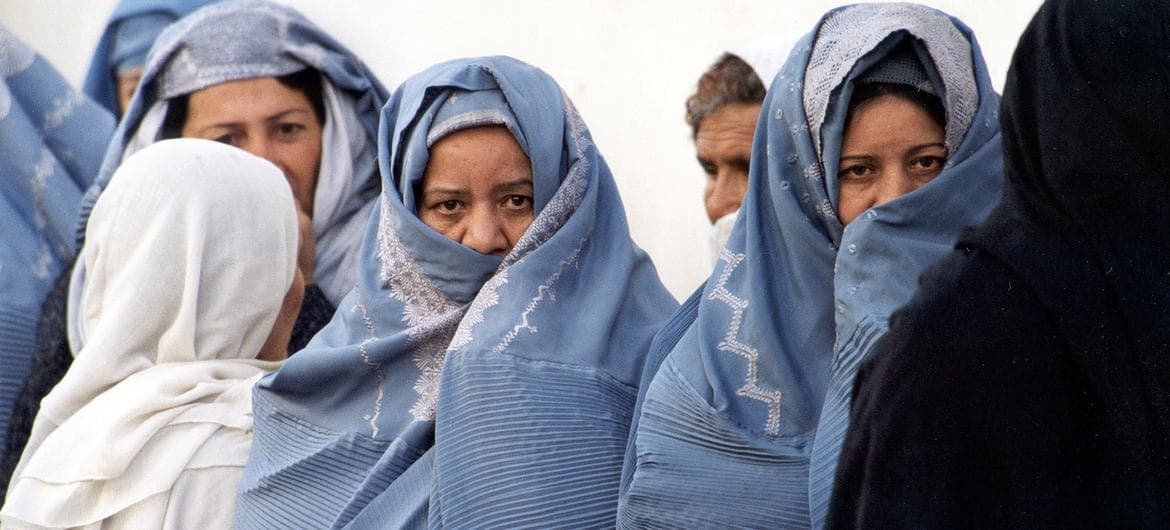
ISLAMABAD: Afghanistan is facing a deepening humanitarian and economic crisis as restrictions on girls’ education and women’s employment continue to erode essential services, according to a new UNICEF analysis.
The report, titled The Cost of Inaction on Girls’ Education and Women’s Labour Force Participation in Afghanistan, highlights a steady decline in female participation across key sectors. Female representation in the civil service dropped from 21% in 2023 to 17.7% in 2025, signaling a shrinking presence of women in public life.
Since the ban on girl's secondary education was imposed in September 2021, more than one million girls have been denied access to schooling beyond the primary level. If the policy remains unchanged through 2030, that number is projected to exceed two million in a country already struggling with one of the lowest female literacy rates globally.
UNICEF Executive Director Catherine Russell warned that the long-term consequences could be severe. She emphasized that Afghanistan risks losing a generation of professionals, including teachers, healthcare workers, and social service providers, who are essential to maintaining basic public services.
The report describes a “dual crisis” in which the country is not only losing trained female professionals but also preventing the next generation from entering these fields. By 2030, Afghanistan could face a shortage of up to 20,000 women teachers and 5,400 healthcare workers.
The education sector is already under strain. The number of female teachers in basic education fell by more than 9%, dropping from nearly 73,000 in 2022 to around 66,000 in 2024. This decline disproportionately affects girls, who are more likely to attend and remain in school when female teachers are present.
Healthcare services are also at risk. In a society where cultural norms often limit interactions between women and male healthcare providers, a reduction in female medical staff could significantly restrict access to care. UNICEF warns this could lead to worsening maternal, newborn, and child health outcomes.
Beyond social impacts, the restrictions are also taking an economic toll. Afghanistan is losing an estimated $84 million annually in economic output due to reduced participation of women in education and the workforce. These losses are expected to increase if current policies remain in place.
Despite the challenges, UNICEF continues to support education initiatives across the country. In 2025, more than 3.7 million children in public schools received emergency assistance, while 442,000 children two-thirds of them girls benefited from community-based learning programs. The agency has also contributed to the construction or rehabilitation of 232 schools.
Russell stressed that denying girls access to education not only limits individual potential but also undermines the country’s future. She called on authorities to lift restrictions and urged the international community to remain committed to supporting Afghan girls’ right to learn.
The report concludes that without urgent action, Afghanistan risks long-term damage to its education system, healthcare services, and economic stability consequences that could affect generations to come.