


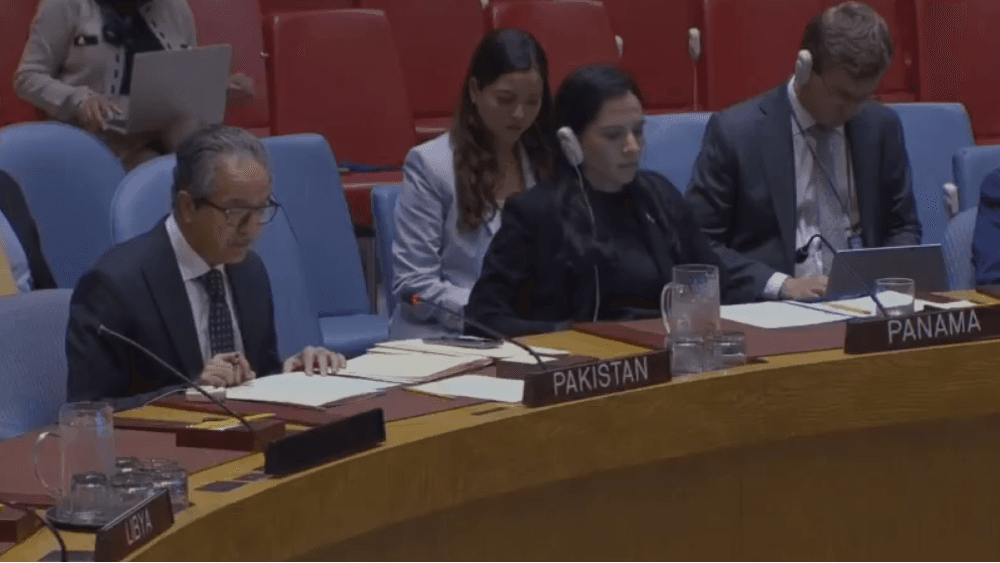
ISLAMABAD: Pakistan has reiterated its steadfast support for the sovereignty, independence, territorial integrity, and national unity of Libya, emphasizing that a Libyan-led and Libyan-owned political process remains the only viable path toward lasting peace, stability, and reconciliation in the country.
Delivering Pakistan’s statement during the United Nations Security Council (UNSC) briefing on Libya and the International Criminal Court (ICC), Ambassador Asim Iftikhar Ahmad, permanent representative of Pakistan to the UN, thanked ICC Deputy Prosecutor Nazhat Shameem Khan for presenting the Prosecutor’s 31st report pursuant to Security Council resolution 1970 (2011), said a statement shared by Pakistan’s mission to the UN on X on Saturday.
He took note of the developments outlined in the report, including progress in investigative activities, cooperation with Libyan authorities, and engagement with international and regional partners.
Ambassador Ahmad also noted the commencement of pre-trial proceedings following the surrender of El Hishri to the Court — the first surrender of a suspect to the ICC in the Libya situation.
He underscored that accountability efforts should reinforce the broader objective of peace and reconciliation in Libya.
Ambassador Ahmad stressed that consistency, objectivity, fairness, and non-selectivity are essential for maintaining the legitimacy and credibility of international accountability mechanisms.
Credible, impartial accountability
While stating that Pakistan is not a party to the Rome Statute, the ambassador reaffirmed Pakistan’s commitment to credible and impartial accountability for serious international crimes through the uniform application of international law.
He further emphasized the importance of constructive cooperation between the ICC and Libyan authorities in implementing Security Council resolution 1970, while fully respecting Libya’s judicial sovereignty, national institutions, and legitimate concerns.
The ambassador underlined that national ownership and capacity-building should remain central to all accountability efforts.
Pakistan also expressed support for all Libyan-led initiatives aimed at preserving judicial unity, strengthening constitutional oversight, upholding the rule of law, and advancing institution-building in the country.
In conclusion, Ambassador Ahmad reiterated Pakistan’s support for all efforts aimed at promoting peace, stability, reconciliation, and durable institution-building in Libya.