


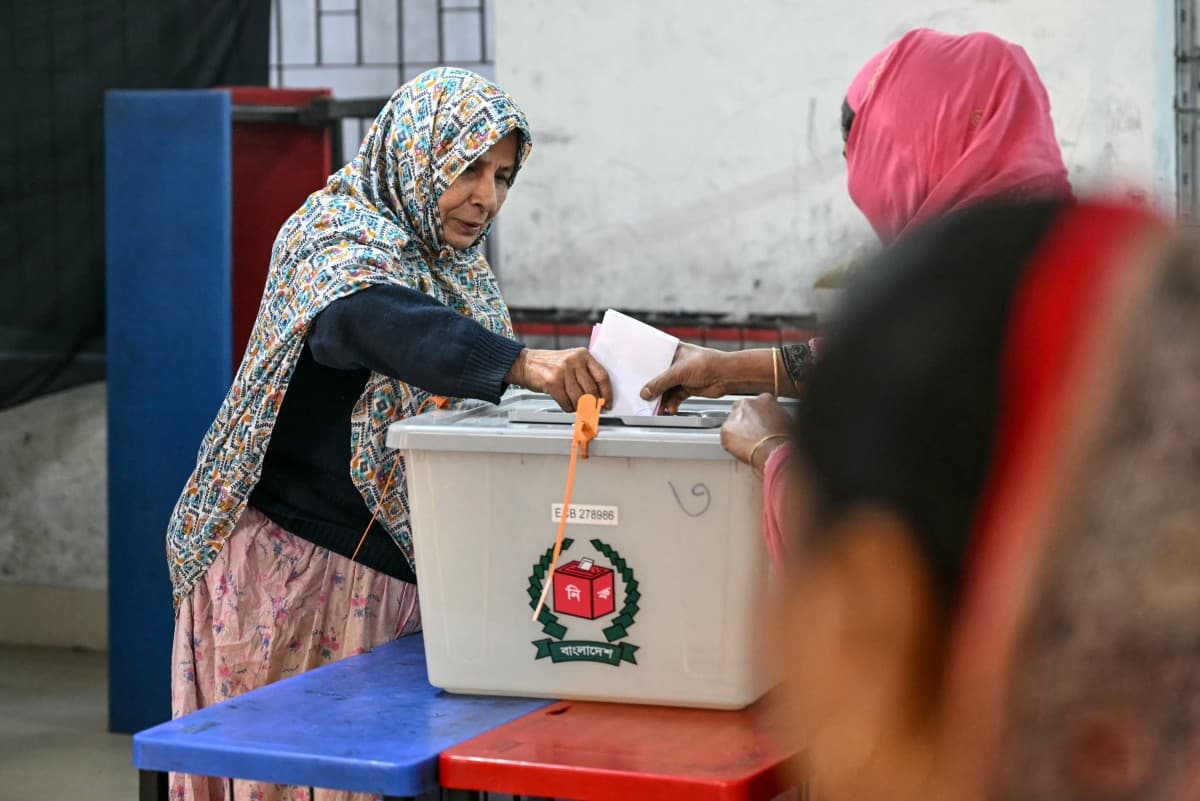
DHAKA: Bangladeshi voters have overwhelmingly endorsed the July National Charter, approving a wide-ranging package of constitutional reforms in a nationwide referendum held alongside the country’s landmark parliamentary election.
The Election Commission announced on Friday that 48,074,429 voters supported the reforms, while 22,565,627 voted against, with an overall turnout of 60.26% across 299 constituencies.
Senior Secretary of the Election Commission Akhtar Ahmed formally declared the results at a briefing at 2:00pm, calling the vote a decisive public mandate for structural political change.
“The referendum has been concluded, and the ‘Yes’ vote has secured a clear victory,” Ahmed said.
Reform blueprint approved
The referendum placed a single, comprehensive question before voters, asking whether they consented to the July National Charter (Constitutional Reform) Implementation Order, 2025, and the reforms recorded within it.
The charter, drafted in the aftermath of the 2024 student-led uprising, outlines a roadmap to prevent a return to authoritarian rule and reshape Bangladesh’s political system.
Among the key provisions approved by voters are:
Formation of a bicameral parliament, including a 100-member upper house allocated proportionally based on national vote share
Limits on prime ministerial tenure and an expansion of presidential powers
Stronger judicial independence and broader constitutional rights
Increased representation of women in parliament
Election of the deputy speaker and parliamentary committee chairs from the opposition
Mandatory implementation of 30 consensus reforms by parties forming the next government
Under the charter, constitutional amendments would require approval from both chambers of parliament.
Binding political commitment
The referendum question explicitly stated that approval would make the charter binding on parties that win national elections, obligating them to implement the agreed reforms.
The vote marks a major pillar of the transition overseen by interim leader Muhammad Yunus, who assumed office after the fall of former prime minister Sheikh Hasina and described the system he inherited as “completely broken.”
The referendum was held simultaneously with the 13th National Parliamentary Election, Bangladesh’s first since the uprising that ended Hasina’s 15-year rule.
While some political parties had expressed reservations ahead of the vote, election officials said the referendum was conducted peacefully, with results reflecting broad national participation.
The approved reforms will now move to the newly elected parliament for formal ratification, setting the stage for the most significant constitutional transformation in Bangladesh in decades