


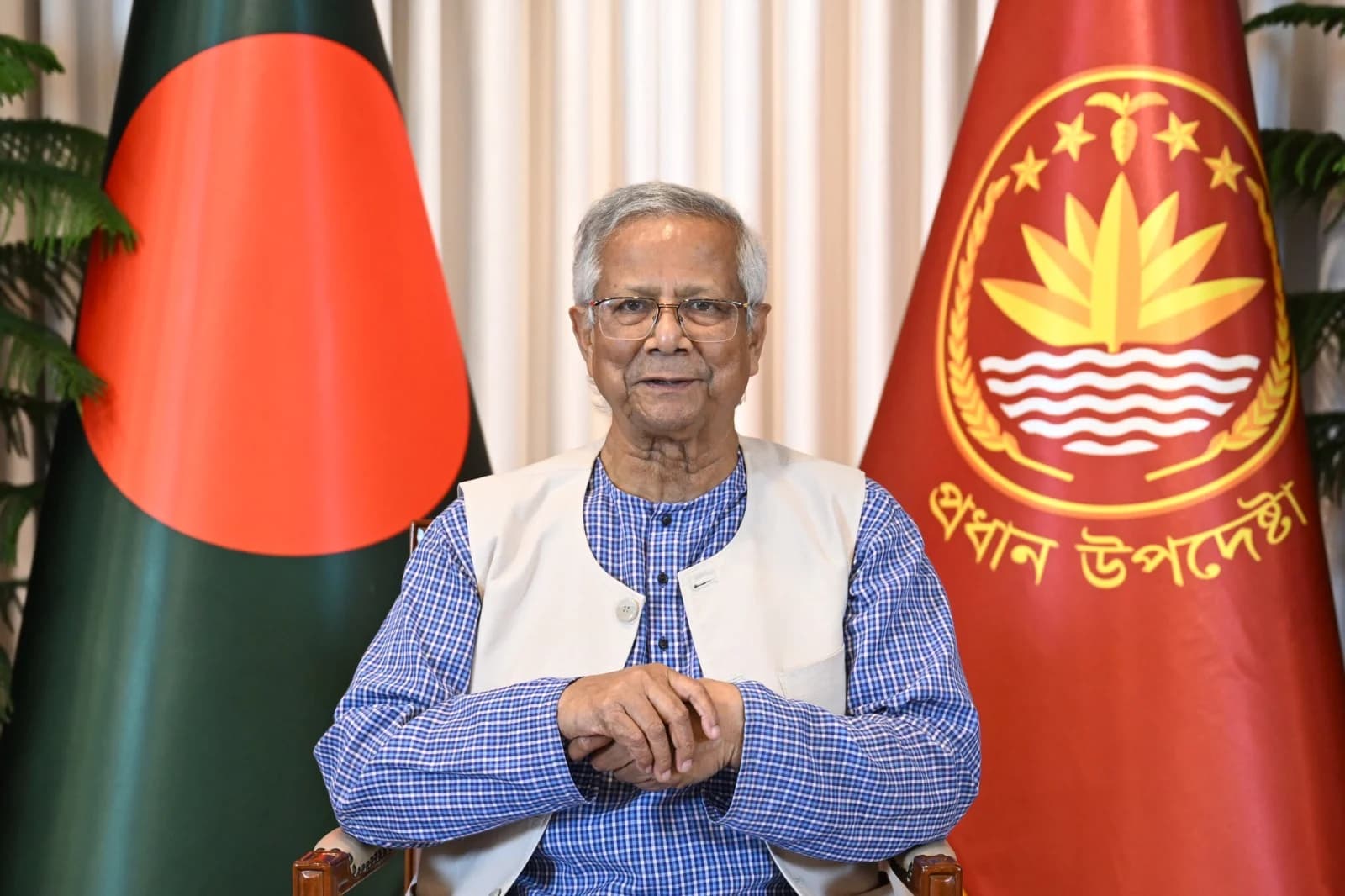
ISLAMABAD: Bangladesh’s Chief Adviser Professor Muhammad Yunus has called on citizens to vote “without fear and with courage” in Thursday’s 13th Jatiya Sangsad (parliamentary elections) and a landmark referendum on the July National Charter, describing the twin votes as a historic turning point for the country’s democratic future.
In a televised address to the nation on Tuesday evening, Yunus said the polls mark a decisive moment following a long struggle against authoritarianism and the July mass uprising that reshaped the political landscape.
“Some days come in the life of every nation that have far-reaching significance,” he said, adding that voters will not only elect a new government but also determine the future structure of the state through the referendum.
The Chief Adviser said 51 political parties — the highest number in the country’s history — and more than 2,000 candidates, including independents, are contesting the election. He termed the campaign period “remarkably peaceful” compared to previous polls, while expressing sorrow over isolated incidents of violence that claimed lives.
“This election is not just another routine poll but the first national election following a mass uprising,” Yunus said. “Through your ballots, the demands once voiced on the streets will now be expressed constitutionally.”
He urged young and women voters, many of whom he said were deprived of meaningful voting opportunities for 17 years, to treat the ballot as their “first true political statement.” A single vote, he added, would not only choose a government but respond to years of “silence and unchecked fascism.”
Massive security, record staffing
Authorities have mounted one of the largest election operations in Bangladesh’s history.
According to the Election Commission (EC), a total of 7,85,225 officials will be deployed nationwide to conduct the polls at 42,779 polling centers. The workforce includes 69 returning officers, 598 assistant returning officers, 42,779 presiding officers, 2,47,482 assistant presiding officers and 4,94,964 polling officers.
In parallel, security has been significantly reinforced. The Bangladesh Army has deployed at least 150,000 troops across the country ahead of the February 12 vote to ensure public safety. Overall, around 900,000 personnel from the military, paramilitary and law enforcement agencies are in the field, with deployments set to continue for seven days after the elections.
The security apparatus includes armoured vehicles, unmanned aerial vehicles (UAVs), electronic surveillance systems, explosive ordnance disposal (EOD) teams and specialised intelligence and reconnaissance units.
Yunus said law enforcement agencies, supported by armed forces personnel vested with magisterial powers, would act firmly against violence, intimidation, vote manipulation or rumour-mongering — both offline and online.
Technology is also being used extensively, with CCTV cameras installed widely, body-worn cameras for polling officials, and drones deployed to monitor sensitive areas.
Referendum to shape future reforms
Alongside parliamentary elections, voters will decide on the July National Charter, a reform document drafted after nine months of consultations with more than 30 political parties through the National Consensus Commission.
Yunus described the charter as a roadmap for political stability, accountable governance, economic restructuring and equal rights, saying its implementation requires direct public endorsement.
“Your every vote here will lay the foundation for the future state system. Its impact will last for many generations,” he said.
Dismissing rumours that the interim administration would delay transferring power, Yunus assured citizens that the elected government would assume office promptly once the results are finalised.
Calling on voters to head to polling stations “with hope, not fear,” he said: “The key to the country is in your hands. Use that key properly.”
Polling for both the general election and referendum will be held on February 12 nationwide.