


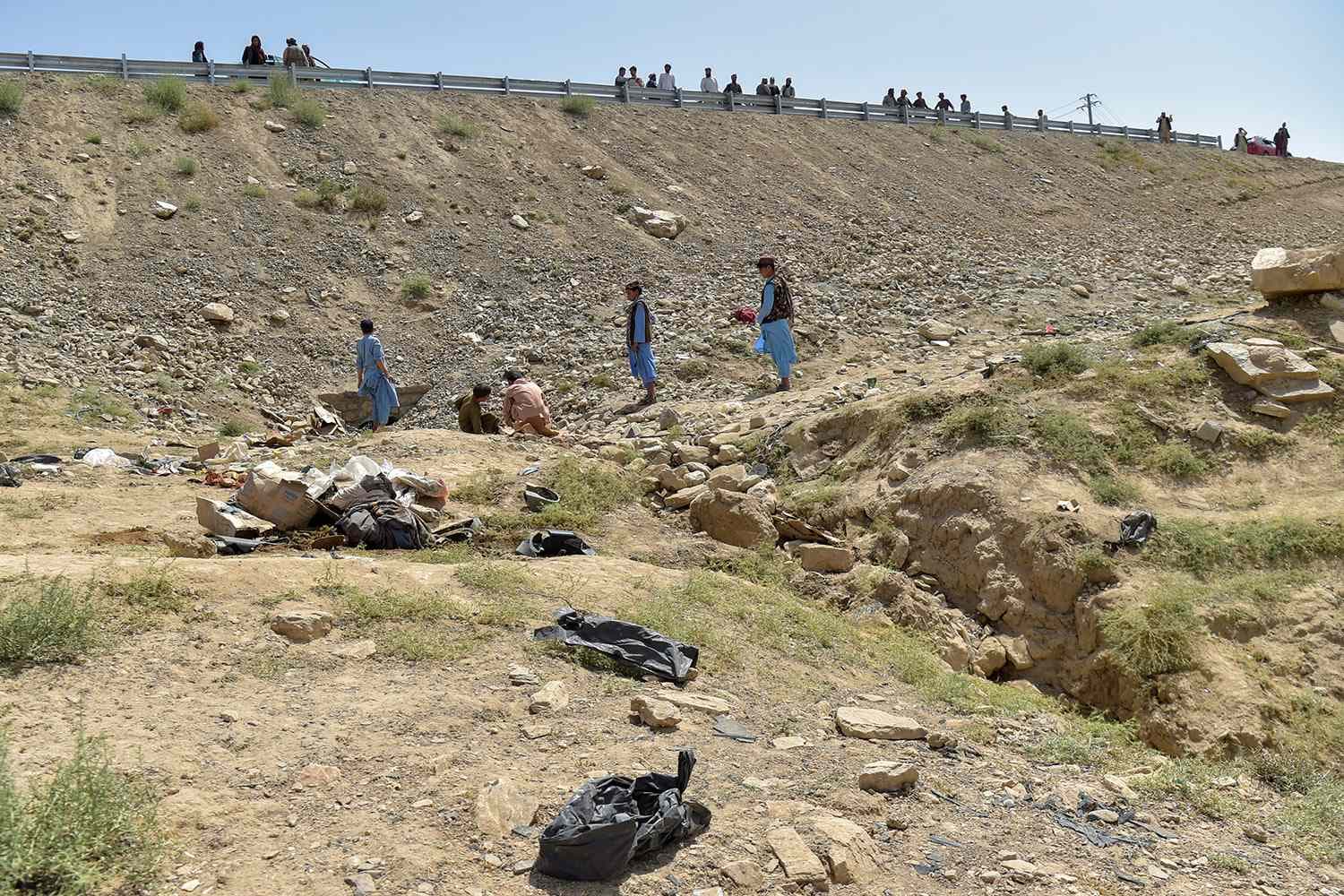
ISLAMABAD: A passenger bus collided with a truck in eastern Afghanistan's Ghazni province on Saturday night, killing two commuters and injuring 29 others, Xinhua reported, quoting the provincial police spokesperson, Khalid Sarhadi.
According to the Chinese state media, the crash occurred due to reckless driving, with some of the injured in critical condition.
The collision is the latest incident to expose the south Asian country's deteriorating road infrastructure.
According to the provincial police spokesperson, five people died in a similar road accident in the northern Kunduz province on Friday.
Three others were killed in Baghlan province on Thursday, the Xinhua report said.
Dilapidated highways, speeding, and the use of aging vehicles have transformed Afghanistan's roads into one of the deadliest transport corridors globally.
According to the World Health Organization (WHO), Afghanistan recorded approximately 24 road crash fatalities per 100,000 population in 2021, the highest rate in Central and West Asia.
As per WHO data, this translates to a fatality every 24 minutes on Afghan roads.
The crisis extends beyond immediate fatalities. Roads in remote areas remain notoriously difficult to navigate, with narrow unpaved routes limiting access to markets, schools, and health facilities.
According to the United Nations Development Program, poor road conditions have contributed to frequent accidents that claim lives and isolate communities across the country.
According to estimates cited in the Asian Transport Observatory road safety profile, road crash fatalities cost Afghanistan approximately $1 billion in 2021, equivalent to 8% of the nation's GDP.
An annual investment of just $50 million could save approximately 4,000 lives annually, the observatory reports.
The pace of road deaths shows no signs of slowing. Between 2016 and 2021, Afghanistan experienced a 6.4% annual increase in road fatalities while the Asia-Pacific region saw improvements, according to WHO data.
Without intervention, the gap between current trends and Afghanistan's commitment to halve road deaths by 2030 will only widen.