


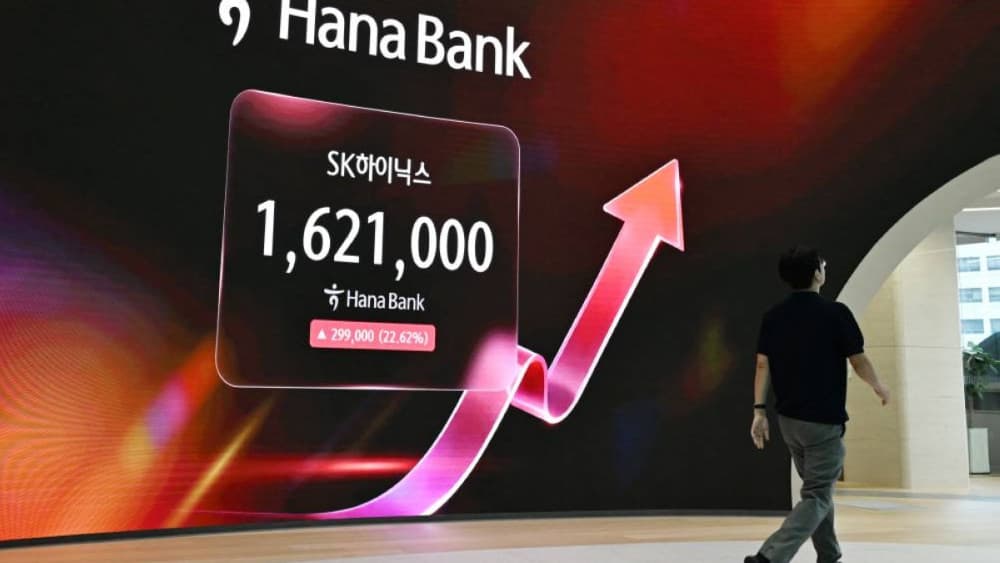
HONG KONG: Asian equities climbed again Wednesday, tracking another record on Wall Street, as tech firms enjoyed a recent revival after a month-long rout and with confidence boosted by the Trump administration touting an imminent deal to reopen the Strait of Hormuz.
After spending four weeks unloading their positions over fears that the AI-led rally had come to a shuddering halt, investors were piling back into the sector to extend a rebound that began in breathtaking fashion Friday.
Strong earnings and positive forecasts from market heavyweights including Amazon, Microsoft and data-mining giant Palantir have injected fresh interest in tech, helping overcome worries about massive spending on artificial intelligence and when that will see a return.
All three main indexes on Wall Street chalked up gains Tuesday, with the S&P 500 and Dow hitting records – while there were also new peaks for Paris, Milan, Frankfurt and Madrid.
That optimism filtered through to Asia where Seoul – which has been at the forefront of extreme volatility in the tech sector over the past month – climbed 3.8%.
Tokyo, which has also benefited from the AI boom, was up more than 3%, while Taipei added 2.9%.
There were also gains in Hong Kong, Shanghai, Sydney, Wellington, Mumbai and Jakarta.
London rose in the morning while Paris and Frankfurt hit fresh record highs.
The gains come as a relief to traders after a wave of tech selling, which was also linked to worries of higher US interest rates, saw Seoul fall more than 40% from its June record high.
The losses were led by chipmakers SK hynix and Samsung, which collapsed up to 50% from their own peaks.
Friday's rebound – the Kospi surged almost 18% and SK hynix 30% – came on the back of bargain-buying and positive earnings among other things.
Gains have been helped this week by hopes that the US-Iran truce will be reset after weeks of tit-for-tat strikes.
Crude prices tumbled more than 5% Tuesday – and are down more than 10% this week – after US Treasury Secretary Scott Bessent said a deal could be reached imminently with Tehran on re-opening the Strait of Hormuz to shipping traffic.
He told CNBC television that "I think there is a chance we may have a deal today or tomorrow to open the strait" – a key sticking point in ceasefire talks.
"I'd expect the energy prices to settle back down, which, as I said, will be good for the entire world."
President Donald Trump later warned Iran would be "hit very hard" unless the waterway was reopened "very soon".
His comments to Fox News came as Axios reported that the United States, Iran and Oman were nearing an interim deal to reopen the strait, which Washington was hoping to announce Wednesday.
The Brent and West Texas Intermediate crude contracts edged up Wednesday in early European trade.
"The past few sessions have been pivotal for financial markets, largely thanks to signs of diplomatic progress around the Strait of Hormuz," wrote Julian Pineda at City Index.
He said officials' comments regarding progress in talks "has had a direct impact on market confidence. With geopolitical uncertainty easing, WTI crude has slipped below the $80 mark, helping to dial back fears of global inflation.
"This, in turn, eases concerns about aggressive central bank rate hikes, clearing the way for risk appetite to recover."
And IG Markets' Tony Sycamore said "the balance of risks appears to be becoming more skewed back to the upside".
The drop in oil prices helped ease concerns about inflation and saw traders lower their expectations for the Federal Reserve to hike interest rates, according to Bloomberg.
Investors are keeping tabs on the release this week of crucial US jobs data that should provide them with a fresh idea about the state of the economy, and guide the Fed as it considers its next move.