



PESHAWAR: Nearly 300 stone steps wind up a hill outside Mardan, a city in northwestern Pakistan. With each step, the sounds of rickshaws and market stalls fade, replaced by silence at Takht-i-Bahi, one of the world's best-preserved Buddhist monastic complexes.
For nearly 2,000 years, the monastery drew scholars and knowledge seekers. Today, pilgrims from across Asia converge on this forgotten ancient site. Once a center of Buddhist learning, the UNESCO World Heritage Site continues to welcome monks from Nepal, Thailand, Sri Lanka and South Korea, who climb the same hillside to pray.
Known as the "Throne of the Springs," Takht-i-Bahi takes its name from the hill's flat summit and the natural springs that once supplied the monastic community, according to local conservation experts.
Built primarily during the Kushan dynasty, the complex flourished from the 1st century BCE through the 6th century CE.
The monastery became a center of intellectual exchange, attracting scholars and disciples who traveled across Asia to study Buddhism. Many passed through neighboring centers, including Shahbaz Garhi and Charsadda, before arriving at Takht-i-Bahi. They later returned home, carrying the teachings of Buddha to their own lands.
The ruins reveal the layout of a carefully organized monastic community. According to site authorities, the Main Stupa Court served as its spiritual center and once housed sacred relics connected to Gautama Siddhartha.
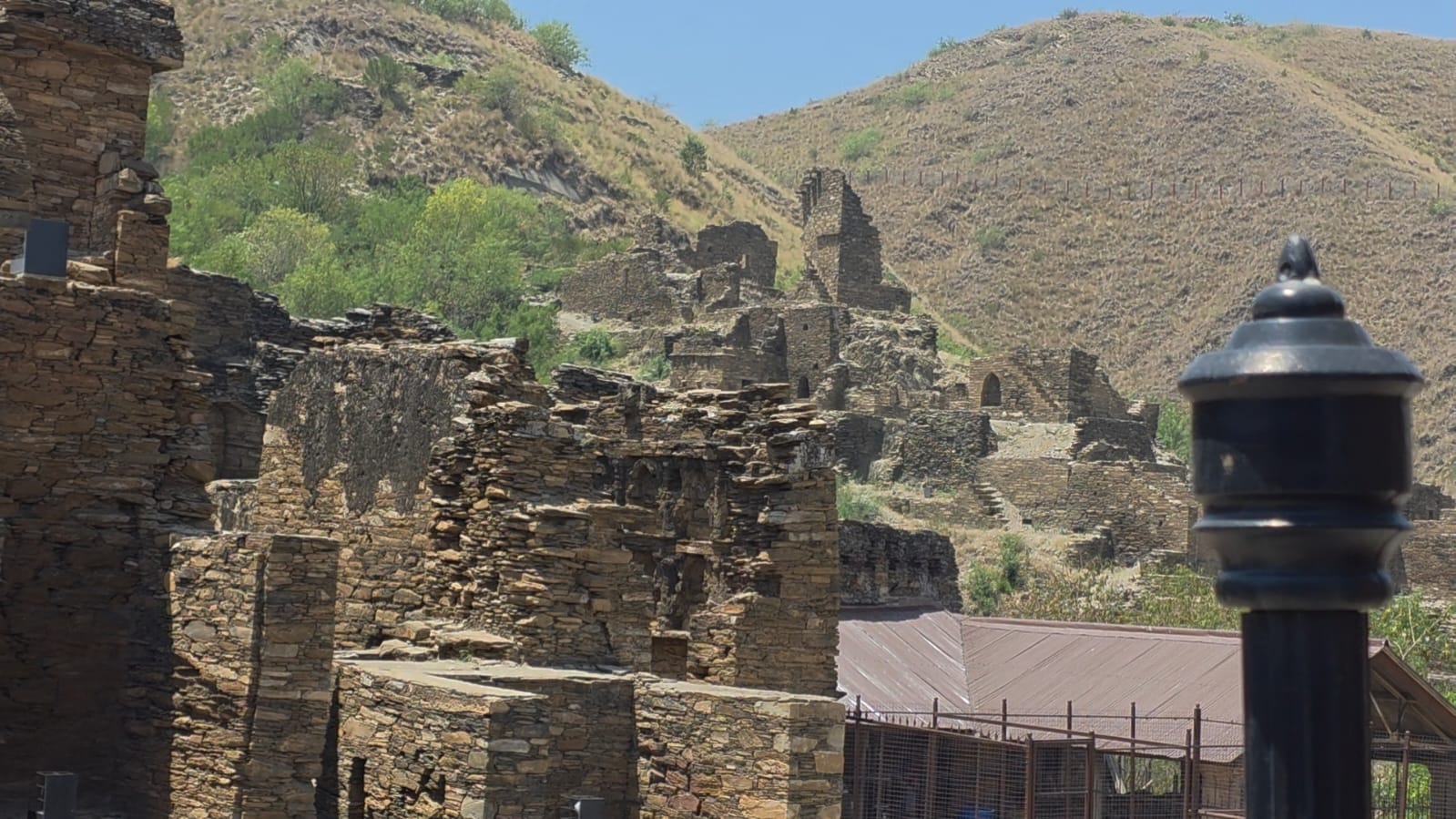
Surrounding it are 35 commemorative stupas, 34 square, one circular and one octagonal. Monastic cells encircle the court, where walls once displayed depictions of Buddha's life. Those artworks are now housed at the Peshawar Museum.
Below ground, meditation cells provided secluded spaces where monks prayed in darkness. Assembly and conference halls hosted theological debates, while interconnected residential quarters accommodated students studying at the monastery.
The complex remained active until the 7th century, when the White Huns inflicted heavy damage. Following the arrival of Islam in the region, the site gradually fell into obscurity before being buried beneath centuries of earth until its rediscovery in the 19th century.
Today, Pakistan's Department of Archaeology oversees conservation work at Takht-i-Bahi and consults international experts when necessary.
.jfif)
Mian Wahab Shah, who oversees the Takht-i-Bahi Archaeological Site for the Department of Archaeology in Khyber Pakhtunkhwa, estimates that only about 30% of the complex has been fully excavated. He stated that more than 70% of the ruins remain beneath the earth.
Artifacts recovered from the site, including sculptures, beads and coins, are displayed at the Peshawar Museum, the Calcutta Museum, the British Museum and other institutions around the world.
According to site authorities, Takht-i-Bahi receives about 10,000 to 12,000 domestic visitors and around 500 international visitors each month. They follow the same stone paths once traveled by monks and scholars who came to study Buddhism: climbing a hillside that has welcomed generations of visitors for nearly two millennia.