


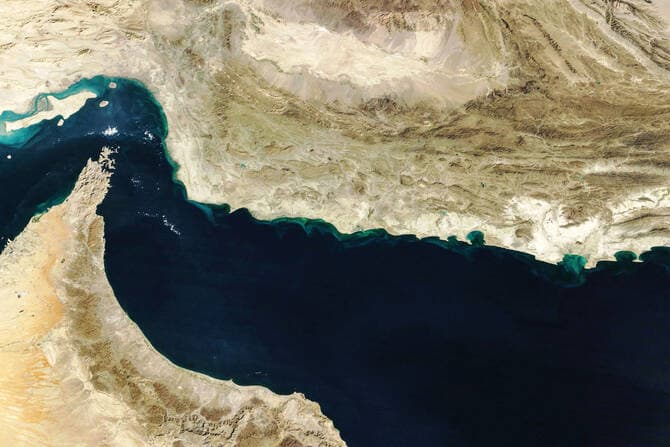
ISLAMABAD: The closure of the Strait of Hormuz by Iran has triggered a severe disruption to global energy supplies, with Asia expected to suffer “the most,” global maritime analytics firm Kpler told AFP.
The strait, a narrow waterway between Iran and Oman through which nearly a fifth of the world’s crude oil and significant volumes of gas flow, has been effectively shut to commercial shipping since US-Israeli strikes on Iran escalated into a broader regional conflict.
The crisis has rapidly evolved into a global energy shock, with International Energy Agency Executive Director Fatih Birol describing it as “the greatest global energy security threat in history.”
At the same time, the standoff between Tehran and Washington continues to deepen. US President Donald Trump has warned that reopening the Strait of Hormuz remains a key condition for any ceasefire, while Iran has signaled it will maintain pressure over the strategic route.
Asia takes the brunt
“We think Asia will, for now, be the ones suffering the most,” said Kpler president Jean Maynier.
“There is almost no crude oil arriving… and inventories are being depleted,” he added.
Around 84% of oil passing through the Strait of Hormuz is destined for Asia, leaving major economies such as China, India, Japan and South Korea particularly exposed.
China alone imported 5.4 million barrels per day through the strait in the first quarter, while India relied on roughly 2.1 million barrels per day, underscoring the scale of dependence on Gulf energy flows.
Experts say that while short-term buffers exist, including elevated global inventories, spare OPEC capacity and US shale output, a prolonged closure would still significantly disrupt supply access.
“A full closure… would still impact the accessibility of a major part of this spare production capacity,” analysts noted.
Saudi Arabia and the UAE have limited infrastructure to bypass the strait, but their combined capacity, around 2.6 million barrels per day, falls far short of offsetting the disruption.
Europe, US less exposed
While global prices have surged, Europe and the United States are comparatively less vulnerable.
However, secondary effects are emerging. LNG shipments are being redirected toward Asia, raising concerns over shortages in Europe, while energy prices are expected to remain elevated.
Even so, analysts warn that no region is fully insulated from the shock.
Leaders under pressure
The crisis is placing growing pressure on global leaders as markets react to prolonged uncertainty.
President Trump has alternated between threats and diplomacy, warning of potential strikes on Iran’s energy infrastructure while also signaling openness to negotiations. Iran, meanwhile, has denied direct talks while continuing to assert control over Hormuz.
G7 ministers have pledged to take “any necessary measures” to stabilize markets, while emergency oil stock releases are being considered to ease supply constraints.
Analysts say the duration of the disruption has caught markets off guard.
“What is surprising is the length of this event… especially in Asia, the crisis that we have now with energy,” Maynier said.
“It’s really bad for Asia and we are not optimistic if the event continues.”
The closure of Hormuz highlights how the conflict has moved beyond military confrontation, turning critical trade routes into strategic pressure points — with Asia now at the center of the global economic fallout.