


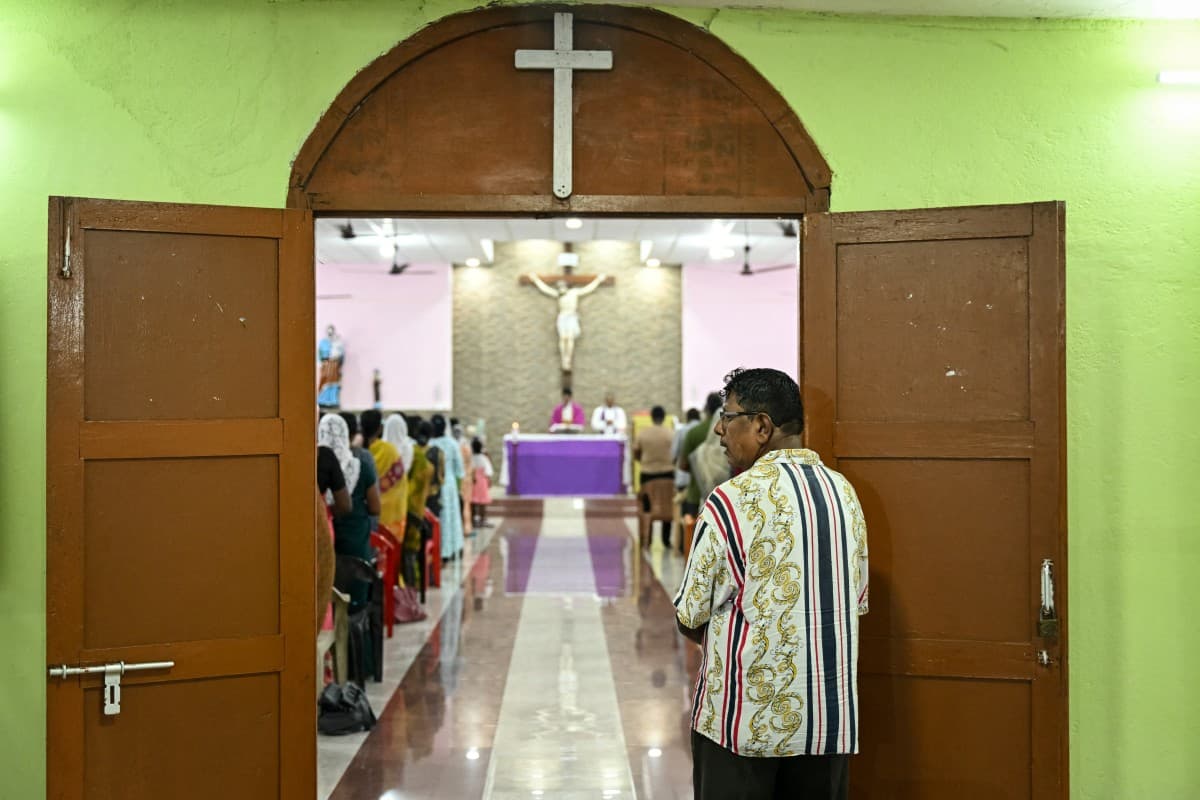
ISLAMABAD: India's federal government would gain the power to take control of Catholic and other minority institutions' property, funds, and assets under a new bill that the country's Catholic bishops have condemned as unconstitutional and a threat to religious freedom.
According to a press release issued by the Catholic Bishops' Conference of India (the apex body representing the country's Roman Catholic clergy) on Friday, the Foreign Contribution Regulation Amendment Bill poses a direct threat to constitutionally protected minority freedoms.
The bill, tabled in the Lok Sabha, India's lower house of parliament, seeks to amend the existing law that governs how Indian organizations receive and use funding from abroad.
As per the CBCI, the amendment would allow the federal government, acting as the licensing authority under the law, to deny or cancel an organization's registration and subsequently transfer control of its institutions, funds, properties, and assets to a newly proposed government authority.
The Conference described such provisions as "unacceptable" and raised concerns over fairness, transparency, and accountability.
The CBCI also objected to how the bill was introduced. According to the press release, it was tabled without broader debate and over the objections of opposition lawmakers. The Conference called for wider consultation on measures affecting fundamental rights.
Provisions allowing the government to assume control of foreign funds and assets when an organization's registration lapses are "undemocratic, unconstitutional, and contrary to the principles of natural justice," the statement noted.
The Conference urged the Indian government to “withdraw all contentious provisions” and ensure “the constitutional rights of all citizens,” particularly religious minorities, remain intact.
Rising violence against Christians
Reports from the United Nations, Amnesty International, and Human Rights Watch show violence, legal restrictions, and discrimination against Christians in India have increased over the past two decades. The United Christian Forum recorded more than 745 incidents of persecution in 2024, averaging over two per day.
Vigilante mobs frequently attack prayer meetings and churches, often citing alleged "illegal conversions." States including Uttar Pradesh and Chhattisgarh report the highest numbers of violent incidents.
In 2023, UN experts raised concerns over ethnic and religious violence in Manipur, where the predominantly Christian Kuki minority faced killings, sexual assaults, and the burning of hundreds of churches.
Legal restrictions target Christians
Legal and administrative measures have also affected Christians. At least 12 states have passed anti-conversion laws, which Amnesty International and USCIRF say are often used to falsely accuse and imprison Christians, including for private worship.
The Indian government has applied the Foreign Contribution Regulation Act to freeze bank accounts and revoke licenses of thousands of Christian-linked NGOs, limiting their social and charitable programs.
Father Stan Swamy, an 83-year-old Jesuit priest, died in custody in 2021 after arrest on counter-terrorism charges, cited by Amnesty as an example of state action against minority advocates.
Systemic discrimination persists
Christians continue to face systemic discrimination. Dalit Christians are excluded from "Scheduled Caste" status, denying them government jobs and education quotas. UN and Human Rights Watch reports document police inaction or complicity in crimes against Christians, which critics say encourages attacks by extremist groups.