



ISLAMABAD: India has stepped up its engagement with Afghanistan’s interim government, delivering 131 cartons of the tetanus-diphtheria (Td) vaccine to the Afghan Ministry of Public Health, according to state-run Bakhtar News Agency.
Each carton reportedly contains 768 doses. The Td vaccine protects against diphtheria and tetanus, with the current batch produced in August 2025 and valid until July 2028.
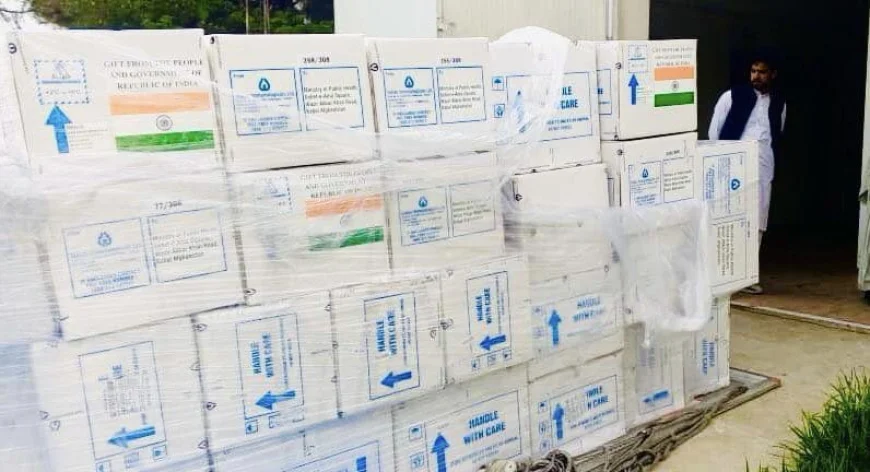
The shipment, received on Friday, follows India’s recent donation of around 9.5 tons of anti-cancer medicines. Earlier, New Delhi also announced 20 ambulances for Afghanistan, five of which were handed over in October 2025.
The growing outreach comes at a time when Afghanistan’s ties with Pakistan are strained, especially over border tensions, and India’s engagement is seen as a strategic counterbalance to Pakistan’s influence. India also aims to limit Chinese dominance in Afghanistan through infrastructure and diplomatic presence.
Pakistan had initially expected the authorities in Kabul to act decisively against the banned Tehreek-e-Taliban Pakistan (TTP) and dismantle terrorist sanctuaries on Afghan soil. However, Islamabad has repeatedly expressed concern that no effective measures were taken despite its cautions over rising cross-border terrorism.
The 37th report of the UN Analytical Support and Sanctions Monitoring Team, issued on Feb. 4, endorsed Pakistan’s position that Afghan territory continues to be used by terrorist groups to launch attacks. The report noted an increase in TTP attacks against Pakistan from Afghanistan, leading to heightened regional tensions.
It further stated that while the Afghan de facto authorities claimed no terrorist groups were operating inside the country, no UN member state supported this view.
The report observed that the TTP was accorded greater operational freedom, resulting in a surge in attacks inside Pakistan. It also highlighted that Al Qaeda continued to benefit from patronage in Afghanistan and provided training and advisory support to militant groups, particularly the TTP.
The group has been linked to many attacks, particularly in the latter half of 2025, contributing to heightened tensions along the Pakistan-Afghanistan frontier.
Last week, at least 33 people were martyred and around 169 others injured in a suicide blast at Imambargah Khadijah al-Kubra during Friday prayers. Just this week, two police officers were martyred, and six others were injured in separate attacks in two districts of Khyber Pakhtunkhwa.
Pakistan has taken firm steps to safeguard its national security, including targeted actions against militant hideouts and stricter border management measures. Officials maintain that durable peace in the region requires concrete action against terrorist elements operating from Afghan soil.