


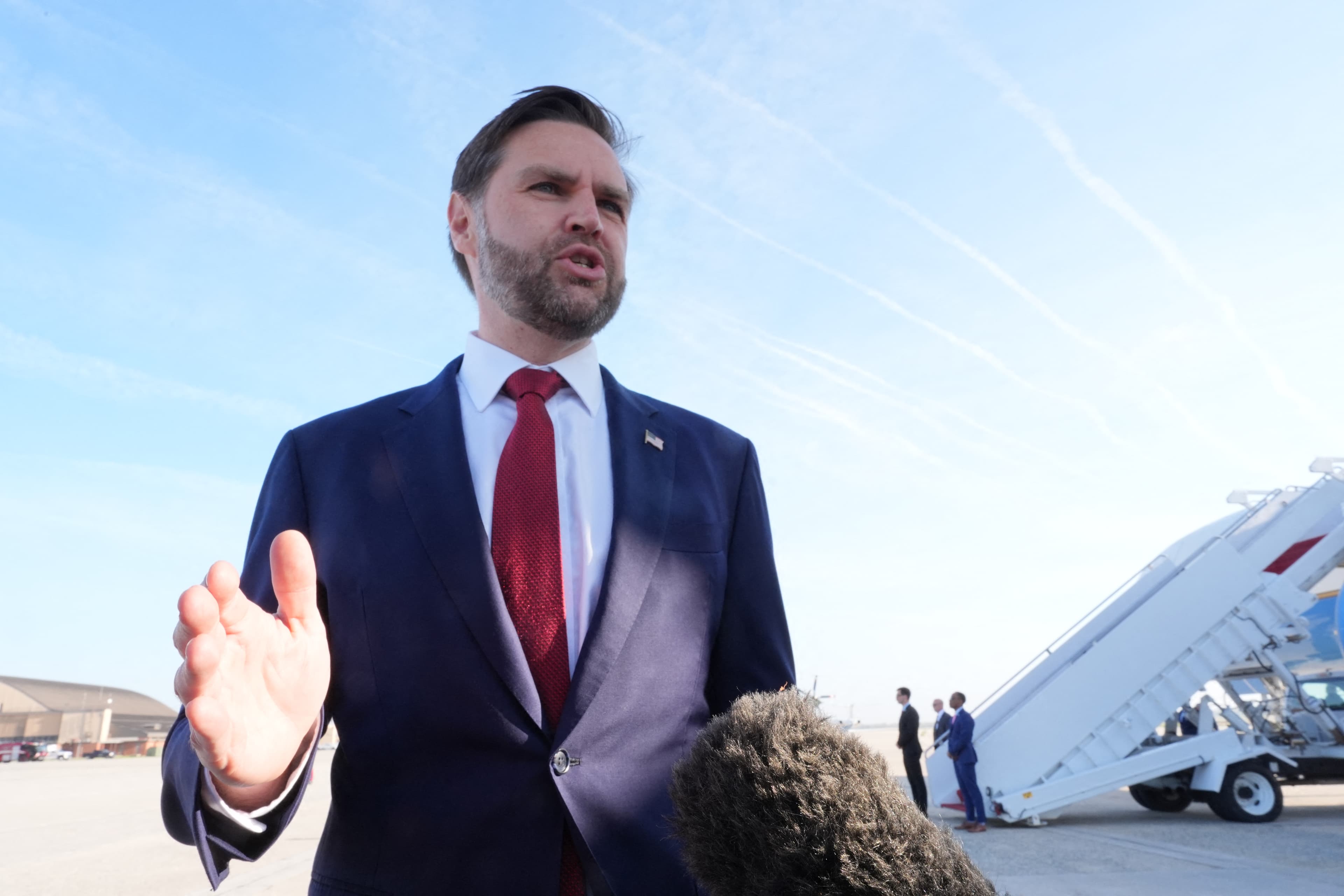
ISLAMABAD: US Vice President JD Vance said Friday he hoped for a "positive" outcome as he departed Washington for US-Iran peace talks being held in Pakistan.
"We're going to try to have a positive negotiation," he told reporters before take-off from Joint Base Andrews. "If the Iranians are willing to negotiate in good faith, we're certainly willing to extend the open hand. If they're going to try to play us, then they're going to find the negotiating team is not that receptive."
Meanwhile, Pakistan’s capital is preparing to host delegations from the United States and Iran for high-stakes “Islamabad Talks,” as global backing grows for efforts to turn a fragile ceasefire into a lasting peace agreement.
The talks follow a two-week truce brokered through Pakistan’s diplomatic engagement, with officials describing the upcoming negotiations as a critical opportunity to stabilise a region shaken by weeks of conflict.
Netherlands extends support for Pakistan's facilitation of peace talks
Pakistan's Foreign Minister Ishaq Dar received a call from his counterpart from the Kingdom of the Netherlands, Tom Berendsen, said a post on X by the Ministry of Foreign Affairs.
During the call, FM Berendsen commended Pakistan’s role in facilitating the ceasefire and conveyed support for promoting a diplomatic path toward lasting peace.
Both sides also expressed concern over serious ceasefire violations in Lebanon and underscored the importance of ensuring full implementation of the ceasefire to achieve sustained peace.
The call concluded with both sides vowing to strengthen cooperation in trade, economic, and investment sectors.
Pakistan to grant visa-on-arrival for Islamabad Talks 2026 delegates from Iran, US
Pakistan will grant visa-on-arrival to delegates and journalists from Iran and the United States attending the Islamabad Talks 2026, officials said Friday.
Foreign Office spokesperson Tahir Andrabi said the facility will remain in place for the duration of the talks and will apply only to participants from the two countries.
“Pakistan has extended visa-free travel to delegates and journalists from participating nations of Islamabad Talks 2026, i.e., Iran and the USA. This facility, extended for the duration of the talks, does not cover third-country nationals,” Andrabi said in a statement issued in response to media queries.
Earlier, Deputy Prime Minister and Foreign Minister Ishaq Dar said delegates and journalists traveling to Islamabad for the talks would be issued visas on arrival.
In a post on X, Dar said Pakistan welcomes all delegates, including journalists from participating nations, traveling in relation to Islamabad Talks 2026. He said airlines have been asked to allow boarding without a visa for such individuals. He added that immigration authorities in Pakistan will issue visas on arrival.
Security arrangements reviewed
A special meeting was chaired by Pakistan's Federal Interior Minister Mohsin Naqvi to review security and other arrangements regarding arrival of foreign delegations for negotiations in Islamabad.
A detailed assessment of preparations and the security plan for the US-Iran negotiations in Islamabad was conducted during the meeting, said a post X by Pakistan's Ministry of Interior.
France expresses support for Pakistan's efforts for regional peace
Pakistan's DPM/FM Senator Mohammad Ishaq Dar received a phone call on Friday from Foreign Minister of France, Jean-Noël Barrot, said a post on X by Pakistan's Ministry of Foreign Affairs.
FM Barrot congratulated Pakistan on its role in securing the initial ceasefire agreement and expressed support for Pakistan’s continued efforts toward a diplomatic pathway for lasting peace and stability in the region.
Both leaders expressed concern over serious ceasefire violations made in Lebanon and underscored the importance of full implementation and respect for the ceasefire.
Both sides reaffirmed their commitment to strengthening bilateral relations, enhancing economic and trade cooperation, and agreed to stay in touch.
Earlier, Pakistan's Prime Minister Shehbaz Sharif said Islamabad remains committed to facilitating dialogue and ensuring the success of the talks.
“I earnestly and sincerely urge all parties to exercise restraint and respect the ceasefire for two weeks… so that diplomacy can take a lead role,” he said in a post on X.
The White House has confirmed that US Vice President JD Vance will lead Washington’s delegation to Islamabad, alongside senior officials, while Iran has also agreed to send a negotiating team.
Separately, Pakistan’s Chief of Defense Forces and Chief of Army Staff Asim Munir called on PM Sharif to review preparations and the evolving regional situation, according to a statement from the PMO.
“The two leaders expressed satisfaction over the de-escalation achieved so far and stressed the need for maintaining peace and a ceasefire by all parties,” the statement said, adding that Pakistan remains committed to facilitating a negotiated settlement.
The leadership also reviewed arrangements for the visiting delegations, with Sharif assuring “highest consideration and support” for the talks and expressing hope for “success in their pursuit of peace.”
Pakistan’s preparations have included high-level coordination with international partners.
Interior Minister Mohsin Naqvi, in a meeting with US Chargé d’Affaires Natalie Baker, assured that “foolproof security measures are in place” for the visiting delegations.
Baker praised Islamabad’s “sincere and constructive role” in supporting de-escalation efforts, reflecting growing international recognition of Pakistan’s mediation.
Sharif, in a series of engagements with world leaders, thanked partners including the United Kingdom, Germany and others for endorsing Pakistan’s efforts to secure the ceasefire and advance talks.
“I am grateful… for support for Pakistan’s sincere efforts in facilitating the Iran–US ceasefire, which we hope will pave the way for lasting peace,” he said.
European and regional leaders have also stressed the importance of sustaining the ceasefire to ensure meaningful negotiations.
At the same time, Pakistan has raised concerns over developments in Lebanon, where Israeli strikes have intensified despite the truce. Foreign Minister Ishaq Dar, in conversations with international counterparts, emphasized the need for “full respect and implementation of the ceasefire.”
Lebanese Prime Minister Nawaf Salam has also called for an immediate end to attacks, as civilian casualties mount.
“The United Nations strongly condemns the strikes… that resulted in significant civilian casualties,” UN spokesman Farhan Haq said.
The situation underscores the delicate balance facing negotiators as diplomacy gains momentum alongside ongoing violence.