


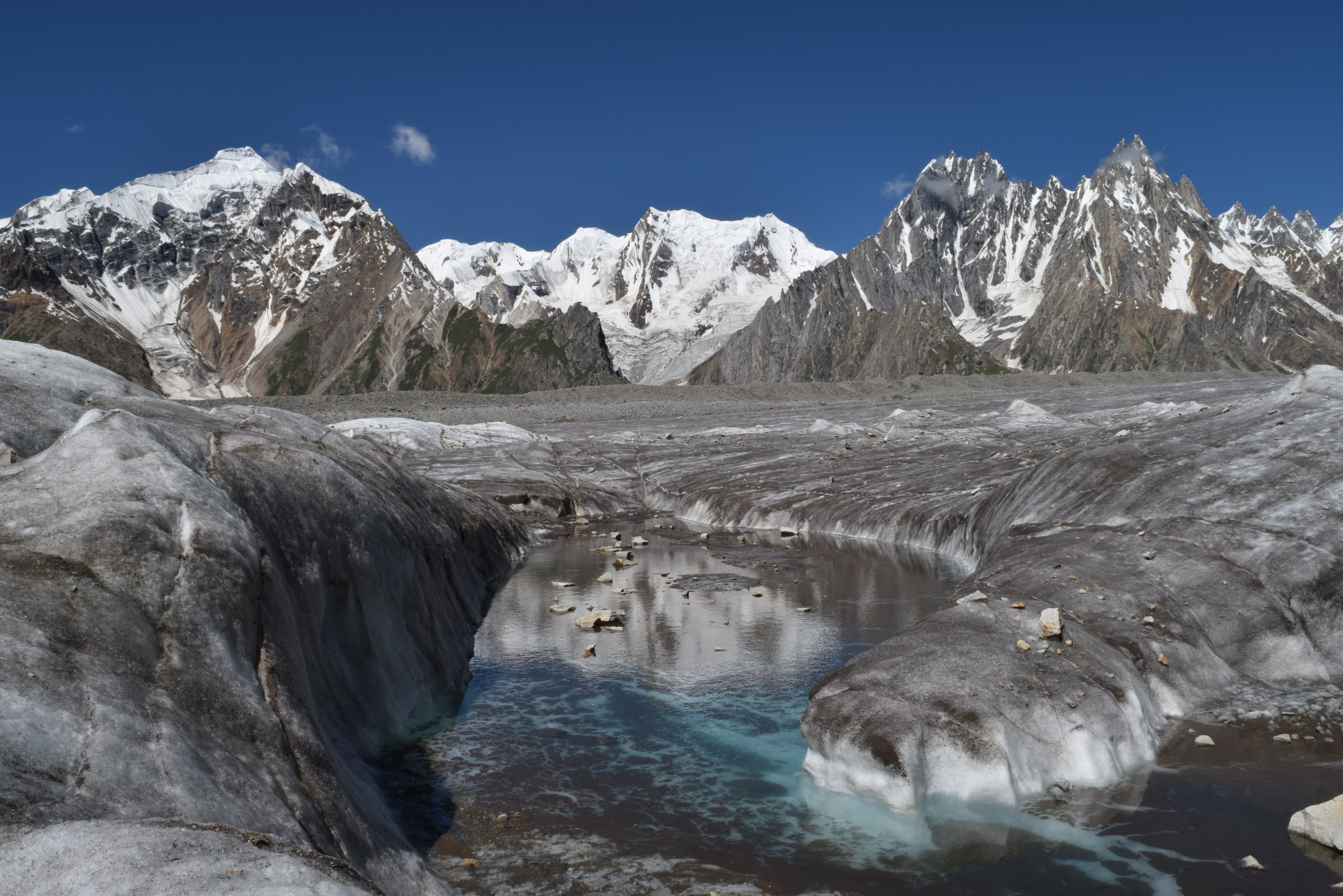
ISLAMABAD: The Pakistan Meteorological Department (PMD) has warned that above-normal temperatures in northern Pakistan could accelerate glacial melt and heighten the risk of glacial lake outburst floods (GLOFs) in vulnerable mountain communities.
In its latest assessment, the Met Office reported that rainfall and snowfall across northern regions remained below normal during the winter season, in line with its earlier seasonal forecast. Persistent clear skies and stable atmospheric conditions during the first three weeks of February have driven temperatures significantly higher than average across Gilgit-Baltistan (GB).
From February 1 to 22, daytime temperatures were recorded 3–5°C above normal, while nighttime temperatures remained 1–3.5°C higher than the 1981–2010 climatological average. The highest warming was observed in Gilgit and Bunji. Chilas and Bunji also experienced notable increases in minimum temperatures, limiting overnight refreezing, a key natural process that helps stabilize snowpacks and glaciers.
According to the PMD, sustained above-normal temperatures are accelerating snow and glacial melt, particularly at mid-to-lower altitudes. Reduced nighttime cooling is further increasing meltwater runoff into glacial lakes. Rapid melting contributes to rising water levels in moraine-and glacier-dammed lakes, increasing the likelihood of GLOF events in downstream valleys.
The department’s February–April 2026 outlook indicates a high probability of continued above-normal temperatures across northern Pakistan, including GB and Kashmir. If the warming trend persists, authorities fear an elevated risk of GLOFs in districts such as Gilgit, Ghizar, Hunza, Bunji, Chilas and Astore.
The PMD said it is closely monitoring temperature trends, glacier melt conditions and other hydrometeorological indicators and will issue advisories to relevant authorities and local communities as needed.
Temperature data collected between February 1 and 22 showed average readings of 4.7°C in Gilgit, 4.5°C in Bunji and 4.3°C in Astore. Chilas recorded an average of 4.1°C, while Gupis and Skardu each recorded 3.1°C, the Met Office said Minimum temperatures remained well above historical norms across most stations.
Environmentalists in the region say the warming trend reflects a broader shift in snowfall patterns over the past three years. Snowfall has increasingly been delayed until mid-January or February, with overall accumulation declining.
According to GBEPA data, the average temperature in GB rose by approximately 0.6°C between 1987 and 2013. In recent years, the region has witnessed an increase in flash floods, accelerated glacial melt and climate-linked disasters.
Last summer, rapidly melting glaciers, GLOFs and cloudburst incidents caused widespread damage across parts of Gilgit-Baltistan, underscoring the growing vulnerability of mountain communities to climate change.
With another warmer-than-normal season forecast, experts warn that residents living downstream of rivers and glacial lakes may face heightened risks in the months ahead.