


This live blog follows the latest developments across the Middle East crisis, including regional diplomacy, maritime security, ceasefire negotiations, and economic fallout.
Catch up Sunday's top development's here
- Iran closes Strait of Hormuz again after fresh US military strikes overnight
- Trump says US hit Iran "very hard" after attacks on commercial shipping
- Iran expands Gulf attacks as Bahrain, Kuwait and UAE activate air defenses
- Pakistan urges restraint as Dar discusses de-escalation with Iranian foreign minister
- Oman protests Iranian attack despite hosting Hormuz diplomacy talks day earlier
Trump says deal with Iran still 'possible'
Published: July 13, 2026 | 22:18 GMT | by AFP
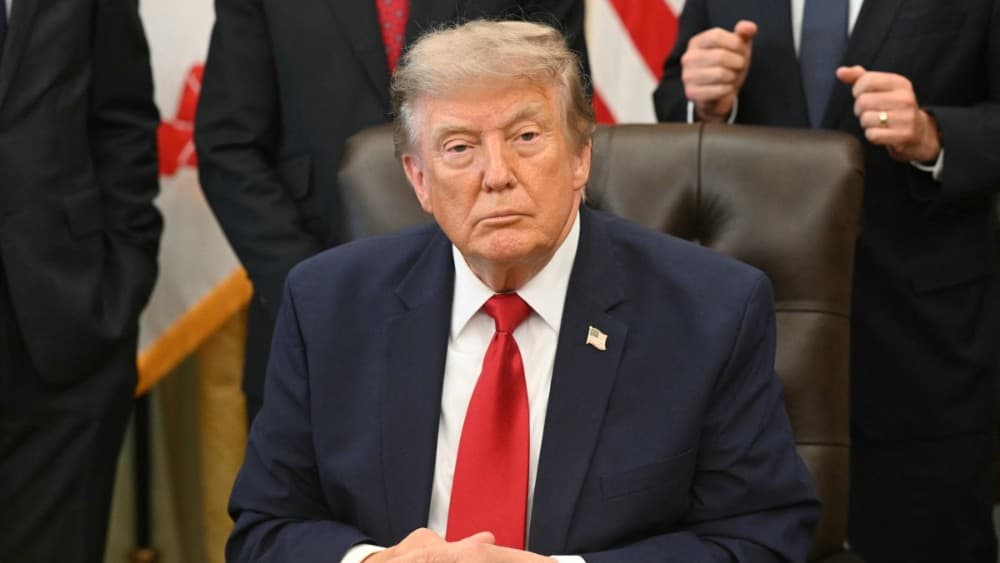
US President Donald Trump said Monday that a deal with Tehran to end the Middle East war was still possible, despite launching fresh strikes on Iran and reimposing a blockade of Iranian ports.
"Yeah, I think a deal is possible. Sure, I do," Trump told reporters in the Oval Office. "We had a deal with them two days ago and then they said 'Oh we can't make that deal. We have to negotiate it further.'"
US military launches third night of strikes on Iran
Published: July 13, 2026 | 21:21 GMT | by Web Desk
The US military said Monday it had launched a fresh salvo of attacks on Iran, marking the third night in a row that it had struck the country, as a deal to end the war falters.
"These strikes will continue imposing a heavy cost on Iranian forces and degrade their ability to attack innocent civilians and commercial shipping in the Strait of Hormuz," US Central Command said in a statement on social media, noting the strikes began at 4:45 pm (2045 GMT).
Oil prices jump almost 9 percent
Published: July 13, 2026 | 21:21 GMT | by Web Desk
Global oil prices have jumped by nearly nine percent as fighting has intensified between the US and Iran, AL Jazeera reported.
Earlier on Monday, Brent crude was trading three percent above last week’s rate, but increased by 8.92 percent at closing to reach $82.79 per barrel.
Four blasts heard east of Iran's Bandar Abbas: state media
Published: July 13, 2026 | 19:30 GMT | by AFP
At least four explosions were heard Monday east of Iran's Bandar Abbas, which sits on the Strait of Hormuz, Iranian state media reported, citing a reporter in the port city's province.
"An IRNA reporter in Hormozgan province reported hearing four explosions east of Bandar Abbas. According to him, the nature of these explosions has not yet been determined by official authorities," news agency IRNA reported.
US to resume Iran port blockade Tuesday at 2000 GMT: US military
Published: July 13, 2026 | 16:40 GMT | by AFP
The United States will begin enforcing its renewed blockade of Iran's ports on Tuesday at 2000 GMT, the US military said.
US forces "will resume blockading maritime traffic entering and exiting Iranian ports on July 14 at 4 pm ET," US Central Command said in a statement on Monday.
UN chief warns over US strikes on Iran, Tehran targeting shipping
Published: July 13, 2026 | 15:00 GMT | by AFP
United Nations Secretary-General Antonio Guterres raised the alarm Monday over US strikes on Iran as well as Tehran's attacks on shipping in the Strait of Hormuz and its neighbors.
Guterres expressed "deep concern at the serious escalation of renewed military confrontation in the Gulf region, including Iranian attacks on ships on the Strait of Hormuz, attacks by the United States on the Islamic Republic of Iran, and attacks by Iran on targets in neighboring countries," his spokesman Stephane Dujarric said.
EU countries push for trade ban with Israeli settlements
Published: July 13, 2026 | 14:05 GMT | by AFP
A majority of European Union countries on Monday called for the bloc to put forward a proposal on banning the import of products from Israeli settlements, top diplomat Kaja Kallas said.
"The option that got the most support was banning the trade with the illegal settlements," EU foreign policy chief Kallas said after a meeting of the bloc's foreign ministers.
Several EU countries, including Ireland, the Netherlands, and Spain, have already imposed their own trade restrictions on Israeli settlements in the occupied Palestinian territories, considered illegal under international law.
Oil prices surge on US-Iran attacks, tech shares tank
Published: July 13, 2026 | 12:10 GMT | by AFP
World oil prices surged Monday as a fresh flare-up between the United States and Iran rattled investors, while a selloff in chipmakers sent South Korea's stock market plunging.
Wall Street's tech-heavy Nasdaq Composite slid at the start of New York trading as did the broad S&P 500 as shares in US chipmakers tumbled.
European equities were mixed in afternoon trading. The dollar traded mixed against main rivals.
Trump says US will be 'paid' for guarding Strait of Hormuz
Published: July 13, 2026 | 11:15 GMT | by AFP
President Donald Trump said on Monday that the United States would be paid for guarding the Strait of Hormuz after declaring that it would be "taking over" the strategic waterway.
"We'll become the guardian of the Strait," Trump told Fox News, adding that the US had been guarding it for "nothing" but now would be reimbursed by wealthy nations.
Iran media reports blasts near Strait of Hormuz
Published: July 13, 2026 | 10:51 GMT | by AFP
Explosions of unknown origin were heard in southern Iran near the Strait of Hormuz on Monday, a news agency reported, following an exchange of attacks between Tehran and Washington.
"Media and residents reported having heard on Monday at midday explosions near Bandar Abbas and the island of Qeshm," Mehr news agency said, adding that the blasts "appear to be coming from the West Coast of Bandar Abbas".
Iran says will stop complying with deal if US does not honor commitments
Published: July 13, 2026 | 07:51 GMT | by AFP
Iran on Monday said it would no longer abide by the deal signed with the United States if Washington failed to uphold its commitments to end the war.
"Each time that the other party has failed to meet its obligations, we did not uphold ours... We will continue to act in this manner," foreign ministry spokesman Esmaeil Baqaei told a press conference in Tehran, following the latest bout of hostilities between the US and Iran.
Iran's Guards claim strikes against Oman and Bahrain
Published: July 13, 2026 | 06:12 GMT | by AFP
Iran's Revolutionary Guards on Monday claimed strikes against Bahrain and Oman, saying they destroyed radar systems in Oman and targeted US military facilities on the southern edge of Manama.
"In addition to targeting US military facilities and infrastructure in Juffair, Bahrain, where fires are raging, the navy of the Revolutionary Guards has... targeted and destroyed the long-range airborne FPS radar and the ship-detection radar in the Sultanate of Oman," said a statement from the Guards carried by their Sepah news outlet.
Jordan's military says it shot down four Iranian missiles
Published: July 13, 2026 | 05:05 GMT | by AFP
The Jordanian military said on Monday it had shot down four Iranian missiles over the country, which Tehran said were intended as retaliation for US strikes.
"At dawn today, air defense systems intercepted and shot down four missiles that had entered Jordanian airspace from Iranian territory," an official source from the Jordanian General Staff said, adding that there were no reports of injuries or damage to property.
Kuwaiti armed forces say responding to 'hostile aerial targets'
Published: July 13, 2026 | 04:05 GMT | by AFP
Kuwait's armed forces said they were responding to "hostile aerial targets" on Monday as Iran carries out strikes on US interests in the Gulf.
"The Armed Forces are currently intercepting hostile aerial targets within Kuwaiti airspace," the head of Kuwait's army said in a statement published by the state-run news agency KUNA.
Iran's Guards say struck US military bases in Jordan, Bahrain, Kuwait: State media
Published: July 13, 2026 | 04:01 GMT | by AFP
Iran's Revolutionary Guards said they had struck US military targets and bases in Jordan, Bahrain and Kuwait, state media reported on Monday.
The official news agency IRNA cited several statements released by the Guards saying they had attacked Prince Hassan Air Base in Jordan, a US military drone command centre in Bahrain and airbases including Ali Al Salem in Kuwait.
CENTCOM launches fresh strikes
Published: July 13, 2026 | 02:30 GMT | by Web Desk
US Central Command (CENTCOM) said on Monday it had completed another wave of strikes against Iran, hitting dozens of military targets at multiple locations with precision-guided munitions in an effort to further degrade Tehran's ability to attack commercial shipping in the Strait of Hormuz.
In a statement, CENTCOM said the operation targeted Iranian air defence systems, coastal radar sites, missile and drone capabilities, and small boats using US fighter aircraft, naval vessels, one-way attack aerial drones and, for the first time, one-way attack sea drones. Earlier, CENTCOM said the strikes had begun on the orders of the US commander in chief "to hold Iranian forces accountable" for attacks on civilian mariners and commercial vessels.
"The Strait of Hormuz is a vital maritime corridor for global trade. Iran does not control it," CENTCOM said, adding that US forces remain "postured and prepared" to ensure freedom of navigation despite what it described as Iran's "continued unwarranted aggression, harassment, threats, and arbitrary declarations."
Bahrain sounds air raid sirens
Published: July 13, 2026 | 02:10 GMT | by Web Desk
Bahrain activated air raid sirens on Monday after Iranian state-affiliated media reported a new wave of missile and drone attacks targeting US military bases and assets across the region, according to the kingdom's Interior Ministry.
In a statement posted on X, the ministry urged citizens and residents to remain calm and "head to the nearest safe place." It also advised the public to avoid using or obstructing main roads unless necessary, adding that further safety instructions would be issued.
"The siren has been sounded. Citizens and residents are urged to remain calm and head to the nearest safe place," the ministry said as regional tensions continued to escalate.
Iran expands regional strikes
Published: July 13, 2026 | 01:50 GMT | by Web Desk
Iran's Revolutionary Guards (IRGC) said on Monday they had launched a new wave of missile and drone attacks targeting US military facilities in Jordan, Bahrain and Kuwait, according to statements carried by state news agency IRNA.
The IRGC said it struck Prince Hassan Air Base in Jordan, a US military drone command centre in Bahrain and several airbases, including Ali Al Salem Air Base in Kuwait. It said the operation targeted missile depots and fuel storage facilities in response to what it described as recent US attacks on Iranian coastal military bases.
State-affiliated Iranian media also reported a broader escalation. Nour News, which is affiliated with Iran's Supreme National Security Council, said "extensive missile and drone attacks" against US military bases and naval assets across the region had begun.
Separately, Sabereen News, a Telegram channel close to Iran-backed armed groups, claimed several ballistic missiles had been launched from western and central Iran toward US military positions across the region.
Prince Hassan Air Base has been used by US and allied forces for regional military operations. There was no immediate confirmation from US or regional authorities regarding the reported attacks or the extent of any damage.
Oil surges on escalation
Published: July 13, 2026 | 01:10 GMT | by Web Desk
Oil prices rose more than 3% in early Monday trading as renewed military exchanges between the United States and Iran heightened concerns over energy supplies through the Strait of Hormuz, according to market trading data.
Brent crude futures climbed 3.08% to $78.35 a barrel, while US West Texas Intermediate crude futures gained 3.09% to $73.62 during Asian trading, reflecting investor concerns over potential disruptions to one of the world's busiest energy shipping routes.
The gains followed Iran's announcement that it had again closed the Strait of Hormuz after fresh US strikes, while US Central Command (CENTCOM) said commercial traffic through the waterway was continuing. "Traffic is flowing," CENTCOM said in a statement, adding that "US forces are positioned and prepared to keep it that way."
Sunday roundup
Published: July 13, 2026 | 00:00 GMT | by Web Desk
Iran announced it had again closed the Strait of Hormuz on Sunday and expanded attacks across the Gulf following fresh US strikes, marking another major escalation that further strained diplomatic efforts launched under the Islamabad Memorandum of Understanding.
The United States said it carried out overnight strikes after accusing Iran of attacking commercial shipping in the strategic waterway. President Donald Trump said US forces had hit Iran "very hard," adding Washington and Tehran had been close to reaching a deal before the latest attacks. US Central Command said about 140 Iranian military targets had been struck and insisted that maritime traffic through the Strait of Hormuz remained open.
Iran's Revolutionary Guards said they targeted multiple vessels in the Strait of Hormuz, describing the first attack as "warning shots" after a ship allegedly ignored instructions to use an approved route. The Guards also claimed attacks on a US base in Qatar and logistical facilities supporting US naval operations in Oman's Duqm port, while Iranian officials said the Strait of Hormuz remained under Tehran's control.
The latest exchanges spilled across the Gulf. Air raid sirens sounded in Bahrain, while Kuwait and the United Arab Emirates activated air defense systems. Jordan said three Iranian missiles landed inside its territory without causing casualties, and Oman issued a formal protest to Iran after reporting an attack on its territory, a day after hosting Iranian Foreign Minister Abbas Araghchi for talks on the Strait of Hormuz.
Pakistan also intensified diplomatic outreach. According to the Foreign Office, Deputy Prime Minister and Foreign Minister Ishaq Dar spoke with his Iranian counterpart Abbas Araghchi, urging all sides to pursue de-escalation, exercise maximum restraint and preserve regional peace through dialogue and diplomacy.
Meanwhile, Iranian officials said a naval officer was killed in overnight US strikes, while Omani authorities rescued 23 crew members from a commercial vessel struck off the country's coast. India said one of its nationals remained missing after the attack.
For earlier developments, read our July 12 live blog here.