


ISLAMABAD: Pakistan and Bangladesh signaled a coordinated push to reset bilateral relations on Sunday, as senior leaders from both sides underscored trade, connectivity, youth exchanges, and regional cooperation following Bangladesh’s democratic transition.
Pakistan’s Foreign Minister Ishaq Dar held a phone conversation with his Bangladeshi counterpart, newly-appointed Khalil ur Rahman, with both sides expressing a desire to strengthen ties “with a shared vision of peace, stability, and prosperity,” according to Pakistan’s Foreign Office.
“Both leaders agreed to expand cooperation across multiple sectors and build a forward-looking partnership for the people of Pakistan and Bangladesh,” the official statement said.
The diplomatic engagement follows Bangladesh’s first competitive election since the 2024 uprising, which brought Tarique Rahman to office at the head of a Bangladesh Nationalist Party-led government with a commanding parliamentary majority, marking a decisive shift after years of political unrest and strained regional ties.
Momentum was reinforced in Dhaka, where Pakistan’s Planning and Development Minister Ahsan Iqbal attended the oath-taking ceremony and held meetings with Bangladesh’s new leadership and opposition figures, representing Prime Minister Shehbaz Sharif.
“I am here to represent the Prime Minister of Pakistan and the people of Pakistan at a very historic moment when Bangladesh is making a democratic transition and a new government is being sworn in,” Iqbal said, adding that PM Sharif “would very much like to visit Bangladesh as early as possible.”
In his meeting with Bangladeshi prime minister, Iqbal conveyed formal congratulations and extended an invitation for an official visit to Pakistan, describing Bangladesh’s peaceful transfer of power as “an important milestone for democratic stability.”
Rahman, in turn, welcomed Pakistan’s goodwill and committed to “constructive and future-oriented relations.”
“We emphasized that Pakistan and Bangladesh are emerging economies with youthful populations,” Iqbal said. “By investing in skills, entrepreneurship and the digital economy, youth can become a driving force for development.”
Iqbal said bilateral trade remains “far below potential,” calling for urgent efforts to expand commerce, integrate supply chains and enhance maritime connectivity through coastal ports. He said both sides discussed creating synergy in industrial capacity, small and medium enterprises, and export strategies to improve access to global value chains.
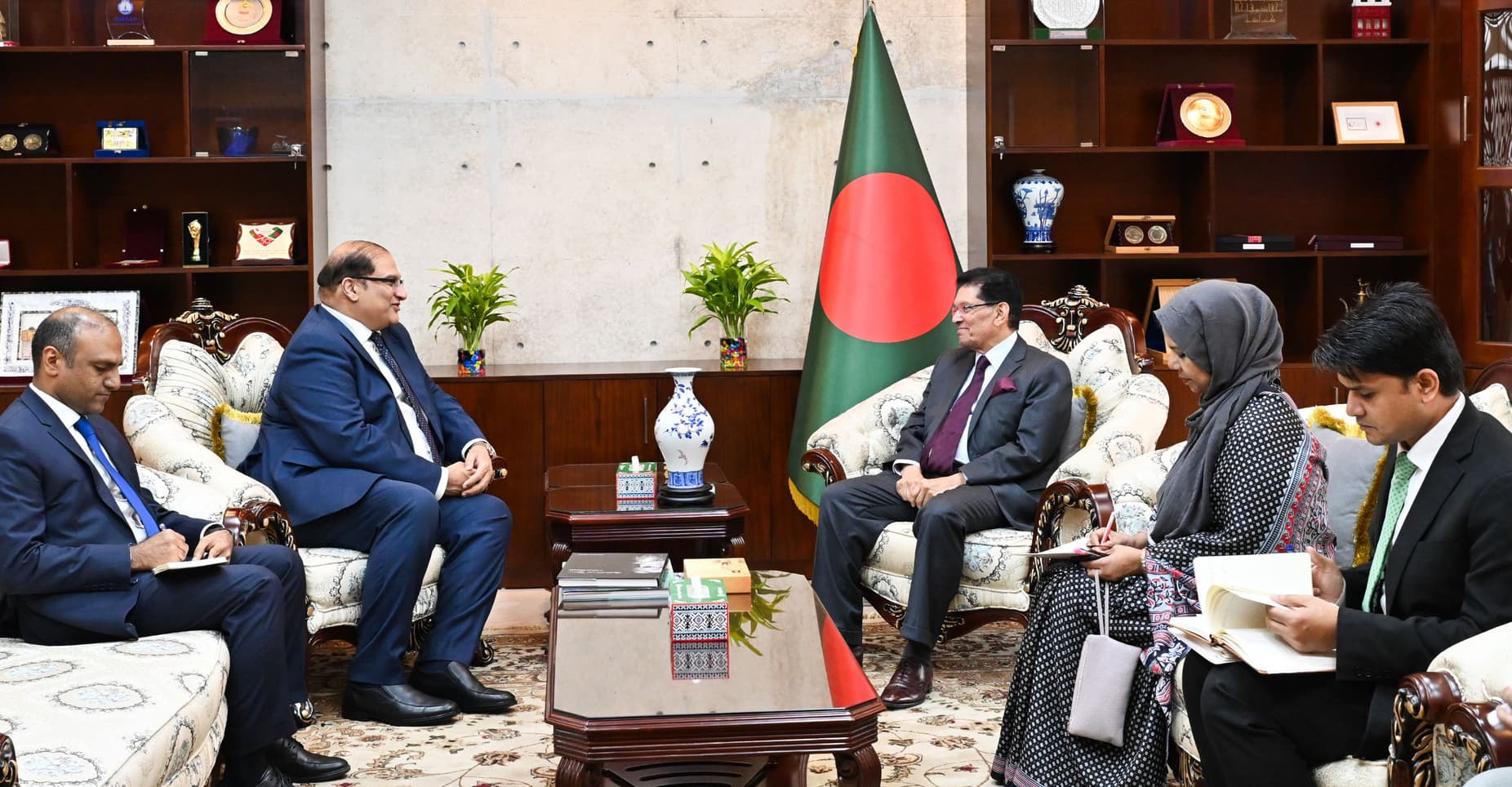
Alongside high-level political outreach, Pakistan’s diplomatic mission in Dhaka has stepped up engagement with Bangladesh’s new foreign policy leadership. Pakistan’s High Commissioner to Bangladesh Imran Haider paid a courtesy call on Foreign Minister Khalil ur Rahman, congratulating him on assuming office and briefing him on recent developments in bilateral relations.
According to the Pakistan High Commission, Haider highlighted positive momentum across education, connectivity, trade, agriculture and health, as well as the activation of bilateral institutional mechanisms. Rahman welcomed the briefing, expressed satisfaction at the progress achieved, and emphasized the importance of exploring new avenues to further expand and deepen cooperation. Both sides also exchanged views on collaboration at multilateral forums.
The high commissioner separately met Bangladesh’s State Minister for Foreign Affairs Shama Obaed Islam, congratulating her on assuming office and noting that Pakistan-Bangladesh relations are rooted in shared history, cultural affinities and people-to-people ties.
Islam welcomed the engagement and stressed the need to enhance cooperation across all domains to realize the full potential of bilateral relations. Both sides agreed to strengthen ties guided by a forward-looking approach, mutual respect and sovereign equality.
At the conclusion of talks with PM Rahman during Iqbal's Dhaka tour, both sides reaffirmed their resolve to translate goodwill into tangible outcomes, agreeing on the need to revitalize the South Asian Association for Regional Cooperation and to advance South Asia through geo-economics rather than geopolitics.
“South Asia remains among the least integrated regions in the world,” Iqbal said. “Through improved connectivity and trade facilitation, Pakistan and Bangladesh can open new avenues of shared prosperity for the region.”