
S&P director says political stability drove Pakistan's latest rating upgrade
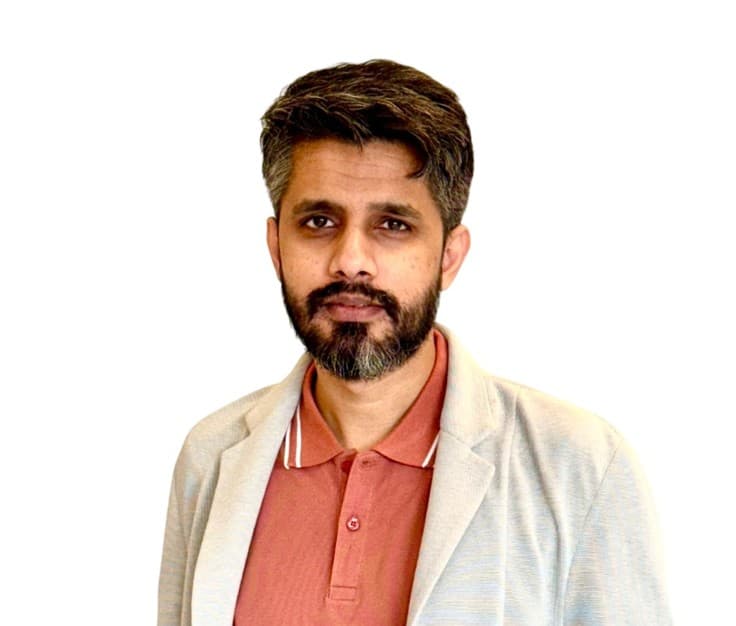
ISLAMABAD: Political stability has been a key factor behind Pakistan's recent sovereign credit rating upgrade to 'B', helping the government implement critical reforms, strengthen fiscal positions and improve institutional capacity, according to S&P Global's Director of Sovereign Credit Ratings YeeFarn Phua.
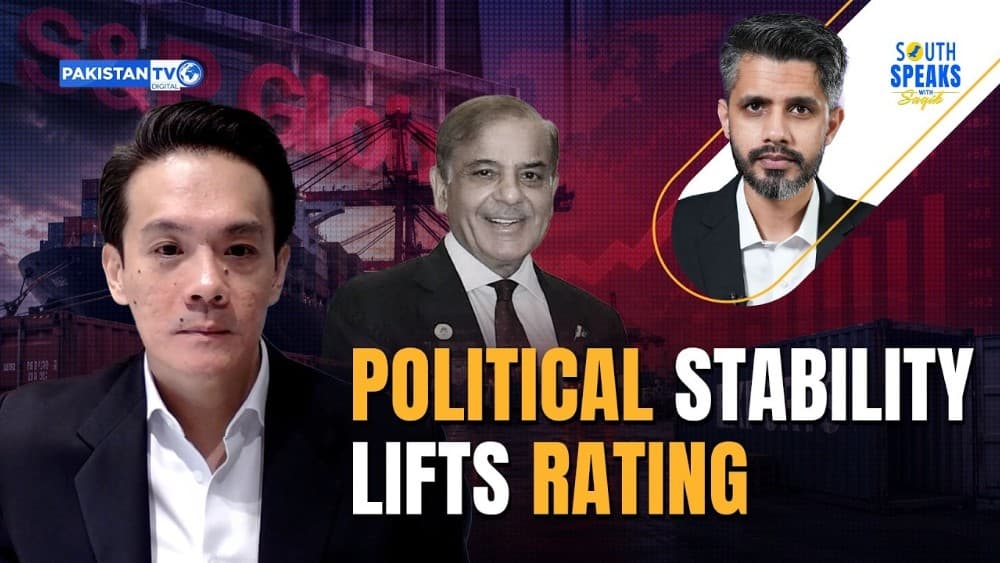
Speaking on Pakistan TV Digital's South Speaks with Saqib, Phua said S&P upgraded Pakistan's rating last month to its highest level since 2016, with the decision reflecting greater political stability and its impact on economic policymaking.
"This was predicated on the fact that we view Pakistan's political settings as relatively more stable," Phua said.
The upgrade comes as Pakistan continues implementing reforms under its International Monetary Fund (IMF) program, with the government focusing on fiscal consolidation, stronger revenue collection and improvements in its external position.
S&P Global Ratings raised Pakistan's long-term sovereign rating to 'B' from 'B-' on July 22, with a stable outlook.
Phua said greater political stability had allowed the government to carry out critical IMF-backed reforms and improve fiscal management.
"This has allowed the country to implement very critical IMF reforms that have stabilized the fiscal position," he said.
He also pointed to improvements in institutional capacity as another consequence of the more stable political environment.
"Because of the more relative political settings, institutional capacity has also improved as well," Phua said.
Phua said Pakistan's bilateral partners had also resumed financial support, including through swap arrangements and deposits with the State Bank of Pakistan.
"We are also seeing that bilateral partners have started to come in with swap lines, and deposits also at the State Bank of Pakistan," he said.
He said improvements in tax collection and expenditure management had also strengthened Pakistan's fiscal performance.
"The fiscal targets, we noticed, have been improving," Phua said.
The assessment comes as Pakistan has intensified economic diplomacy with a range of bilateral partners, pursuing new trade and investment commitments and cooperation in sectors including mining, energy, information technology and manufacturing. Recent engagements have increasingly focused on translating longstanding diplomatic relationships into investment, market access and commercial activity.
Pakistan and Türkiye reaffirmed in July their goal of raising bilateral trade to $5 billion annually while expanding cooperation in energy, mining and information technology. Pakistan has also continued to deepen economic engagement with China and other major partners as Islamabad seeks to diversify its economic base and attract foreign investment.
That push forms part of the government's broader effort to shift economic policy toward export-led growth, investment and diversification, with trade and investment agreements and memorandums providing frameworks for greater private-sector participation.
From economic stress to greater stability
Asked what had changed since Pakistan's economic low point in 2022, Phua again identified political stability as a central factor behind improvements in the country's credit metrics and growth outlook.
"The cornerstone of all these credit metrics, and also now more stable growth, is really due to the more relatively stable political settings," he said.
He said greater stability had allowed policymakers to pursue longer-term measures rather than focusing solely on immediate economic pressures.
"This has also allowed policymakers to put in place measures that are more long-term in nature," Phua said.
The S&P assessment follows a period in which Pakistan has sought to strengthen its macroeconomic position while expanding economic engagement with international partners. The country's improved external position, fiscal consolidation and progress under IMF-backed reforms have contributed to the broader stabilization recognized in its latest rating upgrade.
What Pakistan needs for further upgrades
Phua said Pakistan could move toward its historic best rating if improvements in fiscal and external indicators are sustained.
"It will be basically a fiscal and external metrics continue to strengthen together," he said.
He identified a sustained fiscal deficit below 3% of gross domestic product as one of the key benchmarks.
"If we see that the country's fiscal deficits get less than 3% of GDP on a sustained basis," Phua said.
Government debt would also need to fall below 60% of GDP, he added.
"We believe that Pakistan's government debt will fall below 60% of GDP," Phua said.
He said external indicators would also need to improve, including a reduction in narrow external debt to below 100% of current account receipts.
"Narrow external debt falling below 100% of current account receipts," he said.
Investment-grade status remains distant
On the prospect of Pakistan eventually achieving investment-grade status, Phua said the country remained several notches away.
"Investment grade is still multiple notches away," he said.
He said investment-grade economies in the region typically have stronger institutional capacity and sustained higher growth rates.
"We're talking about growth levels of 4-5% and above on an annual basis, on a long-term structural basis," Phua said.
"If you look at Pakistan's institutional capacity, it has improved but is coming from a fairly low base," he added.
Latest News
US military helicopter crash kills two in Texas
10 MINUTES AGO

US-Iran standoff escalates as Trump vows to keep control of Hormuz
20 MINUTES AGO
S&P director says political stability drove Pakistan's latest rating upgrade
2 HOURS AGO
US jury awards $29M damages to Boeing 737 MAX victim's family
2 HOURS AGO

US stocks mostly up after data shows slightly lower inflation in July
3 HOURS AGO