ISLAMABAD: Saudi Arabia declared a UAE-backed separatist advance in Yemen a threat to the kingdom's national security on Tuesday, while calling Abu Dhabi's actions "highly dangerous," as the rivalry between the Gulf monarchies boiled into an open dispute.
Earlier today (Tuesday), the leader of Yemen's presidential council declared a state of emergency and cancelled a security pact with the United Arab Emirates after Abu Dhabi-backed separatists seized swathes of territory.
The announcements by Rashad al-Alimi, head of the Presidential Leadership Council, came after the Saudi-led coalition in divided Yemen said it struck a UAE weapons shipment destined for the separatists.
In a statement, the UAE “expressed its deep regrets” regarding the statement issued by Saudi Arabia and denied the assertion of fueling the conflict in Yemen.
“The United Arab Emirates affirms its unwavering commitment to the security and stability of the sisterly Kingdom of Saudi Arabia, its full respect for its sovereignty and national security, and its rejection of any actions that threaten the security of the Kingdom or the region,” said the statement.
The foreign ministry statement came hours after the Saudi-led coalition fighting in Yemen said it had struck a UAE weapons shipment destined for separatist forces.
"The steps taken by the UAE are considered highly dangerous," it said, adding "the Kingdom stresses that any threat to its national security is a red line, and the Kingdom will not hesitate to take all necessary steps and measures to confront and neutralise any such threat."
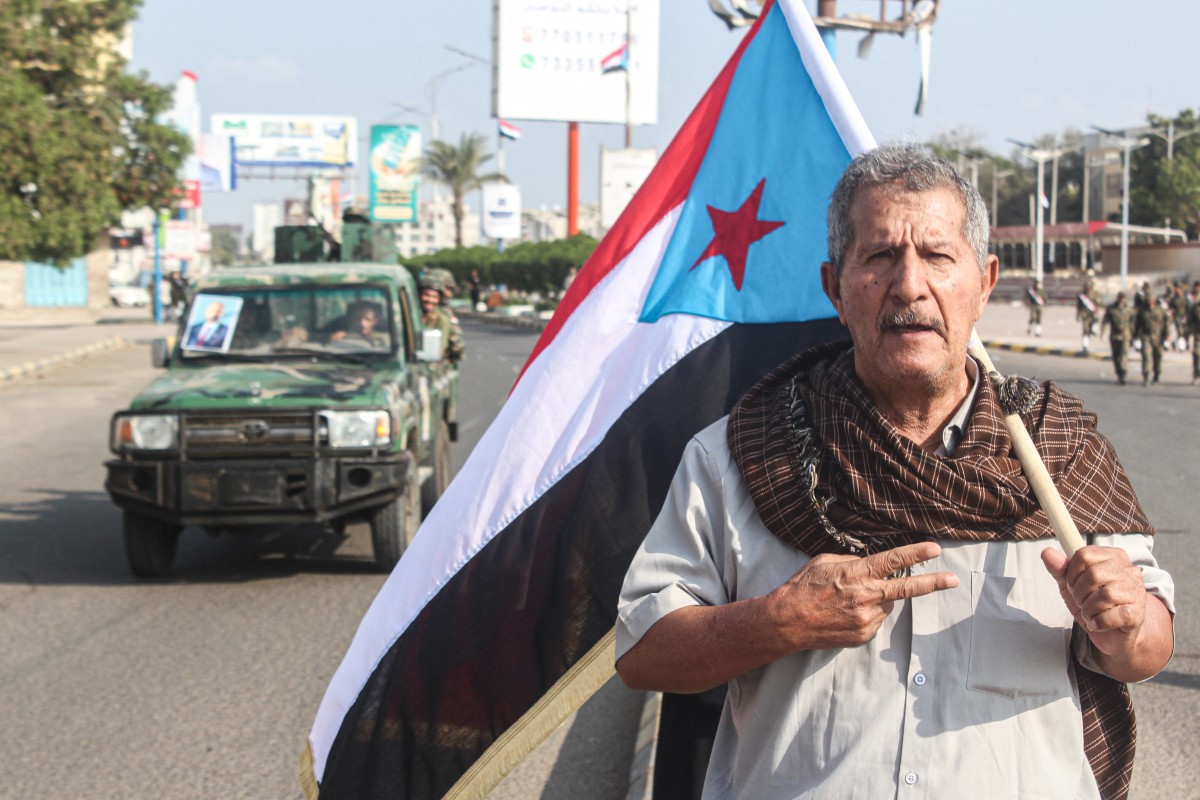
In recent weeks, separatists reportedly backed by the UAE seeking to revive the formerly independent state of South Yemen have made sweeping territorial gains in a lightning offensive.
Experts say their successes have embarrassed Saudi Arabia, a regional heavyweight and the main backer of the internationally recognized Yemeni government.
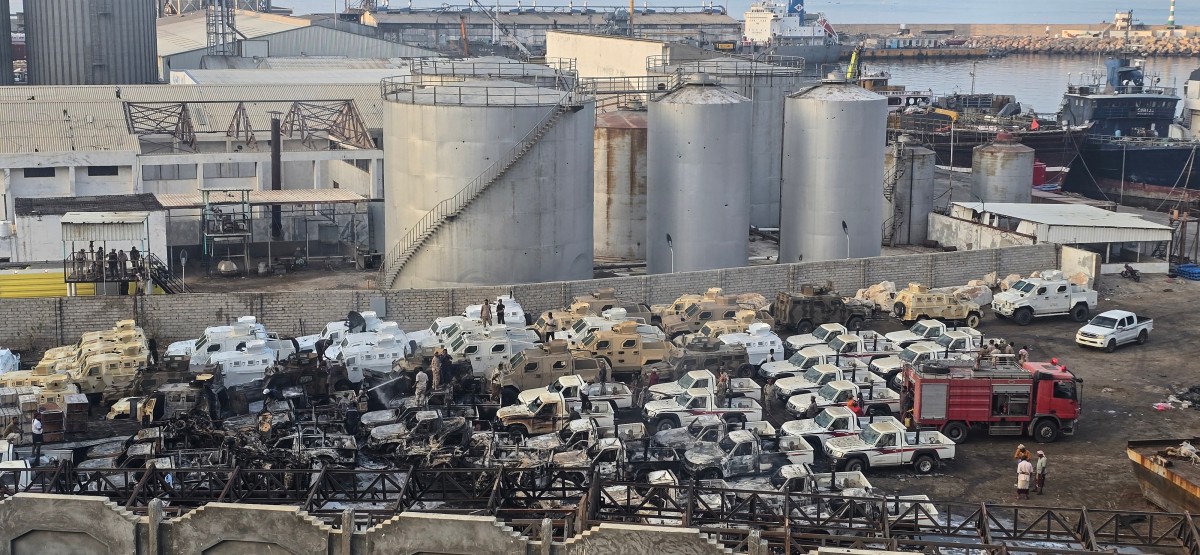
"Given the danger and escalation posed by these weapons... the coalition air forces carried out a limited military operation this morning targeting weapons and combat vehicles that had been unloaded from the two ships at the port of Al-Mukalla," the alliance said, according to the Saudi state news agency.
AFP footage of the port showed dozens of parked military vehicles and pick-ups, several of which were burnt out and smouldering as workers hosed them down.
After the strikes, the leader of Yemen's presidential council, which sits atop the Aden-based government, declared a state of emergency and cancelled a security pact with Abu Dhabi after the forces of the UAE-backed Southern Transitional Council (STC) seized swaths of territory.
The STC is also a key member of the government—a fractious patchwork of groups held together by its opposition to the Iran-backed Houthi rebels who control swaths of northern and western Yemen, including the capital, Sanaa.
'A red line'
Saudi Arabia and the UAE—traditionally close allies who joined forces in Yemen against the Houthis—have increasingly been at odds over the conflict on their doorstep, as well as the war in Sudan.
"The Kingdom expresses its disappointment by the actions taken by the brotherly United Arab Emirates, pressuring the Southern Transitional Council's forces to conduct military operations on the southern border of the Kingdom," the Saudi foreign ministry statement said.
It called them "a threat to the Kingdom's national security, as well as to security and stability in the Republic of Yemen and the region," it said.
A source close to the Saudi military coalition told AFP on Tuesday after the strikes that a diplomatic solution remained on the table.
"The coalition was forced to do that. All diplomacy efforts met deaf ears," said the source.
"Diplomacy is still an option to stop any further escalation."
24-hour deadline
Riyadh also backed a demand from Yemen's presidential council for Emirati forces to withdraw from the country within 24 hours, and urged Abu Dhabi to cut off military and financial support for Yemeni groups.
Rashad al-Alimi, head of the Presidential Leadership Council, issued decrees on Tuesday announcing a 90-day state of emergency and annulling a security pact with the UAE over the separatists' advance.
The STC members of the council later rejected the decision, saying the move threatened to "drag Yemen into new confrontations or target its regional allies".
Following the strikes, broadcasters in Saudi Arabia aired segments showing surveillance footage of the alleged Emirati ships delivering the combat equipment to the port of Mukalla in southern Yemen.
The Saudi-led coalition said the ships had arrived from the UAE port of Fujairah, adding that the operation was conducted in accordance with international humanitarian law and without causing collateral damage.
An official at the port said a warning to evacuate was received at 4:00 am (0100 GMT) local time.
'Unacceptable to God'
Abdullah Bazuhair, whose home overlooks the port, showed AFP the damage to his property, with windows blasted clear out of the walls and glass strewn across the floor.
The strikes were "unacceptable to God" he said, adding "the children were terrified and the women frightened".
The Saudi-led coalition had warned that it would back Yemen's government in any military confrontation with separatist forces and urged them to withdraw "peacefully" from recently seized territories in Hadramawt and Mahra governorates.
Tuesday's strike came days after reported Saudi air raids on separatist positions in resource-rich Hadramawt last week.
A Yemeni military official said on Friday that around 15,000 Saudi-backed fighters were massed near the Saudi border but had not been given orders to advance on separatist-held territory.




![Tensions rise between rival factions in Yemen's anti-Houthi coalition as Saudi Arabia pushes back against UAE-supported separatists [File: AFP]](https://paktv-assets-7d41fab8.s3.eu-west-2.amazonaws.com/uploads/cee809bd-52c5-462d-8b39-b450080f8da2-aca4a75286957c85b8aa023c72e397ec.webp)
.jpg)