


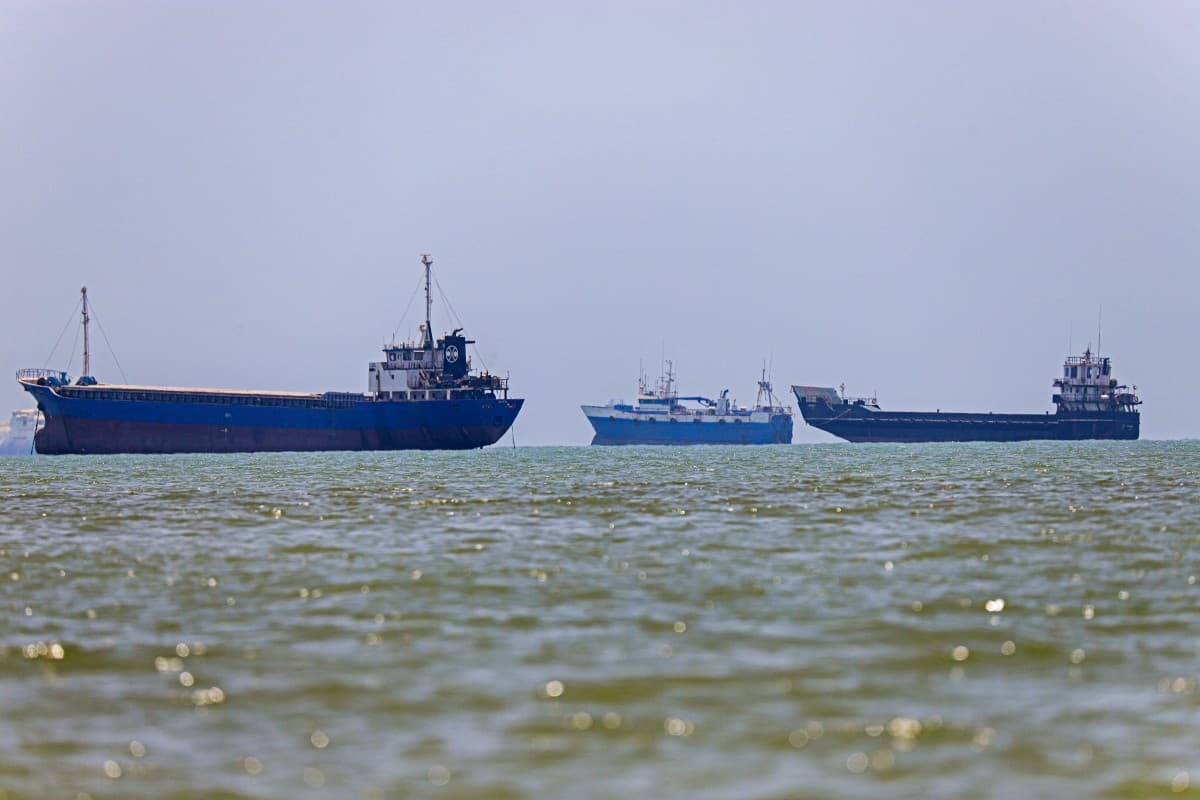
ISLAMABAD: Oil prices fluctuated on Friday, and shipping traffic slowly began to flow through the Strait of Hormuz following the signing of the Islamabad Memorandum of Understanding, with industry data showing over 500 vessels still stranded, while Brent crude traded around $77 a barrel and US benchmark West Texas Intermediate hovered near $74.
The signing of the accord this week was intended to end the conflict in Iran, reopen the Strait of Hormuz, and begin talks on wider issues, including Tehran's nuclear programme.
However, Switzerland announced on Friday that planned talks following up on the deal to end the Middle East war had been postponed.
Ships passing through
Despite the diplomatic breakthrough, maritime traffic remains far below normal levels.
A total of 25 commercial vessels crossed the newly reopened Strait on Thursday, the highest number since mid-April, according to data from maritime tracking firm AXSMarine published on Friday.
On June 18, "we observed 25 verified commercial vessel crossings through the Strait of Hormuz -- the highest single-day count since 18 April and more than five times the average daily level recorded during the first ten days of June," AXSMarine said in a news release.
Before the war, about 120 vessels a day had passed through the strait, according to the leading shipping journal Lloyd's List.
AXSMarine said crossings averaged 7.6 a day from the start of March.
American forces on Thursday lifted their naval blockade of Iranian ports that had prevented ships from sailing to or from the Islamic Republic, the US military said, noting that American warships "will remain in the general area".
Activity was still muted in the Strait of Hormuz, but three Saudi oil tankers left the Gulf through the strait on Thursday, maritime trackers said, as did a French vessel loaded with liquefied natural gas.
The exact number of stranded ships varies across industry trackers, but all indicate a substantial backlog.
"There are some 550 merchant ships of above 10,000 dwt that will need to be prepared to exit the Middle East Gulf, including 160 tankers, 200 bulk carriers, 60 containerships, and 10 vehicle carriers, but greater clarity is needed before shipowners can begin transiting en masse," Lloyd's said, citing industry bodies.
More than 500 commercial vessels are still stuck in the Gulf, with about 11,000 seafarers on board, according to the IMO. It says 20,000 seafarers in the region have been affected by the war overall.
Shipping industry reports, citing the latest Kpler data, indicate over 600 vessels were still effectively trapped, with mine-clearance operations and safety concerns delaying departures.
Meanwhile, Iranian state TV (which TV), quoting the country's Supreme National Security Council, said that ships "seeking passage through the Strait of Hormuz must submit their request" to a new government body tasked with overseeing the waterway.
In keeping with the terms of the deal, it added, "no fees whatsoever will be collected from applicants for a period of sixty days".
Oil prices fluctuate
Oil prices fell more than 3% on Thursday after the signing of the accord.
At around 0625 GMT, the main US oil contract, West Texas Intermediate (WTI), sank 3.4% to $74.18 a barrel.
International benchmark Brent North Sea crude was down 3.02% at $77.15 a barrel.
However, oil prices, which have tanked around 10% this week, rose again, with WTI going up up around 1.8% after the postponement of the planned US-Iran talks in Switzerland.
Bloomberg, citing Vortexa data compiled independently, reported that 40 very large crude carriers holding almost 80 million barrels of non-sanctioned crude from Persian Gulf producers were stuck inside the Gulf.
The news sparked a reversal in several equity markets that had been heading for a positive end, with profit-taking adding to the selling.
Seoul, which has hit multiple records this week and topped 9,000 points for the first time on Thursday, ended in the red after a strong start to the day led by tech firms.
Losses were also reported in Tokyo, Singapore, Sydney, Mumbai, Bangkok, and Jakarta, but Wellington and Manila edged up.
"With the deal signed, that geopolitical cloud is lifting, but markets have learned more than once that a resolution can unravel quickly," Josh Gilbert, at eToro, said.
The gains also followed a strong lead on Wall Street, where the tech-heavy Nasdaq soared almost 2% thanks to heavyweights including Amazon, Alphabet, and Nvidia.
"The repricing this week has been drastic, and part of that came about because of the resumption of Iranian oil almost instantaneously," Tony Sycamore, a market analyst at IG, told Bloomberg Television.
"What comes next is the execution risk. There's a lot of details still to be nutted out."