


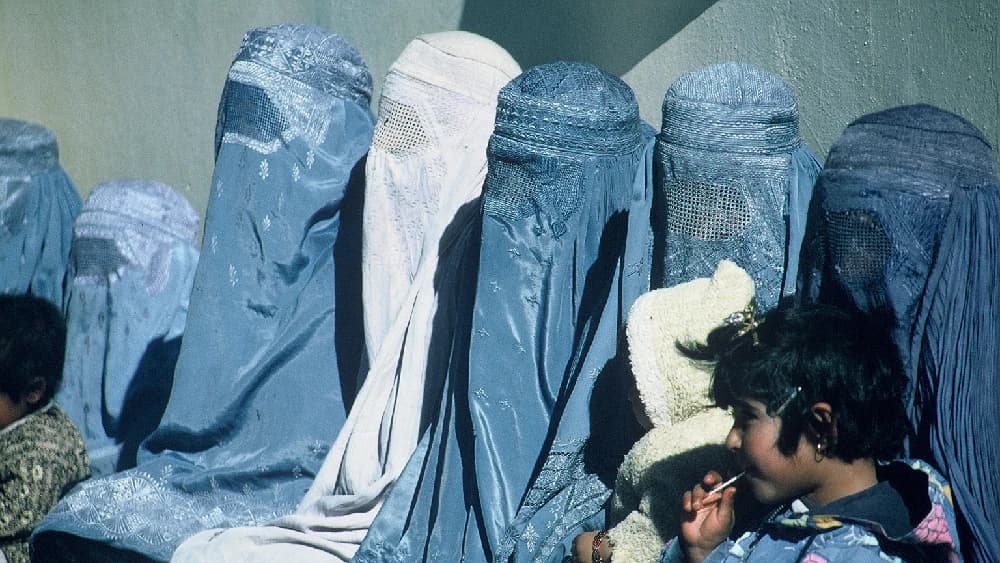
ISLAMABAD: The Afghan Taliban have introduced a new penal code that permits a husband to physically punish his wife, provided the violence does not result in broken bones or open wounds, according to a report published by The Telegraph.
The British newspaper said it had obtained the 60-page legal document, signed by Taliban supreme leader Hibatullah Akhundzada and circulated to courts across Afghanistan.
The code reportedly classifies spousal beatings as “ta’zir,” or discretionary punishment, rather than a criminal offence.
Under the new provisions, a husband may strike his wife or children so long as no visible fractures or open injuries are caused. Even in cases where serious harm is proven, the maximum penalty is said to be 15 days in prison.
The report said the complaint process makes it difficult for women to seek justice. A woman must appear before a male judge, fully veiled and accompanied by a male guardian — often the husband accused of abuse.
There is no explicit prohibition of physical, psychological or sexual violence against women in the code.
The Telegraph further reported that a woman who leaves her husband’s home without permission — including to escape violence — could face up to three months in prison under Article 34. Family members who shelter her may face the same punishment.
The new code replaces legal protections introduced under Afghanistan’s previous government, including a 2009 law that criminalized forced marriage, rape and gender-based violence.
According to the newspaper, the document also introduces broader social and legal restrictions. It criminalizes dancing and attending dance performances, imposes penalties for criticizing Taliban leadership or policies, and does not provide for the right to legal counsel.
Article 23 reportedly prescribes lashes and imprisonment for insulting Taliban leaders, while Article 17 criminalizes “mockery” of Islamic rulings without clearly defining the term.
The report said the code distinguishes between different social classes and includes provisions that affect religious minorities, including followers of non-Hanafi Islamic schools.
Since returning to power in August 2021, the Taliban have imposed wide-ranging restrictions on women and girls, including limits on education, employment and public participation.
A United Nations report in July 2024 warned that enforcement measures by the ministry for promoting virtue and preventing vice were contributing to a climate of fear and intimidation.
The Taliban authorities have not publicly responded to the Telegraph’s report.