


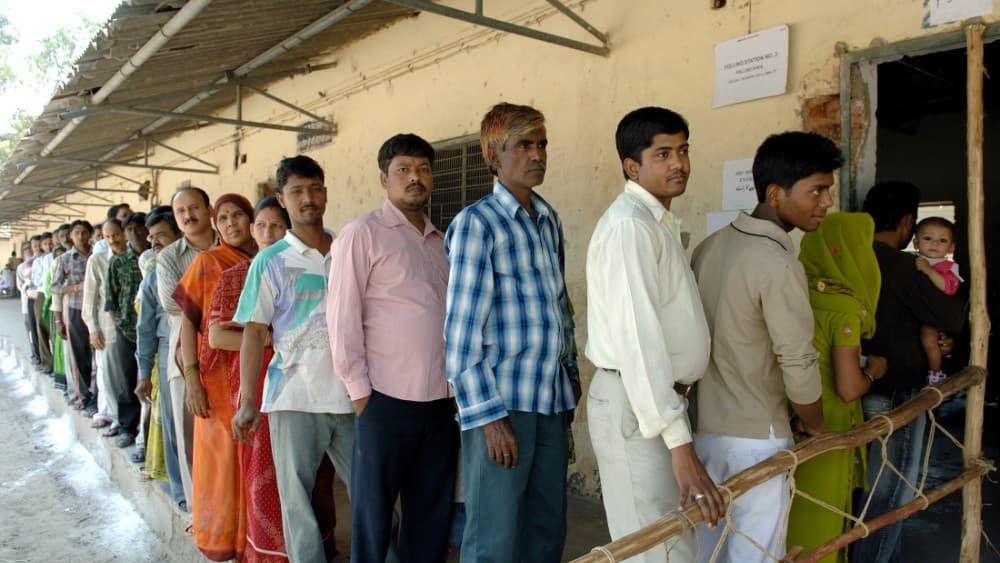
ISLAMABAD: Three United Nations special rapporteurs have sought clarification from the Indian government regarding allegations that about 52 million voters were wrongfully removed from electoral rolls in 12 states and union territories, with Muslims and other minority communities disproportionately affected.
In a letter dated May 1, Nicolas Levrat, the UN Special Rapporteur on minority issues, Irene Khan, the UN Special Rapporteur on the promotion and protection of the right to freedom of opinion and expression, and Nazila Ghanea, the UN Special Rapporteur on freedom of religion or belief, said the voter revision exercise could amount to serious violations of international human rights law.
The letter was made public recently after the customary 60-day confidentiality window observed by UN Special Procedures.
The letter highlighted West Bengal, where 9.1 million names were deleted prior to assembly elections held on April 23 and 29.
According to the UN special rapporteurs, the voter deletions took place during the Election Commission of India's Special Intensive Revision (SIR), launched on Nov 4, 2025. The exercise covered 321 districts and 1,843 assembly constituencies across nine Indian states and three union territories after an earlier pilot in Bihar.
According to the letter, the process disproportionately affected Muslims, Bengalis and other minority communities.
About 52 million names were removed during the exercise before the assembly elections held on April 23 and 29, it alleged.
In West Bengal's Nandigram constituency, about 95% of deleted voters were Muslim, although Muslims make up about 25% of the local electorate.
Affected individuals included men, women, and elderly Indian nationals who held valid identity documents but were excluded due to minor spelling inconsistencies.
They also raised concerns over the reported use of an artificial intelligence-driven system to identify irregularities in voter records. The system introduced potential bias and errors into the electoral process.
Union Home Minister Amit Shah publicly described the voter deletion drive as targeting "illegal Bangladeshi immigrants," which the rapporteurs said conflated Indian Muslim citizens with foreign nationals.
'Discriminatory attitudes toward Muslim citizens'
The rapporteurs also referred to a policy phrase presented before India's Parliament, "Detect, Delete and Deport", describing the electoral revision in those terms risked endorsing discriminatory attitudes toward Muslim citizens.
"We note with grave concern that the framing of a state-administered electoral process in terms of the removal of a religious community risks constituting, at minimum, an official endorsement of discriminatory attitudes toward Muslim citizens," the three UN special rapporteurs wrote.
The reported rhetoric directed at Muslims, Bengalis and other minority communities could amount to incitement to discrimination under Article 20(2) of the International Covenant on Civil and Political Rights, which India ratified in 1979. The reported actions may also conflict with India's obligations under the International Convention on the Elimination of All Forms of Racial Discrimination.
India's Supreme Court initially declined to halt the voter revision process on April 6. The court later allowed removed voters to regain voting rights if appellate tribunals approved their cases before late-April deadlines.
However, more than 3.4 million appeals overwhelmed the tribunals. They said the compressed timeline left millions of eligible voters unable to participate in the West Bengal assembly elections.