


KARACHI/ISLAMABAD: There were no robots walking across the factory floor. Instead, human workers wore gloves, cameras, and motion sensors designed to capture how they moved, handled objects and interacted with their surroundings.
At factories in Punjab and Sindh, Pakistani workers are helping generate physical-world data that World Context, a startup launched in January, says can be used to teach intelligent machines skills such as dexterity, handling, grip and how objects respond to pressure.
CEO Sherdil Ali Khan told Pakistan TV Digital that the company had been prototyping and deploying motion sensors in Pakistan since its launch.
"This data is ultimately synthesized and utilized to train intelligent machinery."
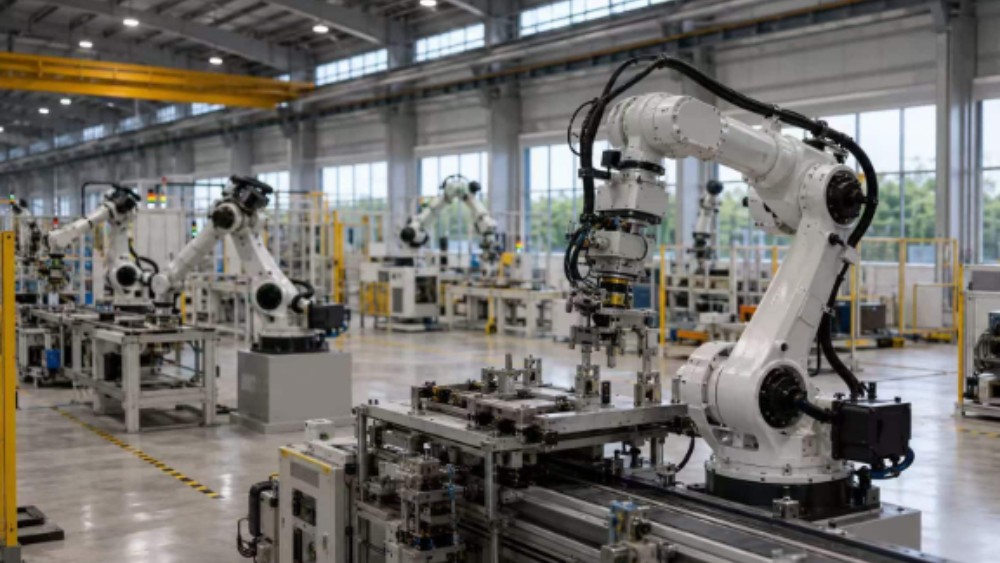
The company's international clients were developing full-scale humanoid robots for manufacturing and other physical tasks, he said, but such machines required extensive training before they could reliably perform complex work.
Khan said the company was working across industries including automotive, textiles, logistics and healthcare.
Workers are incentivized to opt in, but they can opt out at any time, he said, adding that his company did not commoditize personally identifiable information.
'We have the capacity'
For the 27-year-old entrepreneur, the bigger question is not simply whether Pakistan can generate data for robots. It is whether the country can retain enough economic value from doing so.
Pakistan, he said, should not try to replicate the entire technological capabilities of the United States or China.
"We have the capacity to provide the human superintelligence race with frontier-level, state-of-the-art data."
Pakistan's large physical workforce and industrial base could become an advantage, he said, as AI moves beyond text and images into machines that interact with the physical world.
Government's $20 million venture fund
That argument comes as Pakistan pursues a broader vision for artificial intelligence and robotics.
At the Indus RAS Expo in Islamabad last month, Prime Minister Shehbaz Sharif called for universities, research centers, startups, industries and other sectors to form a national innovation ecosystem and said the knowledge behind emerging technologies should remain "indigenous, owned, and continuously advanced within Pakistan."
The government also announced a $20 million Pakistan Venture Fund and the Spark and Elevate programs to help turn research and startups into commercially viable technologies and businesses.
IT Minister Shaza Fatima Khawaja, speaking at the same event, said Pakistan intended to "own the full value chain of robotics and artificial intelligence" as a matter of national policy.
The IT ministry has separately described robotics and autonomous systems as drivers of economic competitiveness and industrial modernization.
Preparing Pakistan
While Islamabad's ambition is to build indigenous capabilities across the technology chain, World Context's approach is more specialized: use an existing strength -- Pakistan's human and industrial workforce -- to supply a part of that global chain.
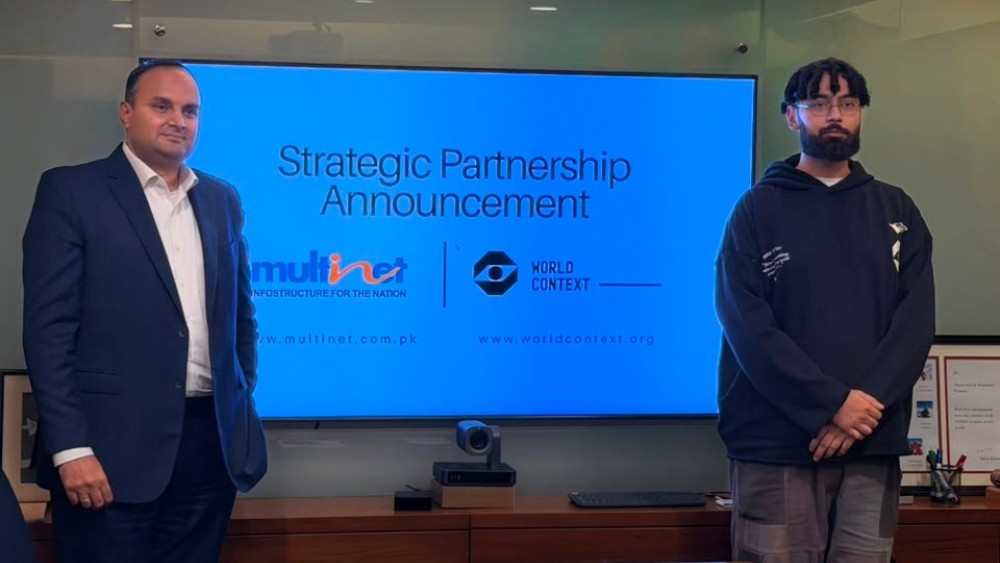
The proposition gained a new infrastructure layer this week when the company announced a partnership with Multinet Pakistan.
The World Context CEO said the choice was not simply about competing with leading AI powers.
"The future of work will take shape in Shenzhen or California, regardless of whether Pakistan contributes to their supply chains," he said. "But by contributing, Pakistan makes money, upskills its people, and positions itself as a vehicle for the next great industrialization."