


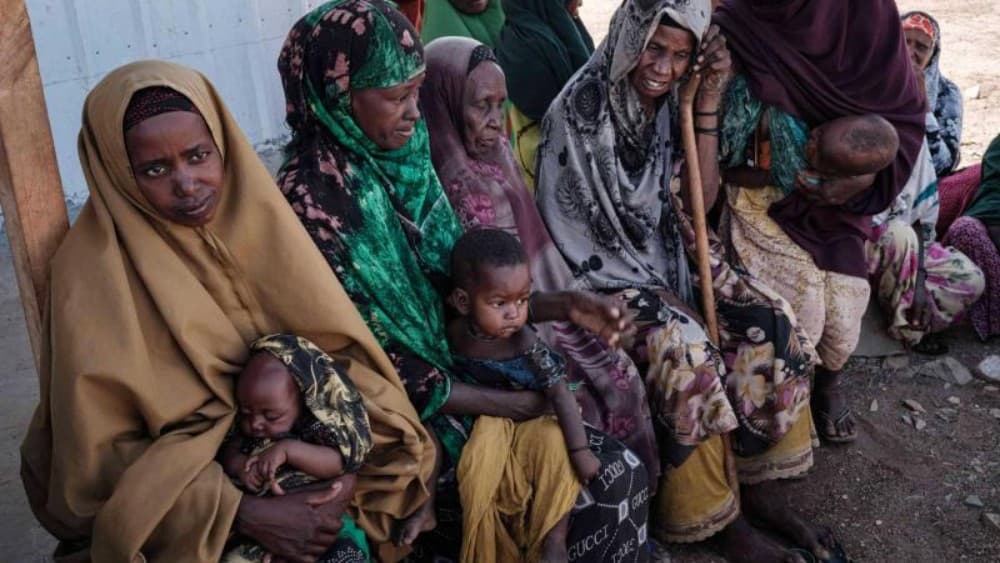
GENEVA: More than 200 health and nutritional facilities have been forced to close across drought-hit Somalia due to deep international aid cuts, leaving more children facing life-threatening malnutrition, the UN said Friday.
The United Nations children's agency warned that Somalia's children were "paying the price" for the dramatic reduction in international aid funding since last year.
"In Somalia today, aid cuts are closing doors to healthcare, shutting down nutrition services, and pushing water, education and protection further out of reach," spokesman James Elder told reporters in Geneva, speaking from Nairobi.
He stressed that some "205 health and nutrition facilities have already closed".
The impact on children, he warned, "has been immediate", with a 32-percent increase seen during the first six months of the year in children admitted to stabilization centers with severe acute malnutrition.
"Fewer facilities mean longer journeys for mums and their babies; longer journeys mean later treatment; later treatment means more severe illness and a greater risk of preventable death," Elder pointed out.
In June, UN-backed experts estimated that almost a third of Somalis faced food insecurity, as the country saw one of its worst droughts in years.
Nearly 1.9 million children are projected to be affected by malnutrition in Somalia this year, including nearly half a million with the deadliest form, Elder said.
.webp)
"This is the wrong moment to retreat," he insisted, highlighting that Somalia was "confronting a worsening climate crisis, severe drought in parts of the north, conflict and displacement".
The war in Iran was meanwhile pushing up the costs for fuel and fertiliser, even as a record-strength El Nino climate pattern was expected to compound Somalia's ongoing humanitarian crisis, with forecasts of severe flooding in coming months, he pointed out.
The funding cuts have already contributed to a 30-percent drop in health and nutrition service coverage, and Elder warned that the situation risked deteriorating further.
"Under severe funding scenarios, as many as 618 health facilities could close nationwide," he said.
At the same time, nearly a million children under five, adolescent girls and women risk losing access to nutrition services.
The aid cuts are also exacerbating the current drought, reducing access to water at a time when prices in rural and pastoral areas have quadrupled, according to UNICEF.
Education has also been hard-hit by the cuts, Elder said, pointing out that more than 78,000 students had already dropped out and another 660,000 were at risk of doing so.
Dozens of child protection facilities helping to reintegrate children formerly associated with armed groups or at risk of recruitment had also been shuttered.