


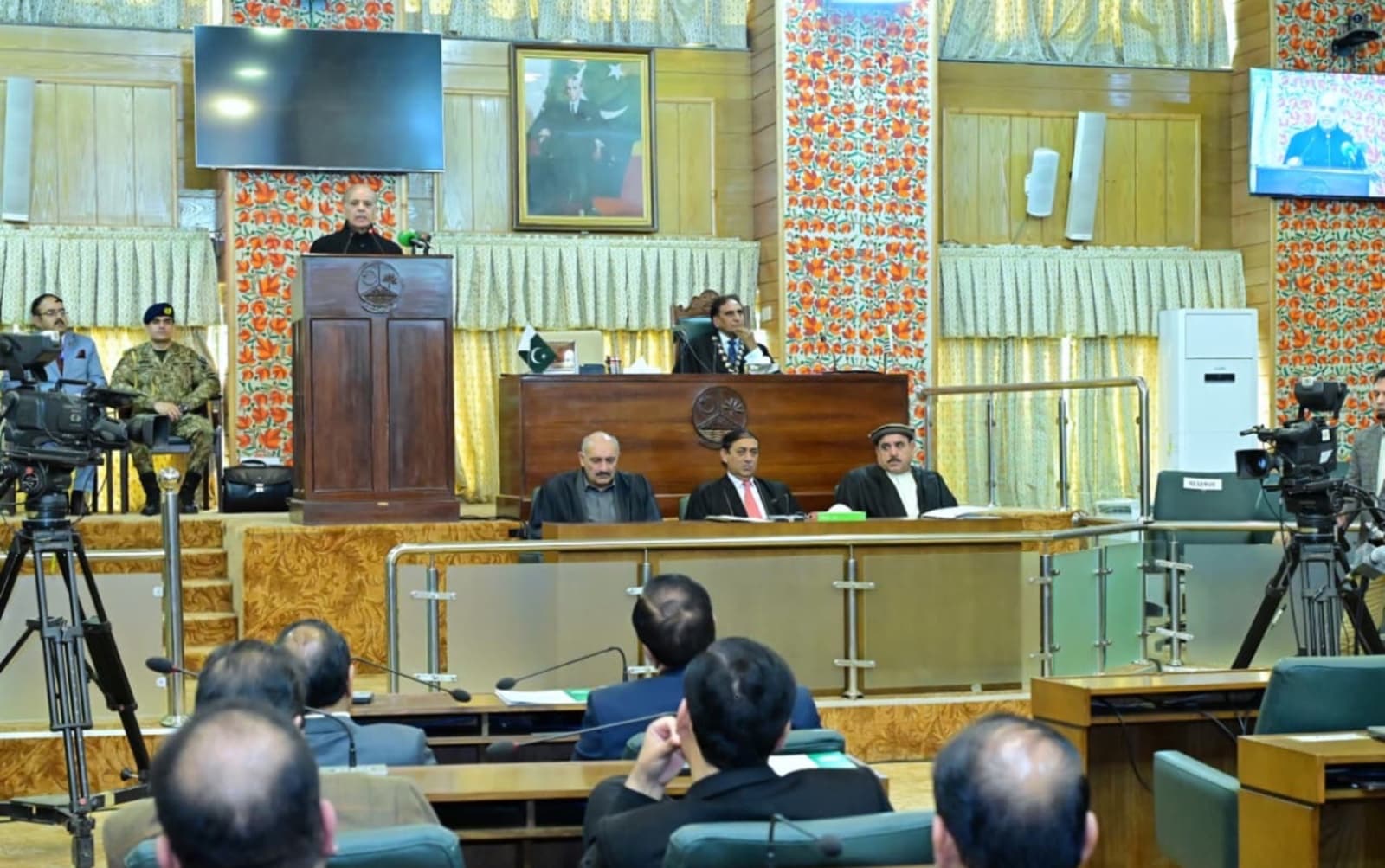
ISLAMABAD: Pakistan is observing Kashmir Solidarity Day on Thursday, reaffirming its political, moral, and diplomatic support for the people of Indian Illegally Occupied Jammu and Kashmir (IIOJK) and their right to self-determination, as guaranteed under United Nations Security Council resolutions.
The day is being marked with rallies, demonstrations, and seminars across the country, while human chains are being formed at all entry points to Azad Jammu and Kashmir to express solidarity with the Kashmiri people.
Kashmir Solidarity Day is observed every year on Feb. 5 to show support for the people of the occupied territory in their just struggle for the right to self-determination. Over the last couple of years, international organizations, including the United Nations experts, Amnesty International, Human Rights Watch, Freedom House, and the US State Department, have documented arbitrary detentions without court orders or due process, restrictions on press and internet access, abuse in custody, repression of dissent, extrajudicial killings and minimal credible steps or action to identify and punish officials who committed human rights abuses.
‘Call for international action’
In his message on the occasion, President Asif Ali Zardari said the people of Pakistan stood united with their Kashmiri brothers and sisters in their “just and legitimate struggle” for freedom. He reiterated that Kashmiris have an inalienable right to determine their future through a free and impartial plebiscite.
The president expressed deep concern over the prevailing situation in IIOJK, particularly following India’s unilateral actions of Aug. 5, 2019, which he said had further aggravated the plight of the Kashmiri people.
He said India had intensified efforts to consolidate its control through administrative and legislative measures, curbed media freedoms, incarcerated political leadership, and attempted to alter the demographic composition of the territory.
Citing international reports, President Zardari highlighted arbitrary detentions, collective punishment, punitive house demolition,s and restrictions on digital freedoms, including the blocking of thousands of social media accounts. He termed the profiling of mosques and their management committees as deliberate intimidation and a violation of religious freedom.
The president warned that India’s military escalation in May 2025 underscored the fragility of peace in South Asia, stressing that lasting regional stability was not possible without a just resolution of the Jammu and Kashmir dispute. He urged the international community to move beyond expressions of concern and press India to end human rights violations and allow unhindered access to international observers.
‘Violations of UN Charter’
Prime Minister Shehbaz Sharif, in his message, said Kashmir Solidarity Day was a reminder of Pakistan’s unwavering commitment to the Kashmiri cause. He described the Jammu and Kashmir dispute as one of the oldest unresolved issues on the UN agenda. He said Kashmiris had been denied their right to self-determination for nearly eight decades due to India’s intransigence.
The prime minister said Indian actions since August 2019 violated the UN Charter, relevant Security Council resolutions and the Fourth Geneva Convention, adding that efforts to change the legal and demographic status of the territory could not absolve India of its international obligations.
Sharif said Pakistan had consistently raised the Kashmir issue at international forums, including the UN General Assembly, and would continue to support the Kashmiri people until they achieved their right to self-determination. “Pakistan will stand shoulder to shoulder with Kashmiris until freedom is achieved,” he said.
‘Unwavering support’
Meanwhile, in their messages on Kashmir Solidarity Day, Chief of Defense Forces and Chief of Army Staff Field Marshal Syed Asim Munir, Air Chief Marshal Zaheer Ahmed Baber Sidhu, Chief of the Naval Staff Admiral Naveed Ashraf, and the armed forces of Pakistan reaffirmed unwavering support for the resilient people of IIOJK in their struggle for self-determination.
According to the Inter-Services Public Relations (ISPR), the Pakistan Armed Forces said a just and peaceful resolution of the Jammu and Kashmir dispute, in accordance with UN Security Council resolutions and the aspirations of the Kashmiri people, remains essential for lasting peace and stability in South Asia.
‘Tribute to resilient Kashmiris’
Leaders in Azad Jammu and Kashmir also reiterated full solidarity with the people of IIOJK, paying tribute to their resilience and sacrifices. They said continued repression, heavy militarization and curbs on political and religious freedoms had failed to break the resolve of the Kashmiri people.
They called on the international community to take concrete steps to address what they described as grave human rights violations in the occupied territory and to ensure the implementation of UN resolutions on Jammu and Kashmir.