


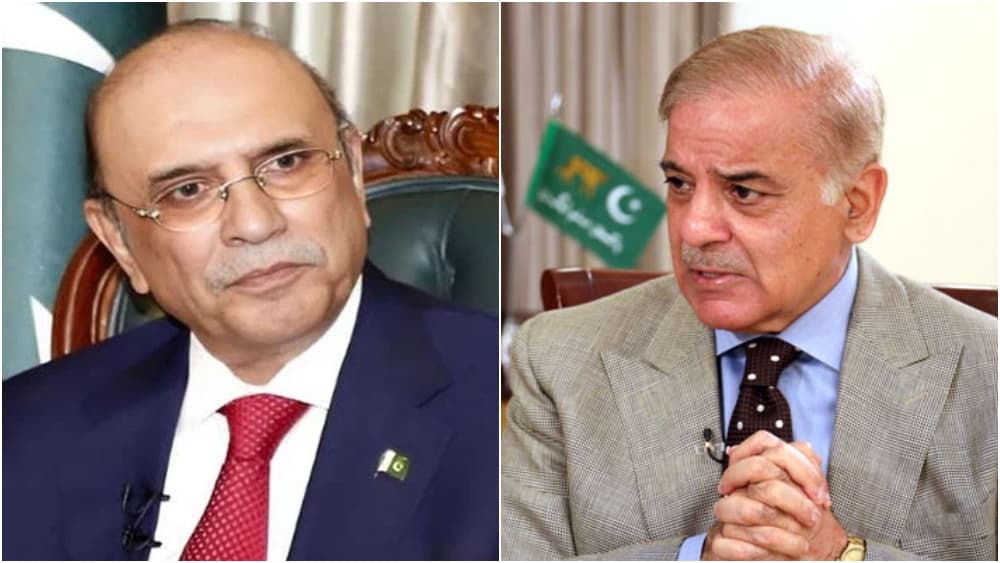
ISLAMABAD: Pakistan Prime Minister Shehbaz Sharif and President Asif Ali Zardari on Monday reaffirmed the country’s unwavering support for the people of Indian Illegally Occupied Jammu and Kashmir (IIOJK) in their struggle for the right to self-determination.
On Right to Self-Determination Day, PM Sharif said that January 5 served as a powerful reminder of the “commitment made by the international community, enshrined in the United Nations Security Council resolutions, to uphold the right to self-determination.”
The premier said that the “people of IIOJK have witnessed nearly eight decades of ordeal at the hands of Indian occupation forces,” adding that their suffering was “exacerbated manifolds since 5 August 2019 when India undertook illegal and unilateral measures, as part of its systematic campaign to transform the demographic and political landscape” of the land.
“All Indian coercive measures have failed to subjugate the will of the people of IIOJK or suppress their quest for the right to self-determination,” PM Sharif said, according to a press release issued by his office.
PM Sharif called on the world to recognize that a “just resolution of the Jammu and Kashmir dispute, is the only way to achieve durable peace in South Asia,” urging the international community to “urgently call upon India to halt its widespread human rights violations in IIOJK.”
Separately, President Zardari affirmed that the “disputed nature of Jammu and Kashmir and recognized the right of its people to determine their own future through a free and impartial plebiscite.”
“The continued denial of this right stands in clear contradiction to the principles of the UN Charter and international law,” the president said.
He added that the control over the “rivers originating in Jammu and Kashmir” has emerged as a grave “additional challenge, with serious implications” for the people in the region.
“India’s unilateral suspension of the Indus Waters Treaty, in disregard of its binding international obligations, represents a dangerous attempt to weaponize water, threatening livelihoods, food security and peace for millions who depend on these shared resources,” the president said.
President Zardari added that lasting peace in South Asia was only possible through “dialogue and through the implementation of United Nations Security Council resolutions.”
He also called upon the international community “to move beyond expressions of concern and to play an effective role in ensuring that the Kashmiri people can exercise their inalienable right to self-determination.”
Meanwhile, Deputy Prime Minister and Foreign Minister Ishaq Dar said Pakistan stood in complete solidarity with the Kashmiri people in their just struggle, stressing that the issue of Jammu and Kashmir remains an internationally recognised dispute.
The statement recalled the January 5, 1949, resolution of the United Nations Commission for India and Pakistan (UNCIP), which guarantees a free and impartial plebiscite to allow Kashmiris to decide their future. It noted that this commitment is reaffirmed through multiple UN Security Council resolutions and annual resolutions of the UN General Assembly.
The foreign minister said the right to self-determination is a core principle of international law and the UN Charter, but has been denied to the people of IIOJK for more than seven decades. He said India’s continued control of the region has resulted in systematic repression, widespread human rights violations and denial of fundamental freedoms.
In a message issued by the Minister for Kashmir Affairs, Gilgit-Baltistan and SAFRON, Engineer Amir Muqam said Pakistan stood “shoulder to shoulder with the Kashmiris in their just struggle for freedom and will make every possible effort to ensure that the people of Kashmir are granted their right to self-determination.”
Minister Muqam termed “all measures taken by the Indian government on August 5, 2019, as unilateral and illegal, and in violation of the UNCharter, the Fourth Geneva Convention, and international laws.”