


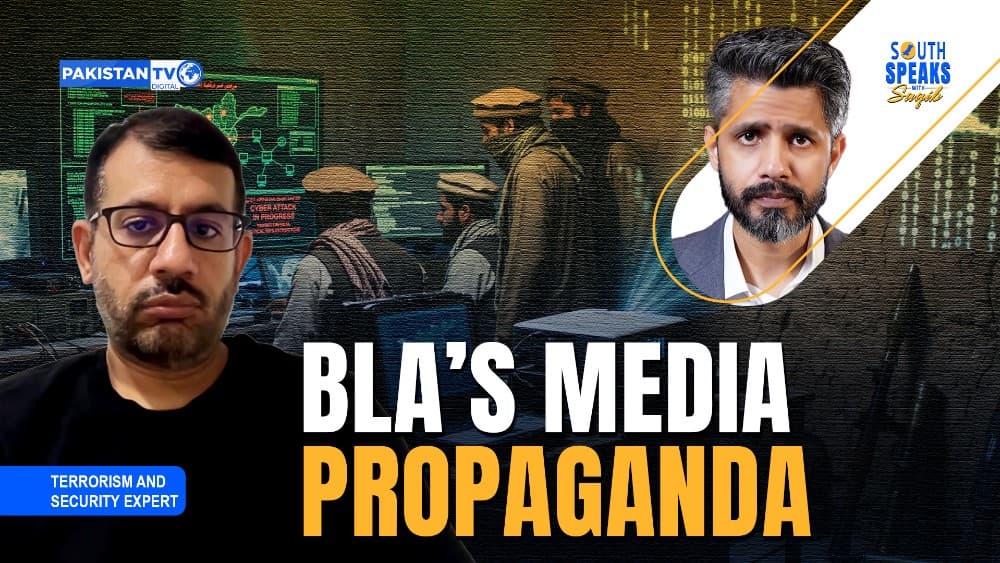
ISLAMABAD: The proscribed Baloch Liberation Army (BLA) is deploying women in high-profile attacks for propaganda rather than operational reasons, a Singapore-based security analyst has said.
Speaking on Pakistan TV Digital's South Speaks with Saqib, Abdul Basit of the S. Rajaratnam School of International Studies said the group builds an image of gender inclusivity that its own conduct contradicts as part of a media operation aimed at recruiting disaffected Baloch youth.
"Lately they have been using women very strategically in high-profile attacks, for pure propaganda purposes," Basit said.
"They try to portray this image of being gender-inclusive and egalitarian in their outlook," he said, adding that ground realities belie the claim.
Basit said the violence is itself the messaging. "Terrorism itself is a form of communication," he added, describing it as political violence used to broadcast demands and draw international attention.
He said attacks are followed by a deliberate release schedule, with photographs of those who took part published first and their profiles a day or two later, particularly when women are involved.
Basit said the group also posts updates during operations.
"They try to create an impression that tactically they have an upper hand over the Pakistani security institution, which again is false," he said.
The intended audience is domestic, he said. "Their immediate intended audience is Baloch society, especially the angry pockets of young people," he said, describing it as a recruitment pitch.
On the group's messaging around development projects, Basit said the propaganda does not survive scrutiny. He said the BLA attacks Chinese investment relentlessly while staying silent on a Canadian mining consortium in the same province.
"I don't recall a single attack against that company," he said, noting the group casts Chinese projects as strategic while treating comparable Western investment as ordinary foreign investment.
Asked whether that pointed to outside sponsorship, Basit said the pattern was visible in the messaging itself. "There is a proxy angle to it," he said.
"This is for their patrons and their masters."
He added that the insurgency has reached a stalemate that should open space for talks. "The state is here to stay," he said, arguing the group cannot match Pakistan's firepower over time and that its tactical advantage will dissipate.