


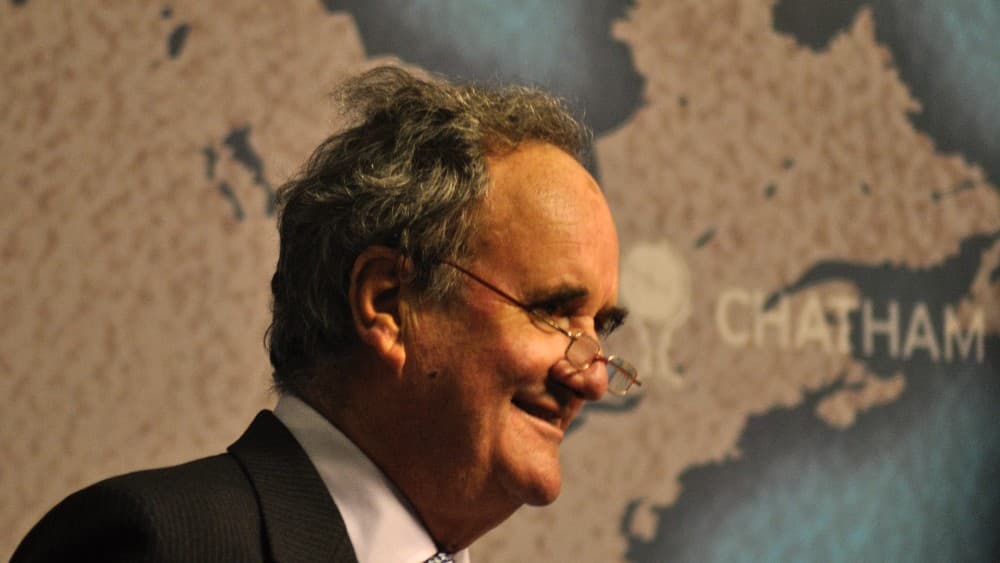
NEW DELHI: Veteran BBC correspondent Mark Tully, known to millions for covering defining moments across the subcontinent, died on Sunday aged 90.
Born in India in 1935 under British rule, he made the country his home and his career, becoming arguably the best-known foreign correspondent in the country.
Tully, who died in New Delhi, covered events such as the demolition of the Mughal-era Babri mosque in Uttar Pradesh in 1992.
Tully studied theology at Cambridge University before joining a seminary.
But he returned to India in 1965, joining the BBC in New Delhi as an office administrator.
Two decades as bureau chief
After a brief stint in London at the BBC's Hindi and World Service, he was appointed the public broadcaster's correspondent in New Delhi in 1971.
Tully was named bureau chief a few years later, overseeing coverage of South Asia, including India, Pakistan, Bangladesh, and Sri Lanka — a position he held for two decades.
He resigned from the BBC in 1994 amid a dramatic overhaul of the organization, criticizing the then director general John Birt, denouncing the "revolution" taking place at the corporation, beginning with a "sweeping attack on the BBC's journalism".
After resigning, he continued working as a freelancer and writing books.
Britain knighted him for his services to broadcasting and journalism in 2002.