


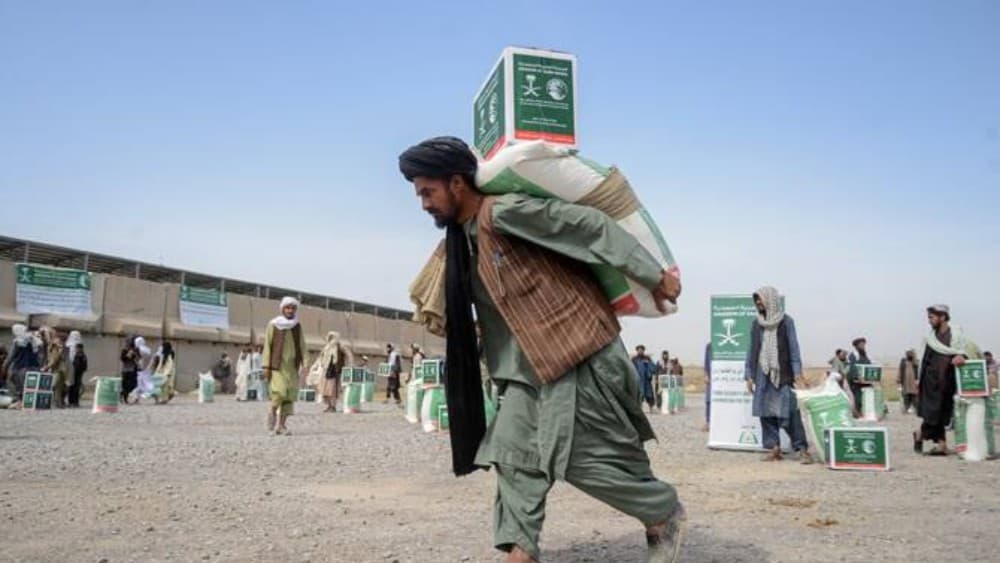
ISLAMABAD: New reports from humanitarian agencies and rights organizations paint a grim picture of worsening food insecurity across Afghanistan, warning that millions of Afghans continue to struggle to meet even their most basic nutritional needs.
Years of economic decline, recurring climate shocks, unemployment and reduced international aid have combined to push vulnerable families deeper into crisis.
The United Nations on July 18, 2026, says that millions of people are experiencing acute food insecurity, with children and pregnant or breastfeeding women among the worst affected.
Humanitarian organizations say widespread malnutrition has reached alarming levels, particularly in rural areas where prolonged drought, failed harvests and limited access to healthcare have left communities increasingly vulnerable.
Human Rights Watch, in a news report on July 17, 2026, has urged the international community not to overlook Afghanistan's growing humanitarian emergency, saying many families are being forced to adopt desperate coping mechanisms.
These include skipping meals, reducing food portions, taking children out of school to work, selling household assets and accumulating debt simply to survive.
Aid workers say children are paying the highest price. Severe acute malnutrition continues to threaten the lives of thousands of young children, while overstretched health facilities are struggling to cope with growing demand.
Experts warn that without sustained humanitarian assistance, preventable deaths could rise significantly in the coming months.
The crisis has also been aggravated by declining international funding for humanitarian operations.
Relief agencies say funding shortfalls have forced them to reduce food assistance programs and other essential services, leaving many vulnerable households without adequate support.
Several organizations have appealed to donor countries to increase financial commitments before conditions deteriorate further.
Humanitarian experts stress that food insecurity in Afghanistan is no longer a seasonal challenge but a chronic emergency driven by multiple overlapping factors.
Besides economic hardship, climate-related disasters, including droughts and flash floods, continue to damage agricultural production, reducing livelihoods for families that depend heavily on farming and livestock.
Rights groups have also highlighted the disproportionate impact on women and children, noting that restrictions affecting women's employment and access to livelihoods have further weakened household incomes.
Combined with soaring prices and limited economic opportunities, these pressures have intensified the struggle for millions of families already living below the poverty line.
The United Nations and humanitarian partners continue to call for uninterrupted humanitarian access and sustained international support, emphasizing that aid should remain insulated from political considerations.
They warn that without urgent action, food insecurity and malnutrition could worsen, placing even greater strain on Afghanistan's fragile humanitarian situation.
For countless Afghan families, however, the crisis is measured not in statistics but in empty kitchens, missed meals and uncertain tomorrows.
As humanitarian needs continue to outpace available resources, relief agencies say immediate international action will be critical to preventing an even deeper hunger emergency across the country.