



ISLAMABAD: The Shanghai Cooperation Organization’s Bishkek Declaration has provided Pakistan with a broader diplomatic framework to raise its concerns about terrorism, as the regional bloc links security to economic connectivity and prosperity.
Adopted on Sept 1, the declaration calls for combating terrorism, separatism, and extremism in all their forms, preventing the movement of terrorists across borders, and rejecting the use of terrorist, separatist, and extremist groups for political purposes.
Although the declaration does not name India, Afghanistan, or any individual country, its language closely intersects with Pakistan’s long-standing allegations that Afghan territory is being used by the Tehreek-i-Taliban Pakistan (TTP) to launch attacks inside Pakistan, while India is supporting separatist militants, particularly the Balochistan Liberation Army (BLA), against Pakistan and Chinese interests.
The provisions assume added significance because the SCO’s economic ambitions — including trade corridors, energy links, transport networks, and regional connectivity -- depend on a stable Afghanistan and a secure Pakistan.
Afghanistan: TTP sanctuary at heart of Pakistan’s concerns
Pakistan has repeatedly accused the Afghan Taliban authorities of allowing the TTP to maintain sanctuaries, training facilities, and operational space on Afghan soil.
The allegation has received support from UN Security Council monitoring reports.
A UN sanctions-monitoring assessment has identified the TTP as the most serious immediate terrorist threat to Pakistan and reported that the group has conducted attacks against Pakistan from Afghan territory.
Earlier UN reporting also documented more than 600 TTP attacks during a six-month reporting period and said the group continues to receive logistical and operational space in Afghanistan, according to a Dawn report.
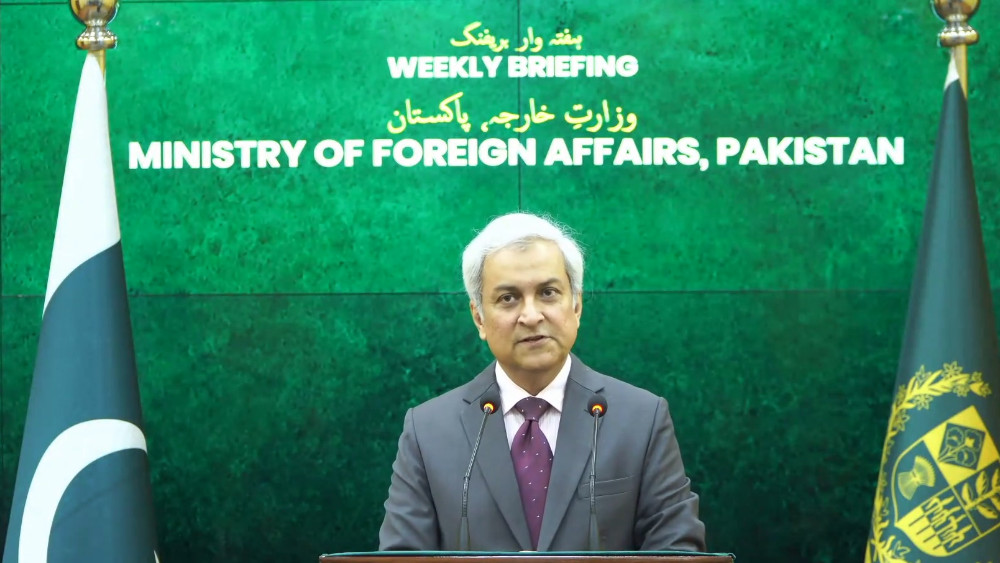
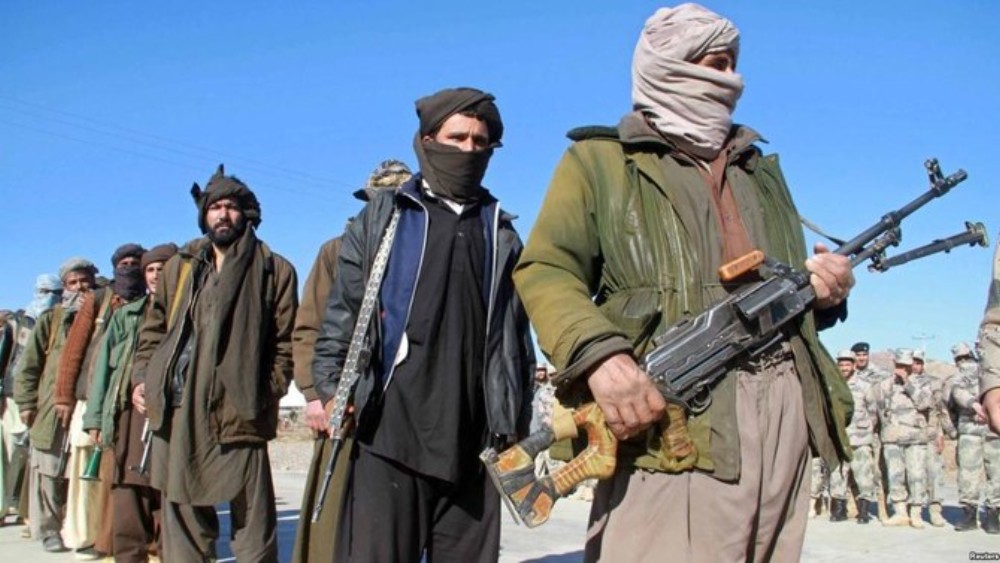
Pakistan's Foreign Office has maintained that Afghan territory is being used to “plan, foment, engineer and execute” terrorist attacks against Pakistan and has demanded verifiable assurances from Kabul that its territory will not be used for such activities.
In August, the Foreign Office said terrorism in Pakistan’s Balochistan and Khyber Pakhtunkhwa was linked to Afghanistan and that discussions with the United States had covered terrorist networks operating from Afghan territory.
Jaffar Express attack highlights Afghan link
The March 2025 attack on the Jaffar Express in Balochistan remains one of the most prominent examples cited by Islamabad.
The BLA hijacked the passenger train carrying hundreds of people, taking passengers hostage and killing the train driver. International news agencies reported that the attackers belonged to the BLA, which has carried out an escalating insurgency in mineral-rich Balochistan, a province that also hosts Chinese-backed infrastructure and investment.
Pakistan subsequently said its investigation had established communications between the attackers and handlers based in Afghanistan. The Foreign Office said technical evidence showed that the perpetrators were in contact with Afghanistan-based handlers and separately maintained that India had been involved in promoting terrorism in Balochistan.
India has rejected Pakistan’s accusations of sponsoring terrorists in Afghanistan, while the Afghan authorities have also denied allowing their territory to be used against Pakistan.
India and BLA: Islamabad's second major concern
Pakistan has repeatedly linked attacks by BLA militants to attempts to undermine China-Pakistan Economic Corridor (CPEC) projects and Chinese personnel.
In June, the Foreign Office said Pakistan was pursuing the proscription of the BLA and Majeed Brigade -- both already proscribed by the Pakistan government -- at relevant international institutions, adding that attacks, including the Quetta bombing and the Jaffar Express incident, strengthened what it described as evidence linking India with terrorism in Balochistan.
India has consistently rejected such allegations.
CPEC becomes part of the regional security equation
Balochistan is home to Gwadar Port, a major component of CPEC, while Chinese engineers and workers have repeatedly been targeted by militants.
A September 2025 suicide attack in Quetta, for example, occurred in Balochistan province, where Gwadar and other strategic infrastructure associated with Chinese investment are located. International news agencies reported that Islamabad accused India of supporting militants in the region, while noting that India denied the charge.
For Pakistan, this creates a direct connection between terrorism and regional connectivity: BLA attacks are not confined to a domestic security problem but threaten Chinese investment, transport corridors, and the wider economic integration envisaged by the SCO.
One declaration, two security concerns
The Bishkek Declaration's rejection of the use of terrorist, separatist, and extremist groups as political instruments corresponds with Pakistan's two principal security allegations: Afghanistan for providing sanctuary and operational space to the TTP for attacks against Pakistan. And India, for supporting BLA and other separatist elements conducting attacks in Pakistan, including against CPEC-related interests.
SCO's Afghanistan clause adds another layer
SCO leaders called for Afghanistan to become an independent, neutral, and peaceful state free from terrorism, war, and drugs, while reiterating support for an inclusive political process.
That language situates Afghanistan's internal stability within the organization's wider security architecture.
For Pakistan, this reinforces the argument that attacks originating from Afghan territory are not merely a bilateral Pakistan-Afghanistan dispute. They potentially threaten the stability of a region whose economic future depends on connectivity between South Asia, Central Asia, China, and Russia.
Security before connectivity
The Bishkek Declaration does not adjudicate Pakistan's allegations against either Kabul or New Delhi. But by rejecting cross-border terrorism, separatism, and the use of militant groups as political instruments, it gives Islamabad a common SCO language with which to argue that Afghanistan-based militancy and alleged Indian support for separatist violence are obstacles not only to Pakistan's security but to the wider South and Central Asian prosperity envisioned by the organization.