


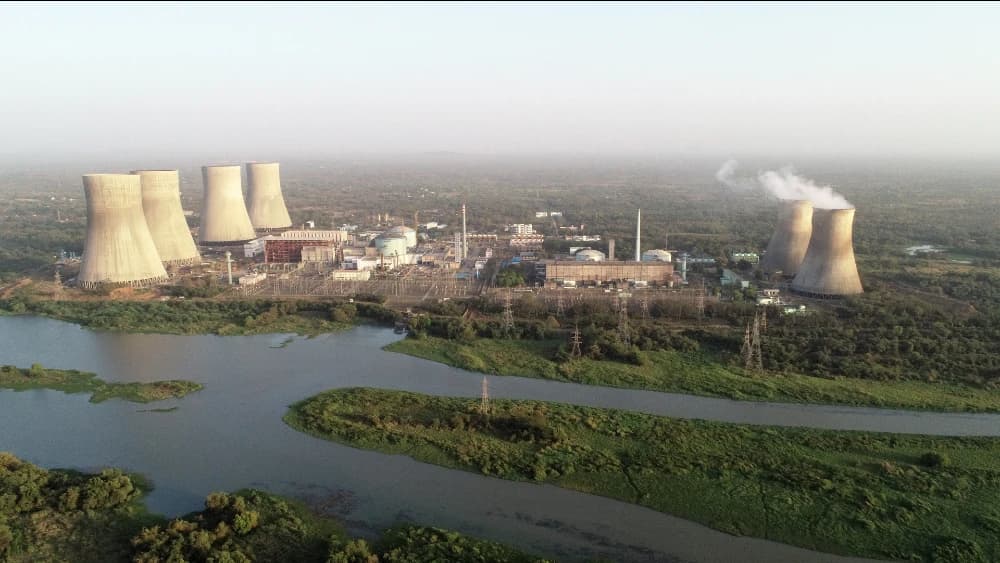
ISLAMABAD: India is preparing to open its atomic power sector to new investment under a planned overhaul of decades-old energy laws, a move that could draw in private capital and accelerate a nuclear expansion worth up to INR19.3 trillion ($214 billion).
The bill, aimed at easing business rules for private firms, may go to the cabinet this week before being placed in parliament during the current session ending Dec. 19, Jitendra Singh, the minister overseeing India’s atomic energy department, told Bloomberg News in an interview on Saturday in Panchkula, about 260 kilometers from New Delhi.
Singh said the new policy seeks to “facilitate the private sector” as Prime Minister Narendra Modi targets 100 gigawatts of nuclear power capacity by 2047 — a goal linked to India’s ambition of becoming a developed economy. India’s existing law exposes suppliers to claims in case of an accident, a provision that has stalled long-pending projects with international partners, including Electricité de France and Westinghouse Electric Co.
Modi earlier this month signaled plans to amend both the atomic energy law and the liability framework, saying private players would be allowed into nuclear generation. Singh declined to share details of the draft legislation but said all legal provisions were being “revisited” to produce a more flexible investment environment.
India’s nuclear push comes as countries from Japan to China expand atomic power to meet rising clean-energy demand driven partly by artificial intelligence and data-center growth. New Delhi is also advancing cooperation with Moscow, with a second project using Russian reactors under discussion following President Vladimir Putin’s visit last week.
While India seeks fresh investment, questions are again being raised over the country’s nuclear security record after multiple incidents of theft and illicit trafficking involving radioactive material over the past several years.
Pakistan has previously urged the International Atomic Energy Agency (IAEA) to probe what it described as a “nuclear black market” in India following repeated reports of sensitive material being stolen or sold illegally.
The Foreign Office in Islamabad has pointed to several cases, including the discovery last year of radioactive equipment allegedly stolen from the Bhabha Atomic Research Centre in the city of Dehradun, and separate seizures of Californium, a highly radioactive and high-value element, reportedly found in the possession of criminal gangs. Three similar Californium-related incidents were reported in 2021.
It should be noted that India’s civilian reactors are subject to IAEA oversight under its 2008 civil nuclear agreement with the United States, though its strategic program remains outside the safeguards regime.